


Lythraceae
Punica granatum
Make your entrance stand out with the Dwarf Pomegranate—an elegant, sun-loving shrub that rewards you with vivid blooms and charming red fruits. Perfect for patios and large pots, it stays naturally compact and responds beautifully to pruning for a tidy, designer look. If you want an outdoor feature plant that looks premium with minimal effort, this is an ideal choice.
1. Basic Identification
Common Name: Dwarf Pomegranate
Botanical Name: Punica granatum
Arabic Name: زعروز
Plant Variant: Standard
Plant Color: Natural
Plant Country: Turkey
Family: Lythraceae
2. Taxonomy & Classification
The Pomegranate belongs to the kingdom Plantae and the family Lythraceae. It is the only genus in the subfamily Punicoideae. While traditionally considered its own family (Punicaceae), recent molecular evidence has placed it firmly within the Lythraceae family under the order Myrtales.
3. Origin & Distribution
Punica granatum is native to a region stretching from modern-day Iran to the Himalayas in northern India. It has been cultivated since ancient times throughout the Mediterranean region and was introduced to the Americas in the late 16th century. It thrives in semi-arid, subtropical, and temperate climates.
4. Visual Characteristics
The Dwarf Pomegranate is a deciduous to semi-evergreen shrub with narrow, oblong, glossy green leaves. It produces striking funnel-shaped flowers in shades of bright orange-red. Following the blooms, it develops small, round, leathery-skinned fruits that turn a deep red when mature, hanging like ornaments from the branches.
5. Size & Dimensions
In its dwarf standard form, this plant typically reaches a height and width of 2 to 4 feet (60–120 cm). Its compact nature makes it significantly smaller than the full-sized orchard varieties which can reach up to 20 feet.
6. Light Requirements
This plant requires full sun to thrive and produce fruit. It should receive at least 6 to 8 hours of direct sunlight daily. While it can tolerate partial shade, its flowering and fruiting will be significantly reduced.
7. Watering Needs
Once established, the Dwarf Pomegranate is quite drought-tolerant. However, for container-grown plants and to ensure healthy fruit development, it prefers regular watering. Allow the top inch of soil to dry out before watering deeply again. Avoid waterlogged soil.
8. Soil & Potting
It prefers well-draining, loamy soil but is highly adaptable to various soil types, including sandy or rocky soils. For potting, use a high-quality potting mix with added perlite or grit to ensure excellent drainage. It prefers a neutral to slightly acidic pH.
9. Temperature & Humidity
Pomegranates love heat and thrive in dry climates. They are hardy in USDA zones 7–11. While the dwarf variety can tolerate some frost, it should be protected or moved indoors if temperatures drop significantly below freezing for extended periods. It is very tolerant of low humidity.
10. Fertilization
Feed the plant with a balanced, slow-release fertilizer in early spring and again in late summer. For plants grown in pots, a liquid fertilizer applied every 4–6 weeks during the growing season can support vigorous blooming.
11. Maintenance & Care Level
The care level is considered easy/low maintenance. Minimal pruning is required to maintain its shape, usually performed in late winter or early spring before new growth begins. Removing suckers from the base helps maintain the "standard" or tree-like form.
12. Growth & Propagation
The Dwarf Pomegranate has a moderate growth rate. It can be easily propagated through softwood cuttings in summer or hardwood cuttings in winter. It can also be grown from seed, although seedlings may vary slightly from the parent plant.
13. Common Problems
It is generally pest-resistant but can occasionally be bothered by aphids, whiteflies, or mealybugs, particularly if grown indoors or in stagnant air. Root rot is the most common issue, usually caused by overwatering or poorly draining soil.
14. Benefits & Uses
Primarily used as an ornamental feature in landscapes, patios, and entryways. The fruit is edible and rich in antioxidants, though the dwarf variety produces much smaller fruit than commercial types. It is also a very popular choice for bonsai enthusiasts.
15. Toxicity & Safety
The Dwarf Pomegranate is considered non-toxic to humans. According to the ASPCA, Punica granatum is also non-toxic to dogs, cats, and horses, making it a safe choice for pet-friendly gardens and homes.

Punica granatum
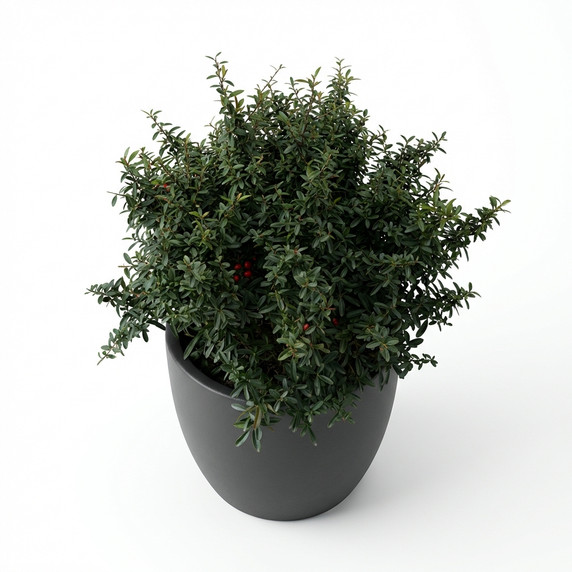
Make your entrance stand out with the Dwarf Pomegranate—an elegant, sun-loving shrub that rewards you with vivid blooms and charming red fruits. Perfect for patios and large pots, it stays naturally compact and responds beautifully to pruning for a tidy, designer look. If you want an outdoor feature plant that looks premium with minimal effort, this is an ideal choice.
1. Basic Identification
Common Name: Dwarf Pomegranate
Botanical Name: Punica granatum
Arabic Name: زعروز
Plant Variant: Standard
Plant Color: Natural
Plant Country: Turkey
Family: Lythraceae
2. Taxonomy & Classification
The Pomegranate belongs to the kingdom Plantae and the family Lythraceae. It is the only genus in the subfamily Punicoideae. While traditionally considered its own family (Punicaceae), recent molecular evidence has placed it firmly within the Lythraceae family under the order Myrtales.
3. Origin & Distribution
Punica granatum is native to a region stretching from modern-day Iran to the Himalayas in northern India. It has been cultivated since ancient times throughout the Mediterranean region and was introduced to the Americas in the late 16th century. It thrives in semi-arid, subtropical, and temperate climates.
4. Visual Characteristics
The Dwarf Pomegranate is a deciduous to semi-evergreen shrub with narrow, oblong, glossy green leaves. It produces striking funnel-shaped flowers in shades of bright orange-red. Following the blooms, it develops small, round, leathery-skinned fruits that turn a deep red when mature, hanging like ornaments from the branches.
5. Size & Dimensions
In its dwarf standard form, this plant typically reaches a height and width of 2 to 4 feet (60–120 cm). Its compact nature makes it significantly smaller than the full-sized orchard varieties which can reach up to 20 feet.
6. Light Requirements
This plant requires full sun to thrive and produce fruit. It should receive at least 6 to 8 hours of direct sunlight daily. While it can tolerate partial shade, its flowering and fruiting will be significantly reduced.
7. Watering Needs
Once established, the Dwarf Pomegranate is quite drought-tolerant. However, for container-grown plants and to ensure healthy fruit development, it prefers regular watering. Allow the top inch of soil to dry out before watering deeply again. Avoid waterlogged soil.
8. Soil & Potting
It prefers well-draining, loamy soil but is highly adaptable to various soil types, including sandy or rocky soils. For potting, use a high-quality potting mix with added perlite or grit to ensure excellent drainage. It prefers a neutral to slightly acidic pH.
9. Temperature & Humidity
Pomegranates love heat and thrive in dry climates. They are hardy in USDA zones 7–11. While the dwarf variety can tolerate some frost, it should be protected or moved indoors if temperatures drop significantly below freezing for extended periods. It is very tolerant of low humidity.
10. Fertilization
Feed the plant with a balanced, slow-release fertilizer in early spring and again in late summer. For plants grown in pots, a liquid fertilizer applied every 4–6 weeks during the growing season can support vigorous blooming.
11. Maintenance & Care Level
The care level is considered easy/low maintenance. Minimal pruning is required to maintain its shape, usually performed in late winter or early spring before new growth begins. Removing suckers from the base helps maintain the "standard" or tree-like form.
12. Growth & Propagation
The Dwarf Pomegranate has a moderate growth rate. It can be easily propagated through softwood cuttings in summer or hardwood cuttings in winter. It can also be grown from seed, although seedlings may vary slightly from the parent plant.
13. Common Problems
It is generally pest-resistant but can occasionally be bothered by aphids, whiteflies, or mealybugs, particularly if grown indoors or in stagnant air. Root rot is the most common issue, usually caused by overwatering or poorly draining soil.
14. Benefits & Uses
Primarily used as an ornamental feature in landscapes, patios, and entryways. The fruit is edible and rich in antioxidants, though the dwarf variety produces much smaller fruit than commercial types. It is also a very popular choice for bonsai enthusiasts.
15. Toxicity & Safety
The Dwarf Pomegranate is considered non-toxic to humans. According to the ASPCA, Punica granatum is also non-toxic to dogs, cats, and horses, making it a safe choice for pet-friendly gardens and homes.