


Pyramid Crassula
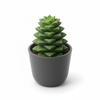
Elevate your space with the architectural marvel of the Pyramid Crassula. This fascinating succulent features tightly stacked, geometric leaves that form a perfect, pagoda-like tower. A true conversation starter, it's the ideal low-maintenance plant for a modern desk, sunny windowsill, or minimalist shelf. Its compact size and drought-tolerant nature make it perfect for busy plant lovers and collectors seeking something extraordinary. Add this living sculpture to your collection today and watch its unique form grow.
1. Basic Identification
Common Name: Pyramid Crassula, Pagoda Mini
Botanical Name: Crassula pyramidalis
Arabic Name: براميد هرمي
Plant Variant: Standard
Plant Color: Green
Plant Country: Netherlands
2. Taxonomy & Classification
Kingdom: Plantae
Order: Saxifragales
Family: Crassulaceae
Genus: Crassula
Species: Crassula pyramidalis
3. Origin & Distribution
Native to the Great Karoo region of South Africa, where it grows in rocky terrain and gravelly soils under harsh, dry conditions.
4. Visual Characteristics
This succulent is known for its distinct four-angled, square appearance created by small, triangular, green leaves that are tightly packed and overlap each other. The stem is completely hidden by the leaves, resulting in a pagoda-like or pyramid-shaped column.
5. Size & Dimensions
A compact, slow-growing species, typically reaching a height of 10 to 15 cm (4 to 6 inches) and a spread of about 5 to 10 cm.
6. Light Requirements
Requires bright, indirect light or full sun. In indoor environments, a south-facing or west-facing windowsill is ideal. Insufficient light may cause the plant to stretch (etiolation).
7. Watering Needs
Low watering needs. Use the "soak and dry" method: water thoroughly only when the soil has completely dried out. Avoid water sitting in the center of the leaves to prevent rot.
8. Soil & Potting
Requires a well-draining succulent or cactus potting mix, preferably with added perlite, grit, or sand to ensure rapid drainage. Use pots with drainage holes.
9. Temperature & Humidity
Prefers warm temperatures between 18°C and 24°C (65°F–75°F). It can tolerate cooler temperatures but must be kept dry and protected from frost. It thrives in low-humidity environments.
10. Fertilization
Feed sparingly with a diluted, balanced succulent fertilizer once or twice during the active growing season (spring and summer).
11. Maintenance & Care Level
Level: Easy/Low Maintenance. Perfect for beginners or busy individuals due to its drought tolerance and slow growth rate.
12. Growth & Propagation
Growth is slow and upright. Propagation is typically achieved through stem cuttings or by planting seeds, although leaf propagation is more difficult than other Crassula species due to the tight leaf structure.
13. Common Problems
The most common issue is root rot caused by overwatering. It can also be susceptible to mealybugs and aphids, which can hide between the tightly packed leaves.
14. Benefits & Uses
Highly valued for its architectural and geometric form. It is an excellent choice for modern interiors, office desks, and rock gardens in succulent collections.
15. Toxicity & Safety
Like many members of the Crassula genus, it is generally considered toxic to cats, dogs, and horses if ingested. It may cause vomiting or lethargy.
Pyramid Crassula

Elevate your space with the architectural marvel of the Pyramid Crassula. This fascinating succulent features tightly stacked, geometric leaves that form a perfect, pagoda-like tower. A true conversation starter, it's the ideal low-maintenance plant for a modern desk, sunny windowsill, or minimalist shelf. Its compact size and drought-tolerant nature make it perfect for busy plant lovers and collectors seeking something extraordinary. Add this living sculpture to your collection today and watch its unique form grow.
1. Basic Identification
Common Name: Pyramid Crassula, Pagoda Mini
Botanical Name: Crassula pyramidalis
Arabic Name: براميد هرمي
Plant Variant: Standard
Plant Color: Green
Plant Country: Netherlands
2. Taxonomy & Classification
Kingdom: Plantae
Order: Saxifragales
Family: Crassulaceae
Genus: Crassula
Species: Crassula pyramidalis
3. Origin & Distribution
Native to the Great Karoo region of South Africa, where it grows in rocky terrain and gravelly soils under harsh, dry conditions.
4. Visual Characteristics
This succulent is known for its distinct four-angled, square appearance created by small, triangular, green leaves that are tightly packed and overlap each other. The stem is completely hidden by the leaves, resulting in a pagoda-like or pyramid-shaped column.
5. Size & Dimensions
A compact, slow-growing species, typically reaching a height of 10 to 15 cm (4 to 6 inches) and a spread of about 5 to 10 cm.
6. Light Requirements
Requires bright, indirect light or full sun. In indoor environments, a south-facing or west-facing windowsill is ideal. Insufficient light may cause the plant to stretch (etiolation).
7. Watering Needs
Low watering needs. Use the "soak and dry" method: water thoroughly only when the soil has completely dried out. Avoid water sitting in the center of the leaves to prevent rot.
8. Soil & Potting
Requires a well-draining succulent or cactus potting mix, preferably with added perlite, grit, or sand to ensure rapid drainage. Use pots with drainage holes.
9. Temperature & Humidity
Prefers warm temperatures between 18°C and 24°C (65°F–75°F). It can tolerate cooler temperatures but must be kept dry and protected from frost. It thrives in low-humidity environments.
10. Fertilization
Feed sparingly with a diluted, balanced succulent fertilizer once or twice during the active growing season (spring and summer).
11. Maintenance & Care Level
Level: Easy/Low Maintenance. Perfect for beginners or busy individuals due to its drought tolerance and slow growth rate.
12. Growth & Propagation
Growth is slow and upright. Propagation is typically achieved through stem cuttings or by planting seeds, although leaf propagation is more difficult than other Crassula species due to the tight leaf structure.
13. Common Problems
The most common issue is root rot caused by overwatering. It can also be susceptible to mealybugs and aphids, which can hide between the tightly packed leaves.
14. Benefits & Uses
Highly valued for its architectural and geometric form. It is an excellent choice for modern interiors, office desks, and rock gardens in succulent collections.
15. Toxicity & Safety
Like many members of the Crassula genus, it is generally considered toxic to cats, dogs, and horses if ingested. It may cause vomiting or lethargy.