


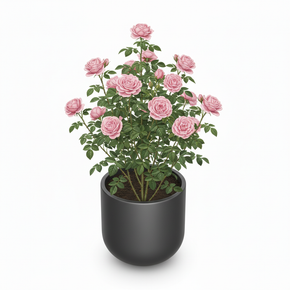
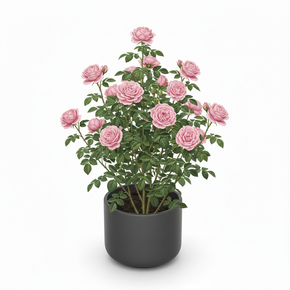



Invite timeless elegance and an intoxicating aroma into your garden with the legendary Damask Rose. A living treasure, the 'jouri' rose is your personal source of the world's most romantic fragrance. Perfect as a stunning gift or a centerpiece for your outdoor space, this isn't just a plant—it's an experience. Order now and cultivate beauty that has been cherished for centuries.
Common Name: Damask Rose
Botanical Name: Rosa damascena
Former Name: Not available
Plant Type: Deciduous Flowering Shrub
Plant Code / SKU: PLT-1795
Alternative Names:
Jouri (جوري)
Persian Damask
Rose of Castile
Order: Rosales
Family: Rosaceae
Genus: Rosa
Origin: An ancient hybrid rose, believed to have originated in the Middle East, likely in Syria or Persia (modern-day Iran). It is thought to be a cross between Rosa gallica and Rosa moschata or Rosa phoenicia.
Distribution: Commercially cultivated in Bulgaria, Turkey, Iran, India, and across the Middle East for its essential oil. It is grown ornamentally in temperate gardens worldwide.
Leaves: Pinnately compound with 5-7 leaflets. The leaflets are toothed and typically have a greyish-green color.
Flowers: Intensely fragrant, double or semi-double flowers that appear in small clusters. The color ranges from light pink to pale red. They bloom primarily in late spring to early summer.
Stem: The plant forms a thicket of upright, arching canes that are covered with stiff, sharp prickles (thorns) and bristles.
Height: Typically grows to 1.5 - 2.2 meters (5 - 7 feet) tall.
Width: Can spread to 1.2 - 1.8 meters (4 - 6 feet) wide.
Prefers full sun, requiring at least 6 hours of direct sunlight per day for the best flower production and overall health. It can tolerate light partial shade, but flowering may be reduced.
Water deeply and regularly, especially during establishment and dry spells. Allow the top 2-3 inches of soil to dry out between waterings. Water at the base of the plant to keep the foliage dry and prevent fungal diseases.
Soil Type: Thrives in fertile, loamy, well-draining soil that is rich in organic matter.
pH: Prefers a slightly acidic to neutral soil pH, between 6.0 and 7.0.
Potting: Can be grown in large containers with ample drainage holes. Use a high-quality potting mix formulated for roses or shrubs.
Hardiness Zones: Best suited for USDA hardiness zones 5 through 9.
Temperature: It is a cold-hardy rose that requires a period of winter dormancy to bloom profusely.
Humidity: Prefers average humidity levels. Good air circulation is crucial to prevent common fungal issues like powdery mildew and black spot.
Feed with a balanced fertilizer formulated for roses in the early spring as new growth begins. An additional application after the first wave of flowering can be beneficial. Avoid fertilizing late in the growing season.
Care Level: Moderate. Requires regular pruning, watering, and monitoring for pests and diseases.
Pruning: Prune in late winter or early spring while the plant is dormant. Remove any dead, damaged, weak, or crossing canes to improve air circulation and shape the plant. Summer-blooming varieties can be pruned after flowering.
Deadheading: Removing spent flowers is generally not necessary as these roses are often grown for their ornamental and edible hips.
Growth Rate: Moderate to vigorous once established.
Propagation: Most commonly propagated by taking hardwood cuttings in late autumn or softwood cuttings in early summer. It can also be propagated by layering.
Pests: Susceptible to aphids, spider mites, Japanese beetles, and rose sawflies.
Diseases: Can be prone to fungal diseases such as black spot, powdery mildew, and rust, especially in humid conditions with poor air circulation.
Culinary: Petals are used to make rosewater, rose oil, jams, jellies, syrups, and teas. Rose hips are rich in Vitamin C and are used for teas and preserves.
Cosmetic/Medicinal: Rose essential oil (attar of roses) is a highly prized ingredient in perfumery and cosmetics. Rosewater is a popular facial toner. It has a long history of use in traditional and herbal medicine.
Ornamental: Valued in gardens for its historical significance, incredible fragrance, and beautiful spring-to-summer blooms.
Toxicity to Humans: Rose petals and hips are considered non-toxic and are widely used in culinary applications.
Toxicity to Pets: The plant is non-toxic to dogs, cats, and horses according to the ASPCA.
Safety Note: The stems are covered in sharp prickles (thorns), requiring caution and protective gloves when handling or pruning.
Invite timeless elegance and an intoxicating aroma into your garden with the legendary Damask Rose. A living treasure, the 'jouri' rose is your personal source of the world's most romantic fragrance. Perfect as a stunning gift or a centerpiece for your outdoor space, this isn't just a plant—it's an experience. Order now and cultivate beauty that has been cherished for centuries.
Common Name: Damask Rose
Botanical Name: Rosa damascena
Former Name: Not available
Plant Type: Deciduous Flowering Shrub
Plant Code / SKU: PLT-1795
Alternative Names:
Jouri (جوري)
Persian Damask
Rose of Castile
Order: Rosales
Family: Rosaceae
Genus: Rosa
Origin: An ancient hybrid rose, believed to have originated in the Middle East, likely in Syria or Persia (modern-day Iran). It is thought to be a cross between Rosa gallica and Rosa moschata or Rosa phoenicia.
Distribution: Commercially cultivated in Bulgaria, Turkey, Iran, India, and across the Middle East for its essential oil. It is grown ornamentally in temperate gardens worldwide.
Leaves: Pinnately compound with 5-7 leaflets. The leaflets are toothed and typically have a greyish-green color.
Flowers: Intensely fragrant, double or semi-double flowers that appear in small clusters. The color ranges from light pink to pale red. They bloom primarily in late spring to early summer.
Stem: The plant forms a thicket of upright, arching canes that are covered with stiff, sharp prickles (thorns) and bristles.
Height: Typically grows to 1.5 - 2.2 meters (5 - 7 feet) tall.
Width: Can spread to 1.2 - 1.8 meters (4 - 6 feet) wide.
Prefers full sun, requiring at least 6 hours of direct sunlight per day for the best flower production and overall health. It can tolerate light partial shade, but flowering may be reduced.
Water deeply and regularly, especially during establishment and dry spells. Allow the top 2-3 inches of soil to dry out between waterings. Water at the base of the plant to keep the foliage dry and prevent fungal diseases.
Soil Type: Thrives in fertile, loamy, well-draining soil that is rich in organic matter.
pH: Prefers a slightly acidic to neutral soil pH, between 6.0 and 7.0.
Potting: Can be grown in large containers with ample drainage holes. Use a high-quality potting mix formulated for roses or shrubs.
Hardiness Zones: Best suited for USDA hardiness zones 5 through 9.
Temperature: It is a cold-hardy rose that requires a period of winter dormancy to bloom profusely.
Humidity: Prefers average humidity levels. Good air circulation is crucial to prevent common fungal issues like powdery mildew and black spot.
Feed with a balanced fertilizer formulated for roses in the early spring as new growth begins. An additional application after the first wave of flowering can be beneficial. Avoid fertilizing late in the growing season.
Care Level: Moderate. Requires regular pruning, watering, and monitoring for pests and diseases.
Pruning: Prune in late winter or early spring while the plant is dormant. Remove any dead, damaged, weak, or crossing canes to improve air circulation and shape the plant. Summer-blooming varieties can be pruned after flowering.
Deadheading: Removing spent flowers is generally not necessary as these roses are often grown for their ornamental and edible hips.
Growth Rate: Moderate to vigorous once established.
Propagation: Most commonly propagated by taking hardwood cuttings in late autumn or softwood cuttings in early summer. It can also be propagated by layering.
Pests: Susceptible to aphids, spider mites, Japanese beetles, and rose sawflies.
Diseases: Can be prone to fungal diseases such as black spot, powdery mildew, and rust, especially in humid conditions with poor air circulation.
Culinary: Petals are used to make rosewater, rose oil, jams, jellies, syrups, and teas. Rose hips are rich in Vitamin C and are used for teas and preserves.
Cosmetic/Medicinal: Rose essential oil (attar of roses) is a highly prized ingredient in perfumery and cosmetics. Rosewater is a popular facial toner. It has a long history of use in traditional and herbal medicine.
Ornamental: Valued in gardens for its historical significance, incredible fragrance, and beautiful spring-to-summer blooms.
Toxicity to Humans: Rose petals and hips are considered non-toxic and are widely used in culinary applications.
Toxicity to Pets: The plant is non-toxic to dogs, cats, and horses according to the ASPCA.
Safety Note: The stems are covered in sharp prickles (thorns), requiring caution and protective gloves when handling or pruning.

Take 20% off your first order
Enter the code below at checkout to get 20% off your first order