





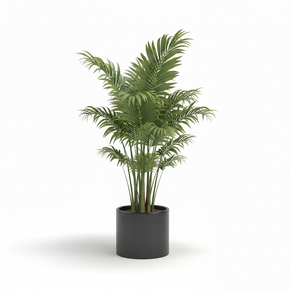
Bring five-star tropical elegance home with Licuala grandis. Its perfectly pleated, round fan leaves create a bold designer centerpiece for bright interiors. Slow-growing and container-friendly, it delivers maximum impact with the right humidity and gentle light—an elevated choice for homes, receptions, and modern offices.
Common Name: Ruffled Fan Palm, Vanuatu Fan Palm, Palas Palm
Botanical Name: Licuala grandis
Arabic Name: نخيل المروحة
Variant: Standard
Color: Natural
Stems: 4
Kingdom: Plantae
Order: Arecales
Family: Arecaceae
Genus: Licuala
Species: L. grandis
Licuala grandis is native to the tropical rainforests of the Vanuatu islands, located in the South Pacific. It has since been naturalized and cultivated in tropical and subtropical regions worldwide as a prized ornamental plant.
This palm is famous for its stunning, solitary trunk and large, glossy, dark green leaves. The leaves are nearly circular (orbicular), perfectly pleated like a hand fan, and feature shallowly notched edges. Unlike many other palms, the leaves remain whole rather than splitting into leaflets.
It is a slow-growing species. In indoor containers, it typically reaches a height of 1.5 to 2 meters. When grown outdoors in optimal tropical conditions, it can eventually reach up to 3 meters in height with a leaf spread of roughly 1 to 1.5 meters.
Licuala grandis prefers bright, indirect light. Direct, harsh sunlight can scorch and yellow the delicate pleated leaves. It can tolerate moderate light levels, but growth will be significantly slower.
Requires consistent moisture. The soil should be kept evenly moist but never waterlogged. It is sensitive to drought and will show distress through drooping leaves if left dry for too long. Using filtered or distilled water is recommended to avoid salt buildup.
Thrives in a rich, well-draining potting mix. A blend of peat moss, pine bark, and perlite or coarse sand works well to ensure adequate drainage while retaining necessary moisture levels.
As a tropical native, it loves warmth and high humidity. It prefers temperatures between 20°C and 30°C and should be protected from drafts and temperatures below 15°C. Humidity levels above 50% are ideal; consider using a humidifier or misting regularly.
Feed with a balanced, slow-release palm fertilizer or a diluted liquid fertilizer once a month during the active growing season (spring and summer). Reduce feeding during the winter months.
Maintenance is considered moderate. While it doesn't require frequent pruning, it does need consistent attention to its humidity and moisture requirements. Wipe the large leaves with a damp cloth occasionally to remove dust and maintain their gloss.
Growth is very slow, which makes it an excellent long-term indoor plant. It is primarily propagated by seeds, though germination can be erratic and may take several months.
The most common issues are brown leaf tips caused by low humidity or hard water. It can also be susceptible to spider mites and mealybugs if the environment is too dry. Root rot may occur if the plant is overwatered or kept in poorly draining soil.
Beyond its high ornamental value, it serves as an effective air purifier, removing common toxins from indoor environments. It is a favorite for interior designers looking to add a structural, tropical focal point to modern homes and offices.
Licuala grandis is non-toxic to both humans and pets (cats and dogs), making it a safe and elegant addition to any household.
Bring five-star tropical elegance home with Licuala grandis. Its perfectly pleated, round fan leaves create a bold designer centerpiece for bright interiors. Slow-growing and container-friendly, it delivers maximum impact with the right humidity and gentle light—an elevated choice for homes, receptions, and modern offices.
Common Name: Ruffled Fan Palm, Vanuatu Fan Palm, Palas Palm
Botanical Name: Licuala grandis
Arabic Name: نخيل المروحة
Variant: Standard
Color: Natural
Stems: 4
Kingdom: Plantae
Order: Arecales
Family: Arecaceae
Genus: Licuala
Species: L. grandis
Licuala grandis is native to the tropical rainforests of the Vanuatu islands, located in the South Pacific. It has since been naturalized and cultivated in tropical and subtropical regions worldwide as a prized ornamental plant.
This palm is famous for its stunning, solitary trunk and large, glossy, dark green leaves. The leaves are nearly circular (orbicular), perfectly pleated like a hand fan, and feature shallowly notched edges. Unlike many other palms, the leaves remain whole rather than splitting into leaflets.
It is a slow-growing species. In indoor containers, it typically reaches a height of 1.5 to 2 meters. When grown outdoors in optimal tropical conditions, it can eventually reach up to 3 meters in height with a leaf spread of roughly 1 to 1.5 meters.
Licuala grandis prefers bright, indirect light. Direct, harsh sunlight can scorch and yellow the delicate pleated leaves. It can tolerate moderate light levels, but growth will be significantly slower.
Requires consistent moisture. The soil should be kept evenly moist but never waterlogged. It is sensitive to drought and will show distress through drooping leaves if left dry for too long. Using filtered or distilled water is recommended to avoid salt buildup.
Thrives in a rich, well-draining potting mix. A blend of peat moss, pine bark, and perlite or coarse sand works well to ensure adequate drainage while retaining necessary moisture levels.
As a tropical native, it loves warmth and high humidity. It prefers temperatures between 20°C and 30°C and should be protected from drafts and temperatures below 15°C. Humidity levels above 50% are ideal; consider using a humidifier or misting regularly.
Feed with a balanced, slow-release palm fertilizer or a diluted liquid fertilizer once a month during the active growing season (spring and summer). Reduce feeding during the winter months.
Maintenance is considered moderate. While it doesn't require frequent pruning, it does need consistent attention to its humidity and moisture requirements. Wipe the large leaves with a damp cloth occasionally to remove dust and maintain their gloss.
Growth is very slow, which makes it an excellent long-term indoor plant. It is primarily propagated by seeds, though germination can be erratic and may take several months.
The most common issues are brown leaf tips caused by low humidity or hard water. It can also be susceptible to spider mites and mealybugs if the environment is too dry. Root rot may occur if the plant is overwatered or kept in poorly draining soil.
Beyond its high ornamental value, it serves as an effective air purifier, removing common toxins from indoor environments. It is a favorite for interior designers looking to add a structural, tropical focal point to modern homes and offices.
Licuala grandis is non-toxic to both humans and pets (cats and dogs), making it a safe and elegant addition to any household.



Take 20% off your first order
Enter the code below at checkout to get 20% off your first order