

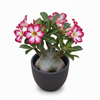





Transform your space with the elegance of a living masterpiece. Our Spiral Ficus Bonsai isn't just a plant; it's an experience. Each twist of its trunk tells a story of patience and artistry, bringing a sense of calm and sophistication to your home or office. Perfect as a distinguished gift or a personal centerpiece, this bonsai invites you to connect with nature and find a moment of peace in your busy day. Order now and own a symbol of harmony and natural beauty.
Common Name: Spiral Ficus Bonsai / بونزاي
Botanical Name: Ficus microcarpa
Variant: Spiral
Color: Green
Country of Origin: Netherlands
Family: Moraceae
Kingdom: Plantae
Clade: Tracheophytes
Order: Rosales
Family: Moraceae
Genus: Ficus
Species: F. microcarpa
Native to a wide range spanning from Sri Lanka to India, Southern China, the Malay Archipelago, the Ryukyu Islands, Australia, and New Caledonia. It is widely cultivated globally as an ornamental tree and a popular choice for bonsai due to its hardy nature.
This bonsai features small, glossy, oval-shaped dark green leaves that create a dense canopy. Its most striking feature is the thick, woody trunk expertly trained into a spiral shape. It may also develop interesting aerial roots over time, adding to its ancient, miniature-tree appearance.
Typically maintained as a medium-sized indoor plant, often ranging from 30 cm to 60 cm in height. The size is controlled through traditional bonsai pruning techniques to keep the foliage compact and proportional to the spiral trunk.
Prefers bright, indirect sunlight. It can tolerate some direct morning sun, but intense afternoon rays can scorch the leaves. It can adapt to medium light conditions, though growth will be slower and foliage less dense.
Requires consistent moisture. Water thoroughly when the top surface of the soil feels slightly dry to the touch. Avoid letting the soil dry out completely, but ensure the pot has excellent drainage to prevent root rot.
Needs a well-draining bonsai soil mix, typically composed of Akadama, pumice, and lava rock, or a high-quality potting soil enriched with perlite and pine bark to ensure aeration and moisture retention.
Thrives in warm environments between 16°C and 24°C. Being a tropical species, it loves high humidity. Frequent misting or placing the pot on a pebble tray with water will help maintain the necessary humidity levels indoors.
Feed with a balanced liquid fertilizer every two to four weeks during the growing season (spring and summer). Reduce fertilization to once a month or less during the winter when the plant's growth slows down.
Moderate care level. Requires regular pruning of new shoots to maintain the spiral shape and encourage dense leaf growth. Leaf cleaning with a damp cloth is recommended to remove dust and keep the plant healthy.
Slow to moderate growth rate, which is ideal for bonsai. Propagation is commonly achieved through stem cuttings or air layering, though achieving the spiral trunk requires specific training techniques over several years.
Can be sensitive to sudden changes in environment, which may lead to leaf drop. Watch out for pests like spider mites, scale, and mealybugs. Overwatering can lead to yellowing leaves and root decay.
Excellent air-purifying qualities, filtering common indoor toxins. Used primarily for home and office décor, it serves as a focal point for Zen-inspired interiors and is highly valued in Feng Shui for bringing positive energy and balance.
The milky sap (latex) of the Ficus microcarpa is toxic to pets if ingested and can cause skin irritation or allergic reactions in humans. It is advised to keep the plant out of reach of cats, dogs, and small children.
Transform your space with the elegance of a living masterpiece. Our Spiral Ficus Bonsai isn't just a plant; it's an experience. Each twist of its trunk tells a story of patience and artistry, bringing a sense of calm and sophistication to your home or office. Perfect as a distinguished gift or a personal centerpiece, this bonsai invites you to connect with nature and find a moment of peace in your busy day. Order now and own a symbol of harmony and natural beauty.
Common Name: Spiral Ficus Bonsai / بونزاي
Botanical Name: Ficus microcarpa
Variant: Spiral
Color: Green
Country of Origin: Netherlands
Family: Moraceae
Kingdom: Plantae
Clade: Tracheophytes
Order: Rosales
Family: Moraceae
Genus: Ficus
Species: F. microcarpa
Native to a wide range spanning from Sri Lanka to India, Southern China, the Malay Archipelago, the Ryukyu Islands, Australia, and New Caledonia. It is widely cultivated globally as an ornamental tree and a popular choice for bonsai due to its hardy nature.
This bonsai features small, glossy, oval-shaped dark green leaves that create a dense canopy. Its most striking feature is the thick, woody trunk expertly trained into a spiral shape. It may also develop interesting aerial roots over time, adding to its ancient, miniature-tree appearance.
Typically maintained as a medium-sized indoor plant, often ranging from 30 cm to 60 cm in height. The size is controlled through traditional bonsai pruning techniques to keep the foliage compact and proportional to the spiral trunk.
Prefers bright, indirect sunlight. It can tolerate some direct morning sun, but intense afternoon rays can scorch the leaves. It can adapt to medium light conditions, though growth will be slower and foliage less dense.
Requires consistent moisture. Water thoroughly when the top surface of the soil feels slightly dry to the touch. Avoid letting the soil dry out completely, but ensure the pot has excellent drainage to prevent root rot.
Needs a well-draining bonsai soil mix, typically composed of Akadama, pumice, and lava rock, or a high-quality potting soil enriched with perlite and pine bark to ensure aeration and moisture retention.
Thrives in warm environments between 16°C and 24°C. Being a tropical species, it loves high humidity. Frequent misting or placing the pot on a pebble tray with water will help maintain the necessary humidity levels indoors.
Feed with a balanced liquid fertilizer every two to four weeks during the growing season (spring and summer). Reduce fertilization to once a month or less during the winter when the plant's growth slows down.
Moderate care level. Requires regular pruning of new shoots to maintain the spiral shape and encourage dense leaf growth. Leaf cleaning with a damp cloth is recommended to remove dust and keep the plant healthy.
Slow to moderate growth rate, which is ideal for bonsai. Propagation is commonly achieved through stem cuttings or air layering, though achieving the spiral trunk requires specific training techniques over several years.
Can be sensitive to sudden changes in environment, which may lead to leaf drop. Watch out for pests like spider mites, scale, and mealybugs. Overwatering can lead to yellowing leaves and root decay.
Excellent air-purifying qualities, filtering common indoor toxins. Used primarily for home and office décor, it serves as a focal point for Zen-inspired interiors and is highly valued in Feng Shui for bringing positive energy and balance.
The milky sap (latex) of the Ficus microcarpa is toxic to pets if ingested and can cause skin irritation or allergic reactions in humans. It is advised to keep the plant out of reach of cats, dogs, and small children.


Take 20% off your first order
Enter the code below at checkout to get 20% off your first order