


Standard Rose
Introduce timeless elegance to your outdoor space with our exquisite Standard Rose Tree. Expertly grafted to form a unique 'lollipop' shape, this 'Jouri' rose stands proudly on a clear, sturdy stem, bursting into a cloud of fragrant, classic blooms. It's the perfect statement piece for patios, balconies, or framing an entryway. Easy to admire and a joy to grow, it brings vertical interest and classic romance to any setting. Order yours today and watch your garden rise to a new level of beauty.
1. Basic Identification
Common Name: Jouri Rose (Standard Rose Tree)
Botanical Name: Rosa spp.
Plant Variant: Standard
Plant Color: Pink
Plant Country: Netherlands
Arabic Name: جوري
Stems: Not available
Family: Rosaceae
Location: Outdoor
2. Taxonomy & Classification
Kingdom: Plantae
Clade: Tracheophytes
Order: Rosales
Family: Rosaceae
Genus: Rosa
3. Origin & Distribution
Roses are native to the Northern Hemisphere, primarily Asia, but are also indigenous to Europe, North America, and northwest Africa. This specific 'Standard' variant is highly cultivated and sourced from the Netherlands, a world leader in rose production.
4. Visual Characteristics
This rose tree features a clear, woody trunk topped with a rounded 'lollipop' canopy of lush, serrated green leaves. The blooms are classic 'Jouri' roses, characterized by high petal counts, a soft pink hue, and a deep, traditional fragrance.
5. Size & Dimensions
The standard stem height is typically between 60cm to 90cm, with the overall height including the floral canopy reaching 120cm to 150cm (approximately 4-5 feet). The canopy width can be maintained at 40-60cm with pruning.
6. Light Requirements
Requires full sun to thrive. Ideally, the plant should receive at least 6 to 8 hours of direct sunlight per day to ensure prolific blooming and strong stem growth.
7. Watering Needs
Requires regular and consistent watering. The soil should remain moist but not waterlogged. During hot summer months, it may need daily watering, especially if kept in a pot or planter.
8. Soil & Potting
Prefers rich, loamy, and well-draining soil with a slightly acidic to neutral pH (6.0 to 7.0). If potting, use a large, heavy container to provide stability for the vertical stem.
9. Temperature & Humidity
Thrives in temperate climates. While hardy, it appreciates protection from harsh, drying winds and extreme frost. Moderate humidity is ideal; very high humidity without airflow can lead to fungal issues.
10. Fertilization
Apply a balanced rose fertilizer or a high-phosphorus "bloom booster" every 4-6 weeks during the growing season (spring and summer) to support continuous flowering.
11. Maintenance & Care Level
Moderate maintenance. Tasks include regular deadheading (removing spent blooms) to encourage new flowers, annual pruning to maintain the 'lollipop' shape, and checking the support stake to ensure the stem stays straight.
12. Growth & Propagation
Standard rose trees are created through grafting. A specific rose variety is budded onto a tall, straight, hardy rootstock stem. They are slow to moderate growers in terms of canopy expansion.
13. Common Problems
Susceptible to aphids, spider mites, and Japanese beetles. Common fungal diseases include black spot, powdery mildew, and rust, which can be managed with proper airflow and fungicides.
14. Benefits & Uses
Provides exceptional vertical interest and architectural form to gardens. Ideal for framing entrances, decorating patios, or as a focal point in flower beds. The blooms are highly fragrant and can be used as cut flowers.
15. Toxicity & Safety
Roses are generally non-toxic to humans, cats, and dogs. However, the plant possesses sharp thorns on the stems and branches which can cause physical injury, so caution is advised when handling or placing near walkways.

Standard Rose
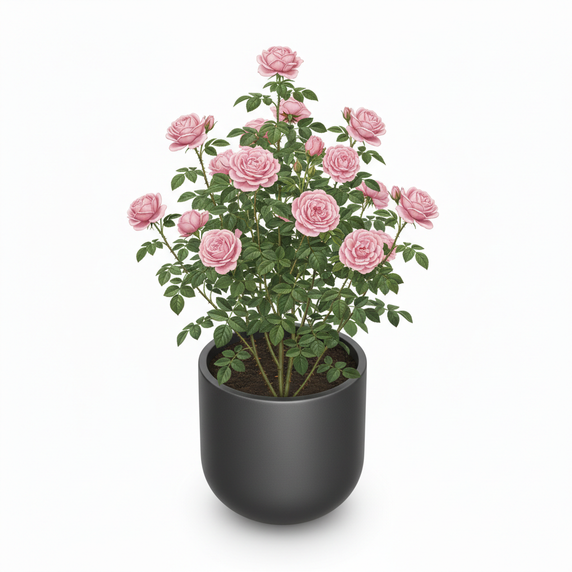
Introduce timeless elegance to your outdoor space with our exquisite Standard Rose Tree. Expertly grafted to form a unique 'lollipop' shape, this 'Jouri' rose stands proudly on a clear, sturdy stem, bursting into a cloud of fragrant, classic blooms. It's the perfect statement piece for patios, balconies, or framing an entryway. Easy to admire and a joy to grow, it brings vertical interest and classic romance to any setting. Order yours today and watch your garden rise to a new level of beauty.
1. Basic Identification
Common Name: Jouri Rose (Standard Rose Tree)
Botanical Name: Rosa spp.
Plant Variant: Standard
Plant Color: Pink
Plant Country: Netherlands
Arabic Name: جوري
Stems: Not available
Family: Rosaceae
Location: Outdoor
2. Taxonomy & Classification
Kingdom: Plantae
Clade: Tracheophytes
Order: Rosales
Family: Rosaceae
Genus: Rosa
3. Origin & Distribution
Roses are native to the Northern Hemisphere, primarily Asia, but are also indigenous to Europe, North America, and northwest Africa. This specific 'Standard' variant is highly cultivated and sourced from the Netherlands, a world leader in rose production.
4. Visual Characteristics
This rose tree features a clear, woody trunk topped with a rounded 'lollipop' canopy of lush, serrated green leaves. The blooms are classic 'Jouri' roses, characterized by high petal counts, a soft pink hue, and a deep, traditional fragrance.
5. Size & Dimensions
The standard stem height is typically between 60cm to 90cm, with the overall height including the floral canopy reaching 120cm to 150cm (approximately 4-5 feet). The canopy width can be maintained at 40-60cm with pruning.
6. Light Requirements
Requires full sun to thrive. Ideally, the plant should receive at least 6 to 8 hours of direct sunlight per day to ensure prolific blooming and strong stem growth.
7. Watering Needs
Requires regular and consistent watering. The soil should remain moist but not waterlogged. During hot summer months, it may need daily watering, especially if kept in a pot or planter.
8. Soil & Potting
Prefers rich, loamy, and well-draining soil with a slightly acidic to neutral pH (6.0 to 7.0). If potting, use a large, heavy container to provide stability for the vertical stem.
9. Temperature & Humidity
Thrives in temperate climates. While hardy, it appreciates protection from harsh, drying winds and extreme frost. Moderate humidity is ideal; very high humidity without airflow can lead to fungal issues.
10. Fertilization
Apply a balanced rose fertilizer or a high-phosphorus "bloom booster" every 4-6 weeks during the growing season (spring and summer) to support continuous flowering.
11. Maintenance & Care Level
Moderate maintenance. Tasks include regular deadheading (removing spent blooms) to encourage new flowers, annual pruning to maintain the 'lollipop' shape, and checking the support stake to ensure the stem stays straight.
12. Growth & Propagation
Standard rose trees are created through grafting. A specific rose variety is budded onto a tall, straight, hardy rootstock stem. They are slow to moderate growers in terms of canopy expansion.
13. Common Problems
Susceptible to aphids, spider mites, and Japanese beetles. Common fungal diseases include black spot, powdery mildew, and rust, which can be managed with proper airflow and fungicides.
14. Benefits & Uses
Provides exceptional vertical interest and architectural form to gardens. Ideal for framing entrances, decorating patios, or as a focal point in flower beds. The blooms are highly fragrant and can be used as cut flowers.
15. Toxicity & Safety
Roses are generally non-toxic to humans, cats, and dogs. However, the plant possesses sharp thorns on the stems and branches which can cause physical injury, so caution is advised when handling or placing near walkways.