


Strelitziaceae
Strelitzia nicolai
Bring resort-style greenery indoors with the White Bird of Paradise. Its towering stems and oversized leaves instantly elevate any space—ideal for living rooms, modern offices, and reception areas. With bright light and simple watering, it grows into a lush, sculptural centerpiece that looks premium all year round.
1. Basic Identification
Common Name: White Bird of Paradise, Giant Bird of Paradise
Botanical Name: Strelitzia nicolai
Arabic Name: عصفور الجنة
Family: Strelitziaceae
Variant: Standard
Color: Natural
2. Taxonomy & Classification
Kingdom: Plantae
Clade: Tracheophytes
Order: Zingiberales
Family: Strelitziaceae
Genus: Strelitzia
Species: S. nicolai
3. Origin & Distribution
Native to Southern Africa, specifically ranging from the Eastern Cape northwards through KwaZulu-Natal into Mozambique and Zimbabwe. It typically grows in coastal dune forests and thickets.
4. Visual Characteristics
The White Bird of Paradise is a tree-like plant with large, leathery, banana-shaped leaves arranged in a fan-like formation atop woody stems. The leaves are deep green with a glossy finish. While it rarely blooms indoors, its flowers are large and striking, featuring white sepals and blue petals nested in a dark purple-blue bract, resembling the head of a crane.
5. Size & Dimensions
In indoor environments, it typically reaches heights of 6 to 10 feet (1.8 to 3 meters), though it can grow larger in high-ceiling spaces. In its natural habitat, it can soar up to 20-30 feet. The individual leaves can grow between 3 to 6 feet long.
6. Light Requirements
Requires bright, indirect light to thrive. It can benefit from a few hours of direct morning sunlight. If kept in too much shade, growth will slow significantly and the plant may become leggy.
7. Watering Needs
Water thoroughly when the top 1-2 inches of soil feel dry to the touch. It prefers consistent moisture but is sensitive to overwatering, which can lead to root rot. Ensure excellent drainage and reduce watering frequency during the winter months.
8. Soil & Potting
Thrives in a rich, well-draining potting mix. A blend of peat moss, perlite, and pine bark is ideal. It prefers to be slightly root-bound, so do not choose a pot that is excessively large.
9. Temperature & Humidity
Prefers warm temperatures ranging between 18°C to 30°C (65°F - 85°F). It enjoys high humidity; misting the leaves regularly or using a humidifier is recommended to prevent leaf edges from browning and to mimic its tropical origin.
10. Fertilization
During the active growing season (spring and summer), apply a balanced liquid fertilizer every 2-4 weeks. Do not fertilize during the fall and winter when the plant's growth slows.
11. Maintenance & Care Level
Maintenance Level: Moderate. Large leaves collect dust, so they should be wiped down periodically with a damp cloth to maintain photosynthesis. It is natural for the large leaves to split over time, which is an adaptation to wind in the wild.
12. Growth & Propagation
This is a relatively fast-growing plant under ideal light conditions. Propagation is most successful through the division of underground rhizomes or offsets (pups) during repotting. Growing from seed is possible but very slow.
13. Common Problems
Common issues include root rot from overwatering, spider mites, and mealybugs. Brown, crispy leaf edges usually indicate low humidity or underwatering. Yellowing leaves may indicate overwatering or a lack of light.
14. Benefits & Uses
Highly valued for its air-purifying qualities and its dramatic, architectural presence. It is a favorite for interior design, often used as a focal point in living rooms, lobbies, and large offices to create a tropical, premium atmosphere.
15. Toxicity & Safety
Mildly toxic to cats, dogs, and humans if ingested. Consumption of the plant can cause gastrointestinal upset, including nausea and vomiting. Keep out of reach of pets and small children.
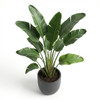
Strelitzia nicolai

Bring resort-style greenery indoors with the White Bird of Paradise. Its towering stems and oversized leaves instantly elevate any space—ideal for living rooms, modern offices, and reception areas. With bright light and simple watering, it grows into a lush, sculptural centerpiece that looks premium all year round.
1. Basic Identification
Common Name: White Bird of Paradise, Giant Bird of Paradise
Botanical Name: Strelitzia nicolai
Arabic Name: عصفور الجنة
Family: Strelitziaceae
Variant: Standard
Color: Natural
2. Taxonomy & Classification
Kingdom: Plantae
Clade: Tracheophytes
Order: Zingiberales
Family: Strelitziaceae
Genus: Strelitzia
Species: S. nicolai
3. Origin & Distribution
Native to Southern Africa, specifically ranging from the Eastern Cape northwards through KwaZulu-Natal into Mozambique and Zimbabwe. It typically grows in coastal dune forests and thickets.
4. Visual Characteristics
The White Bird of Paradise is a tree-like plant with large, leathery, banana-shaped leaves arranged in a fan-like formation atop woody stems. The leaves are deep green with a glossy finish. While it rarely blooms indoors, its flowers are large and striking, featuring white sepals and blue petals nested in a dark purple-blue bract, resembling the head of a crane.
5. Size & Dimensions
In indoor environments, it typically reaches heights of 6 to 10 feet (1.8 to 3 meters), though it can grow larger in high-ceiling spaces. In its natural habitat, it can soar up to 20-30 feet. The individual leaves can grow between 3 to 6 feet long.
6. Light Requirements
Requires bright, indirect light to thrive. It can benefit from a few hours of direct morning sunlight. If kept in too much shade, growth will slow significantly and the plant may become leggy.
7. Watering Needs
Water thoroughly when the top 1-2 inches of soil feel dry to the touch. It prefers consistent moisture but is sensitive to overwatering, which can lead to root rot. Ensure excellent drainage and reduce watering frequency during the winter months.
8. Soil & Potting
Thrives in a rich, well-draining potting mix. A blend of peat moss, perlite, and pine bark is ideal. It prefers to be slightly root-bound, so do not choose a pot that is excessively large.
9. Temperature & Humidity
Prefers warm temperatures ranging between 18°C to 30°C (65°F - 85°F). It enjoys high humidity; misting the leaves regularly or using a humidifier is recommended to prevent leaf edges from browning and to mimic its tropical origin.
10. Fertilization
During the active growing season (spring and summer), apply a balanced liquid fertilizer every 2-4 weeks. Do not fertilize during the fall and winter when the plant's growth slows.
11. Maintenance & Care Level
Maintenance Level: Moderate. Large leaves collect dust, so they should be wiped down periodically with a damp cloth to maintain photosynthesis. It is natural for the large leaves to split over time, which is an adaptation to wind in the wild.
12. Growth & Propagation
This is a relatively fast-growing plant under ideal light conditions. Propagation is most successful through the division of underground rhizomes or offsets (pups) during repotting. Growing from seed is possible but very slow.
13. Common Problems
Common issues include root rot from overwatering, spider mites, and mealybugs. Brown, crispy leaf edges usually indicate low humidity or underwatering. Yellowing leaves may indicate overwatering or a lack of light.
14. Benefits & Uses
Highly valued for its air-purifying qualities and its dramatic, architectural presence. It is a favorite for interior design, often used as a focal point in living rooms, lobbies, and large offices to create a tropical, premium atmosphere.
15. Toxicity & Safety
Mildly toxic to cats, dogs, and humans if ingested. Consumption of the plant can cause gastrointestinal upset, including nausea and vomiting. Keep out of reach of pets and small children.