

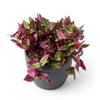





Instant color for shelves, desks, and hanging baskets—Tradescantia zebrina delivers rich purple foliage with minimal effort. It grows fast, bounces back after trims, and propagates easily so you can create a fuller pot in weeks. A top-value décor plant that looks premium and stays vibrant in bright indoor light.
Common Name: Inch Plant, Silver Inch Plant, Wandering Dude
Botanical Name: Tradescantia zebrina
Plant Variant: Standard
Plant Color: Multicolor
Plant Country: Unknown
Arabic Name: مكحلة
Stems: 1
Family: Commelinaceae
Kingdom: Plantae
Clade: Tracheophytes
Order: Commelinales
Family: Commelinaceae
Genus: Tradescantia
Species: T. zebrina
Tradescantia zebrina is native to Mexico, Central America, and Colombia. It has become naturalized in many tropical and subtropical regions worldwide, including parts of Asia, Africa, and Australia, often thriving in moist shaded areas.
This plant is known for its striking foliage. The oval leaves feature two broad silver-white stripes on the upper surface, sandwiching a central green stripe and framed by green margins. The entire underside of the leaf is a vibrant, uniform deep purple. The stems are succulent-like and fleshy, often rooting at the nodes.
Tradescantia zebrina has a trailing or creeping growth habit. Indoors, its stems can trail 2 to 3 feet (60–90 cm) or more in hanging baskets. The individual leaves typically grow 1 to 3 inches in length.
Prefers bright, indirect sunlight. While it can tolerate medium light, its iconic purple and silver coloration will fade, and the plant will become "leggy" (stretched stems) as it reaches for more light. Direct afternoon sun should be avoided as it can scorch the leaves.
Requires consistent moisture but is sensitive to overwatering. Water when the top inch of soil feels dry to the touch. It is best to water the soil directly and avoid getting water on the leaves, which can lead to rot.
Thrives in a well-draining potting soil. A standard high-quality indoor potting mix with added perlite or peat moss is ideal to ensure proper aeration and drainage.
Prefers warm temperatures between 60°F and 80°F (15°C to 27°C). It enjoys higher humidity levels, making it an excellent choice for bathrooms, but it adapts well to average household humidity.
Feed every 2–4 weeks during the active growing season (spring and summer) using a balanced liquid fertilizer diluted to half strength. Reduce fertilization during the dormant winter months.
Care Level: Easy. It is a low-maintenance plant that grows rapidly. Regular pinching back of the stems is recommended to encourage bushier growth and prevent the plant from becoming too sparse or leggy.
This plant has a fast growth rate. It is exceptionally easy to propagate via stem cuttings. Cuttings can be rooted directly in water or moist soil, usually developing roots within just a few days.
Common issues include root rot from overwatering, loss of leaf color due to low light, and occasional pests like spider mites or aphids. Older stems may naturally lose their leaves and appear thin; this is a signal to prune and restart from cuttings.
Primarily used for its ornamental value in hanging baskets, on shelves, or as a ground cover in warm climates. It is also recognized for its air-purifying qualities, helping to remove toxins from indoor environments.
Tradescantia zebrina is considered mildly toxic to pets (cats, dogs, and horses). The sap contains calcium oxalate crystals which can cause skin irritation or localized swelling if ingested or handled frequently by sensitive individuals.
Instant color for shelves, desks, and hanging baskets—Tradescantia zebrina delivers rich purple foliage with minimal effort. It grows fast, bounces back after trims, and propagates easily so you can create a fuller pot in weeks. A top-value décor plant that looks premium and stays vibrant in bright indoor light.
Common Name: Inch Plant, Silver Inch Plant, Wandering Dude
Botanical Name: Tradescantia zebrina
Plant Variant: Standard
Plant Color: Multicolor
Plant Country: Unknown
Arabic Name: مكحلة
Stems: 1
Family: Commelinaceae
Kingdom: Plantae
Clade: Tracheophytes
Order: Commelinales
Family: Commelinaceae
Genus: Tradescantia
Species: T. zebrina
Tradescantia zebrina is native to Mexico, Central America, and Colombia. It has become naturalized in many tropical and subtropical regions worldwide, including parts of Asia, Africa, and Australia, often thriving in moist shaded areas.
This plant is known for its striking foliage. The oval leaves feature two broad silver-white stripes on the upper surface, sandwiching a central green stripe and framed by green margins. The entire underside of the leaf is a vibrant, uniform deep purple. The stems are succulent-like and fleshy, often rooting at the nodes.
Tradescantia zebrina has a trailing or creeping growth habit. Indoors, its stems can trail 2 to 3 feet (60–90 cm) or more in hanging baskets. The individual leaves typically grow 1 to 3 inches in length.
Prefers bright, indirect sunlight. While it can tolerate medium light, its iconic purple and silver coloration will fade, and the plant will become "leggy" (stretched stems) as it reaches for more light. Direct afternoon sun should be avoided as it can scorch the leaves.
Requires consistent moisture but is sensitive to overwatering. Water when the top inch of soil feels dry to the touch. It is best to water the soil directly and avoid getting water on the leaves, which can lead to rot.
Thrives in a well-draining potting soil. A standard high-quality indoor potting mix with added perlite or peat moss is ideal to ensure proper aeration and drainage.
Prefers warm temperatures between 60°F and 80°F (15°C to 27°C). It enjoys higher humidity levels, making it an excellent choice for bathrooms, but it adapts well to average household humidity.
Feed every 2–4 weeks during the active growing season (spring and summer) using a balanced liquid fertilizer diluted to half strength. Reduce fertilization during the dormant winter months.
Care Level: Easy. It is a low-maintenance plant that grows rapidly. Regular pinching back of the stems is recommended to encourage bushier growth and prevent the plant from becoming too sparse or leggy.
This plant has a fast growth rate. It is exceptionally easy to propagate via stem cuttings. Cuttings can be rooted directly in water or moist soil, usually developing roots within just a few days.
Common issues include root rot from overwatering, loss of leaf color due to low light, and occasional pests like spider mites or aphids. Older stems may naturally lose their leaves and appear thin; this is a signal to prune and restart from cuttings.
Primarily used for its ornamental value in hanging baskets, on shelves, or as a ground cover in warm climates. It is also recognized for its air-purifying qualities, helping to remove toxins from indoor environments.
Tradescantia zebrina is considered mildly toxic to pets (cats, dogs, and horses). The sap contains calcium oxalate crystals which can cause skin irritation or localized swelling if ingested or handled frequently by sensitive individuals.




Take 20% off your first order
Enter the code below at checkout to get 20% off your first order