


Arecaceae
Washingtonia robusta
Turn any space into a resort-style statement with the Washington Palm. Its wide, elegant fan leaves instantly add height, texture, and a premium tropical feel—perfect for patios, entryways, and bright indoor atriums. Easy-care and heat tolerant, it’s a top choice for modern homes and business receptions that want greenery with real impact.
1. Basic Identification
Common Name: Washington Palm, Mexican Fan Palm
Botanical Name: Washingtonia robusta
Arabic Name: واشنطوني
Plant Variant: Standard
Color: Natural
Country of Origin: Turkey
2. Taxonomy & Classification
Kingdom: Plantae
Order: Arecales
Family: Arecaceae
Genus: Washingtonia
Species: Washingtonia robusta
3. Origin & Distribution
Native to the desert regions of northwestern Mexico, specifically Baja California and Sonora. It has been widely naturalized in tropical and subtropical regions across the globe including California, Florida, and the Mediterranean.
4. Visual Characteristics
The Washington Palm features a tall, slender trunk topped with a crown of large, fan-shaped green leaves (fronds). A distinctive feature is the presence of white, thread-like filaments hanging from the leaf segments, giving it a "shaggy" appearance when young. The petioles (leaf stems) are lined with sharp teeth.
5. Size & Dimensions
In its natural habitat, it can reach heights of 25 to 30 meters. When grown in containers or as a medium-sized indoor specimen, its growth is limited by the pot size, typically maintaining a manageable height for high-ceiling spaces or atriums.
6. Light Requirements
Thrives in bright, direct sunlight to very bright indirect light. It is highly light-demanding and performs best near south-facing windows or in open outdoor areas.
7. Watering Needs
Moderately drought-tolerant once established. Water regularly during the growing season, allowing the top 2-3 inches of soil to dry out between waterings. Avoid waterlogging the soil to prevent root rot.
8. Soil & Potting
Requires well-draining soil. A sandy loam or a specialized palm potting mix is ideal. Ensure the container has adequate drainage holes to allow excess water to escape.
9. Temperature & Humidity
Highly heat-tolerant and can withstand temperatures up to 40°C or more. It is also relatively cold-hardy for a palm, surviving temperatures down to -5°C. It prefers low to moderate humidity, making it suitable for drier indoor environments.
10. Fertilization
Apply a balanced, slow-release palm fertilizer containing micronutrients (like magnesium and potassium) twice a year during the spring and summer months.
11. Maintenance & Care Level
Care Level: Easy/Low Maintenance. Pruning is only necessary to remove dead or brown fronds at the base of the crown to maintain a clean appearance.
12. Growth & Propagation
A fast-growing species compared to other palms. Propagation is primarily achieved through seeds, which germinate relatively easily in warm, moist conditions.
13. Common Problems
Susceptible to spider mites and scale insects if the air is too dry. Overwatering can lead to root rot or leaf spot diseases. Nutrient deficiencies (yellowing tips) can occur if not fertilized with palm-specific nutrients.
14. Benefits & Uses
Recognized for its air-purifying qualities, it helps filter common indoor toxins. It is primarily used as an architectural specimen plant for landscaping, large lobbies, and tropical-themed interiors.
15. Toxicity & Safety
The Washington Palm is generally considered non-toxic to humans, dogs, and cats. However, the sharp teeth along the leaf stems can cause physical injury, so it should be handled with care.
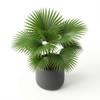
Washingtonia robusta

Turn any space into a resort-style statement with the Washington Palm. Its wide, elegant fan leaves instantly add height, texture, and a premium tropical feel—perfect for patios, entryways, and bright indoor atriums. Easy-care and heat tolerant, it’s a top choice for modern homes and business receptions that want greenery with real impact.
1. Basic Identification
Common Name: Washington Palm, Mexican Fan Palm
Botanical Name: Washingtonia robusta
Arabic Name: واشنطوني
Plant Variant: Standard
Color: Natural
Country of Origin: Turkey
2. Taxonomy & Classification
Kingdom: Plantae
Order: Arecales
Family: Arecaceae
Genus: Washingtonia
Species: Washingtonia robusta
3. Origin & Distribution
Native to the desert regions of northwestern Mexico, specifically Baja California and Sonora. It has been widely naturalized in tropical and subtropical regions across the globe including California, Florida, and the Mediterranean.
4. Visual Characteristics
The Washington Palm features a tall, slender trunk topped with a crown of large, fan-shaped green leaves (fronds). A distinctive feature is the presence of white, thread-like filaments hanging from the leaf segments, giving it a "shaggy" appearance when young. The petioles (leaf stems) are lined with sharp teeth.
5. Size & Dimensions
In its natural habitat, it can reach heights of 25 to 30 meters. When grown in containers or as a medium-sized indoor specimen, its growth is limited by the pot size, typically maintaining a manageable height for high-ceiling spaces or atriums.
6. Light Requirements
Thrives in bright, direct sunlight to very bright indirect light. It is highly light-demanding and performs best near south-facing windows or in open outdoor areas.
7. Watering Needs
Moderately drought-tolerant once established. Water regularly during the growing season, allowing the top 2-3 inches of soil to dry out between waterings. Avoid waterlogging the soil to prevent root rot.
8. Soil & Potting
Requires well-draining soil. A sandy loam or a specialized palm potting mix is ideal. Ensure the container has adequate drainage holes to allow excess water to escape.
9. Temperature & Humidity
Highly heat-tolerant and can withstand temperatures up to 40°C or more. It is also relatively cold-hardy for a palm, surviving temperatures down to -5°C. It prefers low to moderate humidity, making it suitable for drier indoor environments.
10. Fertilization
Apply a balanced, slow-release palm fertilizer containing micronutrients (like magnesium and potassium) twice a year during the spring and summer months.
11. Maintenance & Care Level
Care Level: Easy/Low Maintenance. Pruning is only necessary to remove dead or brown fronds at the base of the crown to maintain a clean appearance.
12. Growth & Propagation
A fast-growing species compared to other palms. Propagation is primarily achieved through seeds, which germinate relatively easily in warm, moist conditions.
13. Common Problems
Susceptible to spider mites and scale insects if the air is too dry. Overwatering can lead to root rot or leaf spot diseases. Nutrient deficiencies (yellowing tips) can occur if not fertilized with palm-specific nutrients.
14. Benefits & Uses
Recognized for its air-purifying qualities, it helps filter common indoor toxins. It is primarily used as an architectural specimen plant for landscaping, large lobbies, and tropical-themed interiors.
15. Toxicity & Safety
The Washington Palm is generally considered non-toxic to humans, dogs, and cats. However, the sharp teeth along the leaf stems can cause physical injury, so it should be handled with care.