

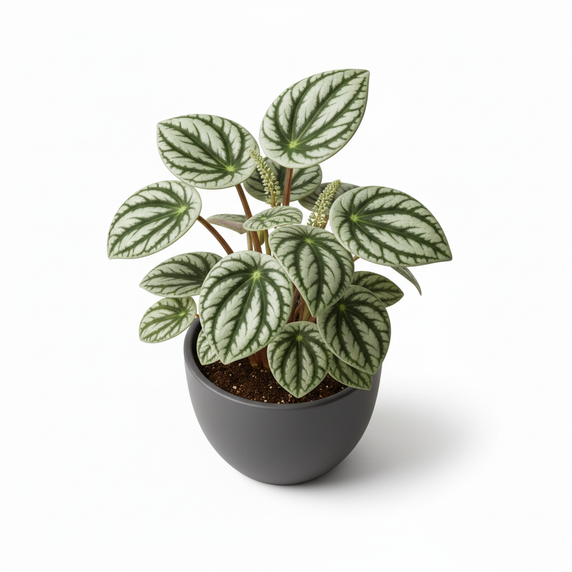





Bring a slice of the tropics indoors with the Watermelon Peperomia! Its mesmerizing, silver-striped leaves perfectly mimic a watermelon's rind, making it an instant conversation starter. Perfectly sized for desks, shelves, and tabletops, this plant is not only stunning but also completely safe for your furry friends. Its easy-care nature makes it a fantastic choice for both seasoned plant parents and beginners. Add this must-have plant to your collection and watch your space transform.
Common Name: Watermelon Peperomia
Botanical Name: Peperomia argyreia
Arabic Name: ببروميا مائي
Plant Variant: Standard
Plant Color: Natural
Plant Country: Netherlands
Family: Piperaceae
Kingdom: Plantae
Clade: Tracheophytes
Order: Piperales
Family: Piperaceae
Genus: Peperomia
Species: Peperomia argyreia
Native to South America, specifically Brazil, Bolivia, and Ecuador. It thrives in the tropical rainforest floor environment and has become a popular ornamental houseplant worldwide.
The plant features distinct, peltate (shield-shaped) leaves with a fleshy texture. The leaf surface is marked with striking alternating stripes of silver and dark green, resembling the rind of a watermelon. The stems (petioles) are thin and often display a deep reddish or burgundy hue.
A compact, slow-growing plant that typically reaches a height and spread of 6 to 12 inches (15–30 cm), making it ideal for small indoor spaces.
Prefers bright, indirect sunlight. Direct sun can scorch the delicate leaves, while too little light may cause the plant to become leggy and lose its vibrant silver variegation.
Allow the top 50–75% of the soil to dry out before watering. This plant is sensitive to overwatering; its thick leaves store some water, giving it succulent-like properties.
Requires a well-draining potting medium. A mix of peat moss and perlite, or a high-quality indoor potting soil with added drainage material like orchid bark, is recommended.
Thrives in standard household temperatures between 65°F and 80°F (18°C–27°C). It appreciates higher humidity levels (50% or more) but can adapt to average indoor humidity.
Feed with a balanced liquid houseplant fertilizer diluted to half-strength once a month during the growing season (spring and summer). No fertilization is needed in winter.
Maintenance level is considered easy. Regular care involves removing yellowing or dead leaves and occasionally wiping the leaves with a damp cloth to remove dust.
Grows at a moderate rate. Propagation is easily achieved through leaf cuttings or stem cuttings placed in water or directly into moist soil.
Susceptible to root rot if overwatered. Common pests include spider mites and mealybugs. Leaf curling may occur due to underwatering or low humidity.
An excellent air-purifying plant that adds aesthetic value to home and office environments. Its compact size makes it perfect for desks, terrariums, and small apartments.
Non-toxic to humans, cats, and dogs. It is a pet-safe plant according to the ASPCA.
Bring a slice of the tropics indoors with the Watermelon Peperomia! Its mesmerizing, silver-striped leaves perfectly mimic a watermelon's rind, making it an instant conversation starter. Perfectly sized for desks, shelves, and tabletops, this plant is not only stunning but also completely safe for your furry friends. Its easy-care nature makes it a fantastic choice for both seasoned plant parents and beginners. Add this must-have plant to your collection and watch your space transform.
Common Name: Watermelon Peperomia
Botanical Name: Peperomia argyreia
Arabic Name: ببروميا مائي
Plant Variant: Standard
Plant Color: Natural
Plant Country: Netherlands
Family: Piperaceae
Kingdom: Plantae
Clade: Tracheophytes
Order: Piperales
Family: Piperaceae
Genus: Peperomia
Species: Peperomia argyreia
Native to South America, specifically Brazil, Bolivia, and Ecuador. It thrives in the tropical rainforest floor environment and has become a popular ornamental houseplant worldwide.
The plant features distinct, peltate (shield-shaped) leaves with a fleshy texture. The leaf surface is marked with striking alternating stripes of silver and dark green, resembling the rind of a watermelon. The stems (petioles) are thin and often display a deep reddish or burgundy hue.
A compact, slow-growing plant that typically reaches a height and spread of 6 to 12 inches (15–30 cm), making it ideal for small indoor spaces.
Prefers bright, indirect sunlight. Direct sun can scorch the delicate leaves, while too little light may cause the plant to become leggy and lose its vibrant silver variegation.
Allow the top 50–75% of the soil to dry out before watering. This plant is sensitive to overwatering; its thick leaves store some water, giving it succulent-like properties.
Requires a well-draining potting medium. A mix of peat moss and perlite, or a high-quality indoor potting soil with added drainage material like orchid bark, is recommended.
Thrives in standard household temperatures between 65°F and 80°F (18°C–27°C). It appreciates higher humidity levels (50% or more) but can adapt to average indoor humidity.
Feed with a balanced liquid houseplant fertilizer diluted to half-strength once a month during the growing season (spring and summer). No fertilization is needed in winter.
Maintenance level is considered easy. Regular care involves removing yellowing or dead leaves and occasionally wiping the leaves with a damp cloth to remove dust.
Grows at a moderate rate. Propagation is easily achieved through leaf cuttings or stem cuttings placed in water or directly into moist soil.
Susceptible to root rot if overwatered. Common pests include spider mites and mealybugs. Leaf curling may occur due to underwatering or low humidity.
An excellent air-purifying plant that adds aesthetic value to home and office environments. Its compact size makes it perfect for desks, terrariums, and small apartments.
Non-toxic to humans, cats, and dogs. It is a pet-safe plant according to the ASPCA.



Take 20% off your first order
Enter the code below at checkout to get 20% off your first order