


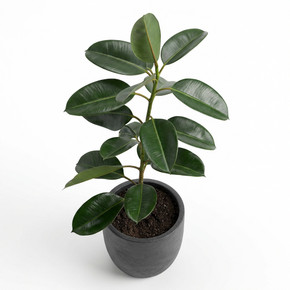


Make a statement with Agave americana—an iconic, sculptural succulent that turns any sunny entrance, patio, or landscape corner into a designer feature. With its blue-gray rosette and rugged drought tolerance, it delivers maximum impact with minimal watering. Plant it in a well-drained pot, give it sunshine, and enjoy a bold, modern look year-round—just remember to place it safely away from walkways and handle with care.
Common Name: Century Plant
Botanical Name: Agave americana
Former Name: Not available
Plant Type: Succulent (Agave)
Plant Code / SKU: PLT-0357
Alternative Names:
American agave
Maguey
American aloe
Order: Asparagales
Family: Asparagaceae
Subfamily: Agavoideae
Genus: Agave
Species: A. americana
Native to semiarid and arid regions of north-central Mexico. Widely naturalized in the southern United States (California, Texas, Arizona), the Mediterranean basin, the Caribbean, parts of Africa, Asia, and Australia.
Forms a solitary or clumping rosette of stiff, succulent leaves. Leaves are blue-gray to silvery-green, often edged with prominent marginal teeth and tipped with a sharp terminal spine. Mature plants produce a tall central flower spike with yellowish-green tubular flowers.
Rosette diameter: typically 1.5–3 m (5–10 ft).
Leaf length: up to 1.8 m (6 ft).
Plant height (without inflorescence): up to 1.2 m (4 ft).
Flower spike height: up to 8 m (25 ft) in cultivation, up to 12 m (40 ft) in the wild.
Full sun for best leaf color and compact growth. Tolerates light shade but may become leggy and lose blue coloration.
Extremely drought tolerant once established. Water sparingly: allow soil to dry out completely between deep waterings. Reduce watering frequency in winter.
Requires well-drained, sandy or gravelly soil. Ideal pH: neutral to slightly acidic (6.0–7.0). In containers, use a specialty cactus or succulent mix with added grit.
Hardy USDA zones 8–11 (minimum temperatures around −12 °C (10 °F)). Prefers warm temperatures 20–30 °C (68–86 °F). Low humidity; good air circulation helps prevent fungal issues.
Low feeder. Apply a balanced, slow-release or liquid succulent fertilizer at half strength in spring and mid-summer. Avoid high-nitrogen formulas that encourage soft growth.
Low maintenance. Remove dead or damaged leaves to maintain appearance and prevent pest habitat. Protect from prolonged frost and excessive moisture.
Monocarpic: blooms once then dies, but typically offsets (pups) around the base. Remove and transplant pups in spring. Seed propagation possible but slow-growing.
Overwatering can cause root and crown rot. In humid climates, leaf rot may occur. Susceptible to mealybugs, scale insects, and agave snout weevil (Scyphophorus acupunctatus).
Ornamental specimen and landscape accent. Traditional source of pulque and agave fibers for rope and textiles. Used in xeriscaping and container plantings.
Sharp marginal teeth and terminal spine can cause physical injury. Leaf sap may cause skin irritation or dermatitis. Toxic if ingested: may cause nausea, vomiting, and diarrhea. Use gloves and protective equipment when handling.
Make a statement with Agave americana—an iconic, sculptural succulent that turns any sunny entrance, patio, or landscape corner into a designer feature. With its blue-gray rosette and rugged drought tolerance, it delivers maximum impact with minimal watering. Plant it in a well-drained pot, give it sunshine, and enjoy a bold, modern look year-round—just remember to place it safely away from walkways and handle with care.
Common Name: Century Plant
Botanical Name: Agave americana
Former Name: Not available
Plant Type: Succulent (Agave)
Plant Code / SKU: PLT-0357
Alternative Names:
American agave
Maguey
American aloe
Order: Asparagales
Family: Asparagaceae
Subfamily: Agavoideae
Genus: Agave
Species: A. americana
Native to semiarid and arid regions of north-central Mexico. Widely naturalized in the southern United States (California, Texas, Arizona), the Mediterranean basin, the Caribbean, parts of Africa, Asia, and Australia.
Forms a solitary or clumping rosette of stiff, succulent leaves. Leaves are blue-gray to silvery-green, often edged with prominent marginal teeth and tipped with a sharp terminal spine. Mature plants produce a tall central flower spike with yellowish-green tubular flowers.
Rosette diameter: typically 1.5–3 m (5–10 ft).
Leaf length: up to 1.8 m (6 ft).
Plant height (without inflorescence): up to 1.2 m (4 ft).
Flower spike height: up to 8 m (25 ft) in cultivation, up to 12 m (40 ft) in the wild.
Full sun for best leaf color and compact growth. Tolerates light shade but may become leggy and lose blue coloration.
Extremely drought tolerant once established. Water sparingly: allow soil to dry out completely between deep waterings. Reduce watering frequency in winter.
Requires well-drained, sandy or gravelly soil. Ideal pH: neutral to slightly acidic (6.0–7.0). In containers, use a specialty cactus or succulent mix with added grit.
Hardy USDA zones 8–11 (minimum temperatures around −12 °C (10 °F)). Prefers warm temperatures 20–30 °C (68–86 °F). Low humidity; good air circulation helps prevent fungal issues.
Low feeder. Apply a balanced, slow-release or liquid succulent fertilizer at half strength in spring and mid-summer. Avoid high-nitrogen formulas that encourage soft growth.
Low maintenance. Remove dead or damaged leaves to maintain appearance and prevent pest habitat. Protect from prolonged frost and excessive moisture.
Monocarpic: blooms once then dies, but typically offsets (pups) around the base. Remove and transplant pups in spring. Seed propagation possible but slow-growing.
Overwatering can cause root and crown rot. In humid climates, leaf rot may occur. Susceptible to mealybugs, scale insects, and agave snout weevil (Scyphophorus acupunctatus).
Ornamental specimen and landscape accent. Traditional source of pulque and agave fibers for rope and textiles. Used in xeriscaping and container plantings.
Sharp marginal teeth and terminal spine can cause physical injury. Leaf sap may cause skin irritation or dermatitis. Toxic if ingested: may cause nausea, vomiting, and diarrhea. Use gloves and protective equipment when handling.

Take 20% off your first order
Enter the code below at checkout to get 20% off your first order