





Turn any corner into a designer space with Alocasia Amazonica. Its sculptural, high-contrast leaves deliver instant impact—perfect for modern homes, receptions, and meeting rooms. Give it bright indirect light, warm temperatures, and a little humidity, and it will reward you with bold, upright foliage that looks like living artwork. (Keep out of reach of pets and children.)
Common Name: Alocasia Amazonica, African Mask Plant, Kris Plant
Botanical Name: Alocasia × amazonica
Arabic Name: ألوكاسيا
Plant Variant: Amazonica
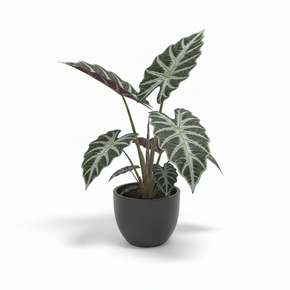
Plant Color: Deep dark green with striking silver-white veins and purple undersides
Family: Araceae
Genus: Alocasia
Species: A hybrid of Alocasia longiloba × Alocasia sanderiana
Kingdom: Plantae
Despite its name, Alocasia Amazonica is not from the Amazon rainforest. It is a nursery-bred hybrid created in the 1950s in Florida. Its parent species are native to the tropical rainforests of Southeast Asia, specifically the Philippines.
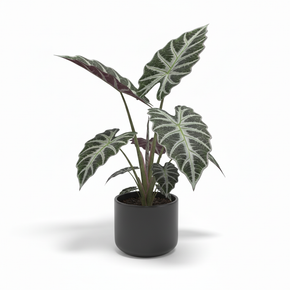
This plant is known for its dramatic, arrow or shield-shaped leaves. The foliage is a glossy, dark emerald green that appears almost black, contrasted by prominent, thick white or silvery-green primary veins. The leaf edges are distinctly scalloped or wavy, and the undersides feature a rich burgundy-purple hue.
As a houseplant, it typically reaches a height and spread of 1 to 2 feet (30–60 cm). Its compact but upright growth habit makes it suitable for tabletops or medium-sized floor displays.
Requires bright, indirect light to maintain its vibrant colors. Direct sunlight will scorch the leaves, while too little light can lead to leggy growth or dormant states.
Prefer soil that is consistently moist but well-drained. Water when the top 1 inch of soil feels dry. Be careful not to let the plant sit in water as it is susceptible to root rot. It is sensitive to chlorine and fluoride found in tap water; using filtered or distilled water is recommended.
Needs an airy, well-draining potting mix. A combination of peat moss, perlite, and orchid bark (an "aroid mix") is ideal to ensure proper aeration for the roots.
Thrives in warm temperatures between 18°C and 27°C (65°F–80°F). It requires high humidity (above 60%) to thrive. Use a humidifier, pebble tray, or place it in naturally humid areas like a bright bathroom.
Feed monthly during the growing season (spring and summer) with a balanced liquid fertilizer diluted to half strength. Do not fertilize during the winter dormant period.
Maintenance Level: Intermediate to High. It requires consistent attention to humidity and watering schedules to prevent leaf drop or dormancy.
Growth Rate: Moderate. Propagation is best achieved through division of the rhizomes or by separating small corm offsets during repotting in the spring.
Susceptible to spider mites, especially in dry environments. Other issues include leaf spotting from fungal infections or yellowing leaves caused by overwatering or cold drafts.
Highly valued for its architectural beauty and air-purifying qualities. It serves as a stunning focal point in modern interior design and thrives in humid environments like terrariums or greenhouses.
Toxic to both humans and pets. Like most Alocasias, it contains calcium oxalate crystals, which can cause severe swelling and irritation of the mouth, throat, and digestive tract if ingested.
Turn any corner into a designer space with Alocasia Amazonica. Its sculptural, high-contrast leaves deliver instant impact—perfect for modern homes, receptions, and meeting rooms. Give it bright indirect light, warm temperatures, and a little humidity, and it will reward you with bold, upright foliage that looks like living artwork. (Keep out of reach of pets and children.)
Common Name: Alocasia Amazonica, African Mask Plant, Kris Plant
Botanical Name: Alocasia × amazonica
Arabic Name: ألوكاسيا
Plant Variant: Amazonica
Plant Color: Deep dark green with striking silver-white veins and purple undersides
Family: Araceae
Genus: Alocasia
Species: A hybrid of Alocasia longiloba × Alocasia sanderiana
Kingdom: Plantae
Despite its name, Alocasia Amazonica is not from the Amazon rainforest. It is a nursery-bred hybrid created in the 1950s in Florida. Its parent species are native to the tropical rainforests of Southeast Asia, specifically the Philippines.
This plant is known for its dramatic, arrow or shield-shaped leaves. The foliage is a glossy, dark emerald green that appears almost black, contrasted by prominent, thick white or silvery-green primary veins. The leaf edges are distinctly scalloped or wavy, and the undersides feature a rich burgundy-purple hue.
As a houseplant, it typically reaches a height and spread of 1 to 2 feet (30–60 cm). Its compact but upright growth habit makes it suitable for tabletops or medium-sized floor displays.
Requires bright, indirect light to maintain its vibrant colors. Direct sunlight will scorch the leaves, while too little light can lead to leggy growth or dormant states.
Prefer soil that is consistently moist but well-drained. Water when the top 1 inch of soil feels dry. Be careful not to let the plant sit in water as it is susceptible to root rot. It is sensitive to chlorine and fluoride found in tap water; using filtered or distilled water is recommended.
Needs an airy, well-draining potting mix. A combination of peat moss, perlite, and orchid bark (an "aroid mix") is ideal to ensure proper aeration for the roots.
Thrives in warm temperatures between 18°C and 27°C (65°F–80°F). It requires high humidity (above 60%) to thrive. Use a humidifier, pebble tray, or place it in naturally humid areas like a bright bathroom.
Feed monthly during the growing season (spring and summer) with a balanced liquid fertilizer diluted to half strength. Do not fertilize during the winter dormant period.
Maintenance Level: Intermediate to High. It requires consistent attention to humidity and watering schedules to prevent leaf drop or dormancy.
Growth Rate: Moderate. Propagation is best achieved through division of the rhizomes or by separating small corm offsets during repotting in the spring.
Susceptible to spider mites, especially in dry environments. Other issues include leaf spotting from fungal infections or yellowing leaves caused by overwatering or cold drafts.
Highly valued for its architectural beauty and air-purifying qualities. It serves as a stunning focal point in modern interior design and thrives in humid environments like terrariums or greenhouses.
Toxic to both humans and pets. Like most Alocasias, it contains calcium oxalate crystals, which can cause severe swelling and irritation of the mouth, throat, and digestive tract if ingested.





Take 20% off your first order
Enter the code below at checkout to get 20% off your first order