


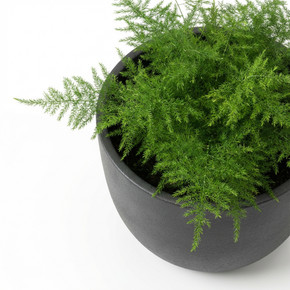



Bring effortless elegance to any space with the Asparagus Fern. Its ultra-fine, cloud-like greenery instantly softens interiors, looks stunning in hanging baskets, and fills corners with a light, airy texture. With simple watering and bright indirect light, it grows quickly into a full, cascading display—perfect for homes, reception areas, and stylish offices.
Common Name: Asparagus Fern, Lace Fern, Common Asparagus Fern
Botanical Name: Asparagus setaceus
Arabic Name: سبراكس ناعم
Plant Variant: Standard
Plant Color: Natural
Family: Asparagaceae
Genus: Asparagus
Species: Asparagus setaceus
Class: Equisetopsida
Order: Asparagales
The Asparagus setaceus is native to Southern Africa, spanning from South Africa to East Africa. It has been introduced to many tropical and subtropical regions worldwide as an ornamental plant.
Despite its name, it is not a true fern but a member of the asparagus family. It features delicate, feathery, bright green foliage composed of fine, needle-like branchlets called cladodes. Mature plants may produce small, bell-shaped white or greenish flowers followed by tiny green berries that turn black when ripe.
When grown indoors, it typically reaches a height and spread of 1 to 3 feet (30–90 cm). In its natural habitat or under ideal outdoor conditions, it can develop a climbing habit and reach several meters in length.
This plant thrives in bright, indirect light. Avoid placing it in direct midday sun, which can scorch the delicate foliage. It can tolerate partial shade, but growth may slow down and the foliage may become less dense.
Keep the soil consistently moist but never waterlogged. Water when the top inch of soil feels dry. During winter months, reduce watering frequency but do not allow the root ball to dry out completely.
Requires a rich, loose, and well-draining potting mix. A peat-based mix with added perlite or sand is ideal for maintaining moisture while ensuring proper drainage.
Prefers moderate temperatures between 15°C and 24°C (60°F–75°F). It enjoys high humidity; misting the foliage regularly or using a humidifier is recommended, especially in dry indoor environments.
Feed with a balanced liquid fertilizer diluted to half-strength once a month during the active growing season (spring and summer). No fertilization is necessary during the winter dormant period.
Easy to Moderate. The plant is relatively low-maintenance but requires regular pruning to remove old, yellowing fronds and to maintain its shape. Be careful of its small thorns on mature stems.
It is a fast grower. Propagation is most commonly achieved through division of the root clump during repotting in spring. It can also be grown from seeds found within its berries.
Common issues include yellowing needles due to low humidity or underwatering, and browning due to direct sun exposure. It can be susceptible to spider mites, mealybugs, and scale insects.
Highly valued for its air-purifying qualities and aesthetic appeal. It is a popular choice for hanging baskets, mixed containers, and floral arrangements due to its elegant, cascading texture.
Toxic to pets. Ingestion of the berries can cause gastrointestinal upset in dogs and cats, and skin contact with the sap may cause allergic dermatitis in sensitive individuals.
Bring effortless elegance to any space with the Asparagus Fern. Its ultra-fine, cloud-like greenery instantly softens interiors, looks stunning in hanging baskets, and fills corners with a light, airy texture. With simple watering and bright indirect light, it grows quickly into a full, cascading display—perfect for homes, reception areas, and stylish offices.
Common Name: Asparagus Fern, Lace Fern, Common Asparagus Fern
Botanical Name: Asparagus setaceus
Arabic Name: سبراكس ناعم
Plant Variant: Standard
Plant Color: Natural
Family: Asparagaceae
Genus: Asparagus
Species: Asparagus setaceus
Class: Equisetopsida
Order: Asparagales
The Asparagus setaceus is native to Southern Africa, spanning from South Africa to East Africa. It has been introduced to many tropical and subtropical regions worldwide as an ornamental plant.
Despite its name, it is not a true fern but a member of the asparagus family. It features delicate, feathery, bright green foliage composed of fine, needle-like branchlets called cladodes. Mature plants may produce small, bell-shaped white or greenish flowers followed by tiny green berries that turn black when ripe.
When grown indoors, it typically reaches a height and spread of 1 to 3 feet (30–90 cm). In its natural habitat or under ideal outdoor conditions, it can develop a climbing habit and reach several meters in length.
This plant thrives in bright, indirect light. Avoid placing it in direct midday sun, which can scorch the delicate foliage. It can tolerate partial shade, but growth may slow down and the foliage may become less dense.
Keep the soil consistently moist but never waterlogged. Water when the top inch of soil feels dry. During winter months, reduce watering frequency but do not allow the root ball to dry out completely.
Requires a rich, loose, and well-draining potting mix. A peat-based mix with added perlite or sand is ideal for maintaining moisture while ensuring proper drainage.
Prefers moderate temperatures between 15°C and 24°C (60°F–75°F). It enjoys high humidity; misting the foliage regularly or using a humidifier is recommended, especially in dry indoor environments.
Feed with a balanced liquid fertilizer diluted to half-strength once a month during the active growing season (spring and summer). No fertilization is necessary during the winter dormant period.
Easy to Moderate. The plant is relatively low-maintenance but requires regular pruning to remove old, yellowing fronds and to maintain its shape. Be careful of its small thorns on mature stems.
It is a fast grower. Propagation is most commonly achieved through division of the root clump during repotting in spring. It can also be grown from seeds found within its berries.
Common issues include yellowing needles due to low humidity or underwatering, and browning due to direct sun exposure. It can be susceptible to spider mites, mealybugs, and scale insects.
Highly valued for its air-purifying qualities and aesthetic appeal. It is a popular choice for hanging baskets, mixed containers, and floral arrangements due to its elegant, cascading texture.
Toxic to pets. Ingestion of the berries can cause gastrointestinal upset in dogs and cats, and skin contact with the sap may cause allergic dermatitis in sensitive individuals.




Take 20% off your first order
Enter the code below at checkout to get 20% off your first order