


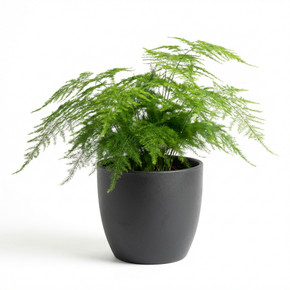


Bring instant softness and volume to any space with Asparagus Fern. Its cloud-like, feathery fronds make shelves, corners, and hanging baskets look fuller and more elegant in minutes. A reliable indoor performer with simple care—just bright filtered light and steady moisture—this plant is a favorite for homes and offices. Note: keep out of reach of pets and children.
Common Name: Asparagus Fern
Botanical Name: Asparagus setaceus
Former Name: Not available
Plant Type: Not available
Plant Code / SKU: PLT-0441
Alternative Names:
سبراكس ناعم
Order: Asparagales
Family: Asparagaceae
Genus: Asparagus
Native to southern Africa (Mozambique, South Africa) and Madagascar; widely naturalized in tropical and subtropical regions worldwide as an ornamental and groundcover.
Delicate, fine-textured cladodes (leaf-like stems) forming soft, feathery fronds on arching or trailing stems; small, inconspicuous white to pale pink flowers appear sporadically, followed by round red berries.
Indoor height typically 60–90 cm (2–3 ft); spread up to 60 cm (2 ft); stems may trail or climb 1–2 m (3–6 ft) when given support or ample space.
Prefers bright, indirect light; tolerates partial shade; avoid direct sun which can scorch the delicate fronds.
Keep soil evenly moist but not waterlogged; water when the top 2–3 cm (1 in) of soil feels dry. Reduce frequency in winter but do not allow the potting mix to dry out completely.
Use a well-draining, peat-based potting mix enriched with organic matter. Ensure the container has drainage holes. Repot every 2–3 years or when root-bound, dividing clumps if desired.
Optimal temperature range 15–24 °C (60–75 °F); avoid exposure below 10 °C (50 °F). Prefers moderate to high humidity (50–70%); mist regularly or use a humidity tray to prevent brown tips.
Apply a balanced, water‐soluble fertilizer (e.g., 20‐20‐20) every 4–6 weeks during the active growing season (spring and summer). Suspend feeding in fall and winter.
Care Level: Easy to moderate. Prune regularly to remove yellowed or dead fronds and maintain a compact shape. Monitor moisture and humidity to prevent stress.
Propagate by division when repotting: separate clumps of roots and replant. Can also be grown from seed or tip cuttings placed in moist potting mix or water until roots develop.
Yellowing fronds from overwatering or poor drainage; brown leaf tips from low humidity or fluoride in water; pests include spider mites, mealybugs, and scale insects; root rot if kept overly wet.
Highly ornamental for hanging baskets, shelves, and tabletops. Its soft texture adds airiness to interior plant displays. Reported to help improve indoor air quality by filtering pollutants.
Contains sap that can cause mild skin irritation. Toxic to cats, dogs, and other pets if ingested, leading to vomiting and diarrhea. Keep out of reach of children and pets.
Bring instant softness and volume to any space with Asparagus Fern. Its cloud-like, feathery fronds make shelves, corners, and hanging baskets look fuller and more elegant in minutes. A reliable indoor performer with simple care—just bright filtered light and steady moisture—this plant is a favorite for homes and offices. Note: keep out of reach of pets and children.
Common Name: Asparagus Fern
Botanical Name: Asparagus setaceus
Former Name: Not available
Plant Type: Not available
Plant Code / SKU: PLT-0441
Alternative Names:
سبراكس ناعم
Order: Asparagales
Family: Asparagaceae
Genus: Asparagus
Native to southern Africa (Mozambique, South Africa) and Madagascar; widely naturalized in tropical and subtropical regions worldwide as an ornamental and groundcover.
Delicate, fine-textured cladodes (leaf-like stems) forming soft, feathery fronds on arching or trailing stems; small, inconspicuous white to pale pink flowers appear sporadically, followed by round red berries.
Indoor height typically 60–90 cm (2–3 ft); spread up to 60 cm (2 ft); stems may trail or climb 1–2 m (3–6 ft) when given support or ample space.
Prefers bright, indirect light; tolerates partial shade; avoid direct sun which can scorch the delicate fronds.
Keep soil evenly moist but not waterlogged; water when the top 2–3 cm (1 in) of soil feels dry. Reduce frequency in winter but do not allow the potting mix to dry out completely.
Use a well-draining, peat-based potting mix enriched with organic matter. Ensure the container has drainage holes. Repot every 2–3 years or when root-bound, dividing clumps if desired.
Optimal temperature range 15–24 °C (60–75 °F); avoid exposure below 10 °C (50 °F). Prefers moderate to high humidity (50–70%); mist regularly or use a humidity tray to prevent brown tips.
Apply a balanced, water‐soluble fertilizer (e.g., 20‐20‐20) every 4–6 weeks during the active growing season (spring and summer). Suspend feeding in fall and winter.
Care Level: Easy to moderate. Prune regularly to remove yellowed or dead fronds and maintain a compact shape. Monitor moisture and humidity to prevent stress.
Propagate by division when repotting: separate clumps of roots and replant. Can also be grown from seed or tip cuttings placed in moist potting mix or water until roots develop.
Yellowing fronds from overwatering or poor drainage; brown leaf tips from low humidity or fluoride in water; pests include spider mites, mealybugs, and scale insects; root rot if kept overly wet.
Highly ornamental for hanging baskets, shelves, and tabletops. Its soft texture adds airiness to interior plant displays. Reported to help improve indoor air quality by filtering pollutants.
Contains sap that can cause mild skin irritation. Toxic to cats, dogs, and other pets if ingested, leading to vomiting and diarrhea. Keep out of reach of children and pets.

Take 20% off your first order
Enter the code below at checkout to get 20% off your first order