


Asparagaceae
Aspidistra elatior
Need a plant that still looks great when life gets busy? The Cast Iron Plant delivers lush, dark-green leaves and dependable growth in low light—ideal for apartments, offices, and reception areas. With simple watering and occasional feeding, it stays elegant year-round and makes any space feel calmer and more refined.
1. Basic Identification
Common Name: Cast Iron Plant
Botanical Name: Aspidistra elatior
Former Name: Not available
Plant Type: Foliage houseplant
Plant Code / SKU: PLT-0455
Alternative Names:
Bar room plant
Iron plant
كلافيا
2. Taxonomy & Classification
Order: Asparagales
Family: Asparagaceae
Genus: Aspidistra
3. Origin & Distribution
Native Range: Southeastern Asia, including Japan, Taiwan, and southern China
Naturalized: Widely cultivated and naturalized in temperate regions worldwide
4. Visual Characteristics
Leaf Description: Evergreen, lanceolate to elliptic, glossy dark green leaves emerging directly from underground rhizomes
Growth Habit: Clumping, low-to-the-ground perennial with leaves on short petioles
Flower Description: Small, nodding, bell-shaped flowers at soil level, typically dark purple to brownish
5. Size & Dimensions
Height: 30–45 cm (12–18 in)
Spread: 45–60 cm (18–24 in)
Leaf Length: 30–50 cm (12–20 in)
Growth Rate: Slow to moderate
6. Light Requirements
Preferred Light: Low to bright indirect light
Tolerances: Thrives in deep shade; avoid direct sunlight to prevent leaf scorch
7. Watering Needs
Watering Frequency: Water when the top 2–3 cm (1 in) of soil is dry
Moisture Level: Evenly moist but never waterlogged; drought tolerant if allowed to dry slightly between waterings
8. Soil & Potting
Soil Type: Rich, well-draining potting mix with good organic content
pH Range: 6.0–7.5 (slightly acidic to neutral)
Repotting: Every 2–3 years or when rootbound; use a container with drainage holes
9. Temperature & Humidity
Temperature Range: 7–30 °C (45–86 °F); optimal 15–24 °C (59–75 °F)
Humidity: Average indoor humidity; tolerates lower humidity but benefits from occasional misting
10. Fertilization
Fertilizer Type: Balanced, water-soluble houseplant fertilizer (e.g., 10-10-10 or 20-20-20)
Frequency: Monthly during spring and summer; reduce or omit feeding in fall and winter
11. Maintenance & Care Level
Care Difficulty: Low; ideal for beginners
Maintenance Tasks: Remove yellowing or damaged leaves; wipe leaves occasionally to remove dust; divide clumps every few years
12. Growth & Propagation
Propagation Method: Division of rhizomes in spring
Procedure: Carefully lift plant, separate rhizome sections with at least two growth points, pot individually
13. Common Problems
Pests: Scale insects, slugs, snails
Diseases: Root rot from overwatering; leaf spot if overly wet foliage
Physiological Issues: Leaf tip browning due to low humidity or fluoride in water
14. Benefits & Uses
Benefits: Extremely low maintenance; excellent for low-light interiors; improves aesthetic and may help filter indoor air
Uses: Office desks, shady patios, reception areas, corridors
15. Toxicity & Safety
Safety: Non-toxic to cats, dogs, and humans; safe for homes with children and pets

Aspidistra elatior
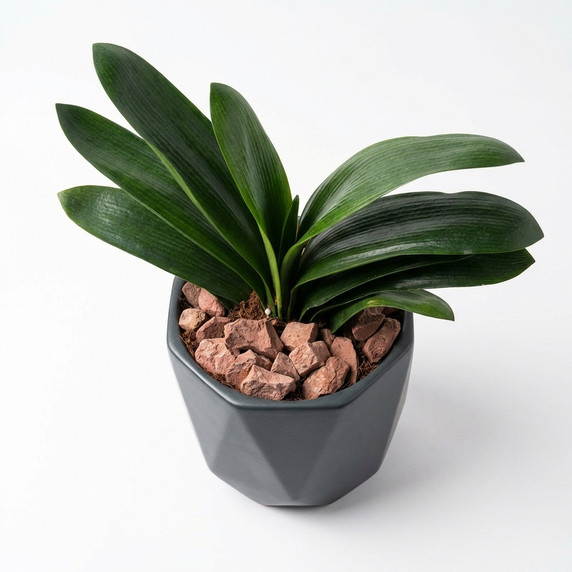
Need a plant that still looks great when life gets busy? The Cast Iron Plant delivers lush, dark-green leaves and dependable growth in low light—ideal for apartments, offices, and reception areas. With simple watering and occasional feeding, it stays elegant year-round and makes any space feel calmer and more refined.
1. Basic Identification
Common Name: Cast Iron Plant
Botanical Name: Aspidistra elatior
Former Name: Not available
Plant Type: Foliage houseplant
Plant Code / SKU: PLT-0455
Alternative Names:
Bar room plant
Iron plant
كلافيا
2. Taxonomy & Classification
Order: Asparagales
Family: Asparagaceae
Genus: Aspidistra
3. Origin & Distribution
Native Range: Southeastern Asia, including Japan, Taiwan, and southern China
Naturalized: Widely cultivated and naturalized in temperate regions worldwide
4. Visual Characteristics
Leaf Description: Evergreen, lanceolate to elliptic, glossy dark green leaves emerging directly from underground rhizomes
Growth Habit: Clumping, low-to-the-ground perennial with leaves on short petioles
Flower Description: Small, nodding, bell-shaped flowers at soil level, typically dark purple to brownish
5. Size & Dimensions
Height: 30–45 cm (12–18 in)
Spread: 45–60 cm (18–24 in)
Leaf Length: 30–50 cm (12–20 in)
Growth Rate: Slow to moderate
6. Light Requirements
Preferred Light: Low to bright indirect light
Tolerances: Thrives in deep shade; avoid direct sunlight to prevent leaf scorch
7. Watering Needs
Watering Frequency: Water when the top 2–3 cm (1 in) of soil is dry
Moisture Level: Evenly moist but never waterlogged; drought tolerant if allowed to dry slightly between waterings
8. Soil & Potting
Soil Type: Rich, well-draining potting mix with good organic content
pH Range: 6.0–7.5 (slightly acidic to neutral)
Repotting: Every 2–3 years or when rootbound; use a container with drainage holes
9. Temperature & Humidity
Temperature Range: 7–30 °C (45–86 °F); optimal 15–24 °C (59–75 °F)
Humidity: Average indoor humidity; tolerates lower humidity but benefits from occasional misting
10. Fertilization
Fertilizer Type: Balanced, water-soluble houseplant fertilizer (e.g., 10-10-10 or 20-20-20)
Frequency: Monthly during spring and summer; reduce or omit feeding in fall and winter
11. Maintenance & Care Level
Care Difficulty: Low; ideal for beginners
Maintenance Tasks: Remove yellowing or damaged leaves; wipe leaves occasionally to remove dust; divide clumps every few years
12. Growth & Propagation
Propagation Method: Division of rhizomes in spring
Procedure: Carefully lift plant, separate rhizome sections with at least two growth points, pot individually
13. Common Problems
Pests: Scale insects, slugs, snails
Diseases: Root rot from overwatering; leaf spot if overly wet foliage
Physiological Issues: Leaf tip browning due to low humidity or fluoride in water
14. Benefits & Uses
Benefits: Extremely low maintenance; excellent for low-light interiors; improves aesthetic and may help filter indoor air
Uses: Office desks, shady patios, reception areas, corridors
15. Toxicity & Safety
Safety: Non-toxic to cats, dogs, and humans; safe for homes with children and pets