


Azalea Standard Tree
Transform your home or entryway with the breathtaking elegance of our Azalea Standard Tree. Expertly cultivated into a classic topiary form, this large plant features a sturdy, single stem topped with a lush canopy of deep green leaves. When in season, it erupts in a profusion of spectacular blooms, creating an unforgettable display of color. Perfect as a sophisticated gift or a living centerpiece, the Azalea Standard adds a touch of formal garden beauty to any indoor or patio setting. While it requires specific care, the reward is an unparalleled floral showpiece that captivates and delights.
1. Basic Identification
Common Name: Azalea Standard / Indian Azalea
Botanical Name: Rhododendron simsii
Arabic Name: ازاليا
Variety: Standard (Topiary form)
Plant Color: Multicolor
Family: Ericaceae
Country of Origin: Netherlands
2. Taxonomy & Classification
Kingdom: Plantae
Order: Ericales
Family: Ericaceae
Genus: Rhododendron
Subgenus: Azaleastrum
Species: Rhododendron simsii
3. Origin & Distribution
Rhododendron simsii is native to East Asia, including parts of China, Taiwan, and Thailand. It has been extensively bred and cultivated in Europe, particularly in the Netherlands and Belgium, which are global hubs for the production of high-quality florist azaleas.
4. Visual Characteristics
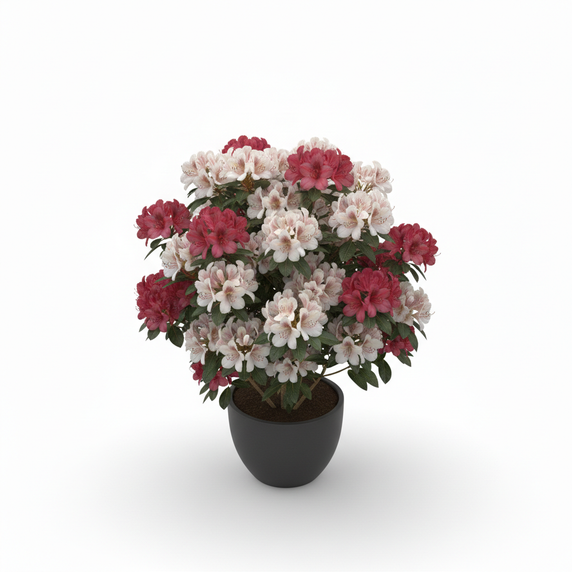
This "Standard" variety is trained into a tree-like shape with a clean, woody trunk and a rounded, bushy canopy. It features small, dark green, ovate leaves that are slightly leathery. The blooms are large, funnel-shaped, and appear in dense clusters, showcasing a vibrant range of multicolored patterns including pinks, reds, and whites.
5. Size & Dimensions
As a standard tree form, it typically reaches a height of 90 cm to 120 cm (approximately 3 to 4 feet). The canopy spread is usually maintained between 40 cm to 60 cm through careful pruning.
6. Light Requirements
Prefers bright, indirect light. It thrives near east-facing windows. Avoid direct, harsh afternoon sunlight, which can scorch the delicate flower petals and leaves. If kept on a patio, it requires a shaded or semi-shaded spot.
7. Watering Needs
Azaleas require consistent moisture and do not tolerate drying out. The soil should be kept damp to the touch at all times but never waterlogged. It is highly recommended to use soft, lime-free water (such as rainwater or distilled water) to prevent leaf yellowing.
8. Soil & Potting
Requires acidic soil (pH 4.5 to 5.5). Use a specialized ericaceous potting mix rich in peat moss or leaf mold. Ensure the pot has excellent drainage to prevent root rot.
9. Temperature & Humidity
Prefers cool to moderate temperatures, ideally between 10°C and 18°C. High humidity is essential, especially when kept indoors; place the pot on a pebble tray with water or use a humidifier to maintain moisture in the air.
10. Fertilization
Apply a liquid fertilizer formulated specifically for acid-loving (ericaceous) plants every two weeks during the growing and flowering season. Do not fertilize during the dormant winter period.
11. Maintenance & Care Level
Maintenance Level: High. This plant requires attentive watering and specific environmental conditions. Deadheading (removing spent flowers) is necessary to encourage further blooming and maintain a tidy appearance. Regular pruning is required to keep the "standard" topiary shape.
12. Growth & Propagation
The Azalea Standard is a slow-to-moderate grower. Propagation is typically achieved through semi-hardwood cuttings in late summer, though the "standard" tree form requires years of professional training and grafting.
13. Common Problems
Common issues include leaf drop due to dry soil or high temperatures, and chlorosis (yellowing leaves with green veins) caused by alkaline soil or hard water. Watch for pests such as spider mites and lace bugs in dry conditions.
14. Benefits & Uses
Primarily used as a high-end ornamental centerpiece for home décor, offices, and formal events. It is a popular choice for "living gifts" due to its spectacular floral display. It also offers minor air-purifying qualities.
15. Toxicity & Safety
Toxicity: High. All parts of the Rhododendron simsii contain grayanotoxins, which are toxic to humans, cats, dogs, and horses if ingested. Keep out of reach of children and pets.
Azalea Standard Tree
Transform your home or entryway with the breathtaking elegance of our Azalea Standard Tree. Expertly cultivated into a classic topiary form, this large plant features a sturdy, single stem topped with a lush canopy of deep green leaves. When in season, it erupts in a profusion of spectacular blooms, creating an unforgettable display of color. Perfect as a sophisticated gift or a living centerpiece, the Azalea Standard adds a touch of formal garden beauty to any indoor or patio setting. While it requires specific care, the reward is an unparalleled floral showpiece that captivates and delights.
1. Basic Identification
Common Name: Azalea Standard / Indian Azalea
Botanical Name: Rhododendron simsii
Arabic Name: ازاليا
Variety: Standard (Topiary form)
Plant Color: Multicolor
Family: Ericaceae
Country of Origin: Netherlands
2. Taxonomy & Classification
Kingdom: Plantae
Order: Ericales
Family: Ericaceae
Genus: Rhododendron
Subgenus: Azaleastrum
Species: Rhododendron simsii
3. Origin & Distribution
Rhododendron simsii is native to East Asia, including parts of China, Taiwan, and Thailand. It has been extensively bred and cultivated in Europe, particularly in the Netherlands and Belgium, which are global hubs for the production of high-quality florist azaleas.
4. Visual Characteristics
This "Standard" variety is trained into a tree-like shape with a clean, woody trunk and a rounded, bushy canopy. It features small, dark green, ovate leaves that are slightly leathery. The blooms are large, funnel-shaped, and appear in dense clusters, showcasing a vibrant range of multicolored patterns including pinks, reds, and whites.
5. Size & Dimensions
As a standard tree form, it typically reaches a height of 90 cm to 120 cm (approximately 3 to 4 feet). The canopy spread is usually maintained between 40 cm to 60 cm through careful pruning.
6. Light Requirements
Prefers bright, indirect light. It thrives near east-facing windows. Avoid direct, harsh afternoon sunlight, which can scorch the delicate flower petals and leaves. If kept on a patio, it requires a shaded or semi-shaded spot.
7. Watering Needs
Azaleas require consistent moisture and do not tolerate drying out. The soil should be kept damp to the touch at all times but never waterlogged. It is highly recommended to use soft, lime-free water (such as rainwater or distilled water) to prevent leaf yellowing.
8. Soil & Potting
Requires acidic soil (pH 4.5 to 5.5). Use a specialized ericaceous potting mix rich in peat moss or leaf mold. Ensure the pot has excellent drainage to prevent root rot.
9. Temperature & Humidity
Prefers cool to moderate temperatures, ideally between 10°C and 18°C. High humidity is essential, especially when kept indoors; place the pot on a pebble tray with water or use a humidifier to maintain moisture in the air.
10. Fertilization
Apply a liquid fertilizer formulated specifically for acid-loving (ericaceous) plants every two weeks during the growing and flowering season. Do not fertilize during the dormant winter period.
11. Maintenance & Care Level
Maintenance Level: High. This plant requires attentive watering and specific environmental conditions. Deadheading (removing spent flowers) is necessary to encourage further blooming and maintain a tidy appearance. Regular pruning is required to keep the "standard" topiary shape.
12. Growth & Propagation
The Azalea Standard is a slow-to-moderate grower. Propagation is typically achieved through semi-hardwood cuttings in late summer, though the "standard" tree form requires years of professional training and grafting.
13. Common Problems
Common issues include leaf drop due to dry soil or high temperatures, and chlorosis (yellowing leaves with green veins) caused by alkaline soil or hard water. Watch for pests such as spider mites and lace bugs in dry conditions.
14. Benefits & Uses
Primarily used as a high-end ornamental centerpiece for home décor, offices, and formal events. It is a popular choice for "living gifts" due to its spectacular floral display. It also offers minor air-purifying qualities.
15. Toxicity & Safety
Toxicity: High. All parts of the Rhododendron simsii contain grayanotoxins, which are toxic to humans, cats, dogs, and horses if ingested. Keep out of reach of children and pets.