Asparagaceae
Beaucarnea recurvata
Make a bold, modern statement with Nolina (Ponytail Palm). Its dramatic fountain of leaves and distinctive water-storing base deliver a premium look with surprisingly simple care. Place it in a bright spot, water only when dry, and enjoy a long-lived, resilient centerpiece that elevates homes, studios, and office receptions with effortless style.
1. Basic Identification
Common Name: Ponytail Palm
Botanical Name: Beaucarnea recurvata
Former Name: Nolina recurvata
Plant Type: Succulent houseplant
Plant Code / SKU: PLT-0036
Alternative Names:
Elephant Foot Palm
Bottle Palm
Arabic Name: نولينا
2. Taxonomy & Classification
Order: Asparagales
Family: Asparagaceae
Genus: Beaucarnea
Species: Beaucarnea recurvata
3. Origin & Distribution
Native to the semi-arid regions of eastern Mexico, particularly the states of Veracruz, Tamaulipas, and San Luis Potosí.
Widely introduced as an ornamental in subtropical and warm temperate regions worldwide.
4. Visual Characteristics
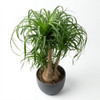
Trunk: Swollen, bulbous base (caudex) tapering into a slender gray-brown trunk.
Leaves: Long, narrow, arching, strap-like leaves up to 1–1.5 m long, glossy bright green, entire margins.
Habit: Evergreen, solitary-trunked palm with a fountain of foliage.
Flowers: Rarely blooms indoors; small, creamy-white flowers on panicles.
5. Size & Dimensions
Indoor Height: Typically 1–4 ft (30–120 cm) over many years.
Outdoor Height: Up to 20–30 ft (6–9 m) over decades.
Trunk Diameter: 8–20 in (20–50 cm) at the caudex.
Pot Size: Prefers to remain slightly root-bound; repot every 3–4 years into a pot 2 in (5 cm) wider.
6. Light Requirements
Thrives in bright indirect light to full sun.
Minimum: Bright, filtered light.
Ideal: 4–6 hours of morning or late afternoon sun.
7. Watering Needs
Drought-tolerant; water thoroughly then allow soil to dry completely.
Frequency: Every 2–4 weeks in spring/summer; every 4–6 weeks in winter.
Underwatering: Leaf tips brown and curl.
Overwatering: Yellowing leaves, soft caudex, root rot.
8. Soil & Potting
Soil: Well-draining sandy or gritty succulent/cactus mix.
pH: Slightly acidic to neutral (6.0–7.0).
Potting: Use containers with drainage holes; amend with perlite or pumice.
Repotting: Every 3–4 years or when root-bound; handle caudex gently.
9. Temperature & Humidity
Preferred: 65–75 °F (18–24 °C).
Minimum: 50 °F (10 °C); avoid cold drafts.
Humidity: Low to average indoor humidity; tolerates dry air.
10. Fertilization
Apply a balanced water-soluble fertilizer (e.g., 10-10-10) at half strength monthly during spring and summer.
Do not fertilize in winter.
Occasionally flush soil to prevent salt buildup.
11. Maintenance & Care Level
Low maintenance; ideal for beginners.
Pruning: Remove dead or brown leaves at the base.
Inspect periodically for pests.
12. Growth & Propagation
Growth Rate: Slow growing.
Propagation: By seed—requires warm temperatures (75–85 °F) and light for germination (2–4 weeks).
Offsets: Rare; division is uncommon.
13. Common Problems
Pests: Mealybugs, scale insects, spider mites.
Diseases: Root rot from overwatering.
Cultural: Leaf scorch in intense afternoon sun; etiolation in low light.
14. Benefits & Uses
Ornamental accent for interiors and patios.
Architectural form provides focal interest.
Low-water landscape use.
Typical air-purifying qualities of houseplants.
15. Toxicity & Safety
Non-toxic to humans and pets (cats and dogs) according to the ASPCA.
Safe for homes with children and animals.
Beaucarnea recurvata
Make a bold, modern statement with Nolina (Ponytail Palm). Its dramatic fountain of leaves and distinctive water-storing base deliver a premium look with surprisingly simple care. Place it in a bright spot, water only when dry, and enjoy a long-lived, resilient centerpiece that elevates homes, studios, and office receptions with effortless style.
1. Basic Identification
Common Name: Ponytail Palm
Botanical Name: Beaucarnea recurvata
Former Name: Nolina recurvata
Plant Type: Succulent houseplant
Plant Code / SKU: PLT-0036
Alternative Names:
Elephant Foot Palm
Bottle Palm
Arabic Name: نولينا
2. Taxonomy & Classification
Order: Asparagales
Family: Asparagaceae
Genus: Beaucarnea
Species: Beaucarnea recurvata
3. Origin & Distribution
Native to the semi-arid regions of eastern Mexico, particularly the states of Veracruz, Tamaulipas, and San Luis Potosí.
Widely introduced as an ornamental in subtropical and warm temperate regions worldwide.
4. Visual Characteristics
Trunk: Swollen, bulbous base (caudex) tapering into a slender gray-brown trunk.
Leaves: Long, narrow, arching, strap-like leaves up to 1–1.5 m long, glossy bright green, entire margins.
Habit: Evergreen, solitary-trunked palm with a fountain of foliage.
Flowers: Rarely blooms indoors; small, creamy-white flowers on panicles.
5. Size & Dimensions
Indoor Height: Typically 1–4 ft (30–120 cm) over many years.
Outdoor Height: Up to 20–30 ft (6–9 m) over decades.
Trunk Diameter: 8–20 in (20–50 cm) at the caudex.
Pot Size: Prefers to remain slightly root-bound; repot every 3–4 years into a pot 2 in (5 cm) wider.
6. Light Requirements
Thrives in bright indirect light to full sun.
Minimum: Bright, filtered light.
Ideal: 4–6 hours of morning or late afternoon sun.
7. Watering Needs
Drought-tolerant; water thoroughly then allow soil to dry completely.
Frequency: Every 2–4 weeks in spring/summer; every 4–6 weeks in winter.
Underwatering: Leaf tips brown and curl.
Overwatering: Yellowing leaves, soft caudex, root rot.
8. Soil & Potting
Soil: Well-draining sandy or gritty succulent/cactus mix.
pH: Slightly acidic to neutral (6.0–7.0).
Potting: Use containers with drainage holes; amend with perlite or pumice.
Repotting: Every 3–4 years or when root-bound; handle caudex gently.
9. Temperature & Humidity
Preferred: 65–75 °F (18–24 °C).
Minimum: 50 °F (10 °C); avoid cold drafts.
Humidity: Low to average indoor humidity; tolerates dry air.
10. Fertilization
Apply a balanced water-soluble fertilizer (e.g., 10-10-10) at half strength monthly during spring and summer.
Do not fertilize in winter.
Occasionally flush soil to prevent salt buildup.
11. Maintenance & Care Level
Low maintenance; ideal for beginners.
Pruning: Remove dead or brown leaves at the base.
Inspect periodically for pests.
12. Growth & Propagation
Growth Rate: Slow growing.
Propagation: By seed—requires warm temperatures (75–85 °F) and light for germination (2–4 weeks).
Offsets: Rare; division is uncommon.
13. Common Problems
Pests: Mealybugs, scale insects, spider mites.
Diseases: Root rot from overwatering.
Cultural: Leaf scorch in intense afternoon sun; etiolation in low light.
14. Benefits & Uses
Ornamental accent for interiors and patios.
Architectural form provides focal interest.
Low-water landscape use.
Typical air-purifying qualities of houseplants.
15. Toxicity & Safety
Non-toxic to humans and pets (cats and dogs) according to the ASPCA.
Safe for homes with children and animals.