


Begonia rex-cultorum 'Rex Cultorum Group (variegated foliage type)'
The Sellum (Thaumatophyllum bipinnatifidum) is a magnificent tropical plant known for its dramatic, deeply lobed leaves and robust growth habit. This easy-to-grow evergreen brings an instant jungle vibe to any interior space while acting as a natural air purifier, making it a favorite for both homes and large office spaces. Its architectural foliage and glossy green sheen make it a standout specimen for plant enthusiasts and beginners alike.
1. Basic Identification
Common Name: Sellum, Lacy Tree Philodendron
Botanical Name: Thaumatophyllum bipinnatifidum
Arabic Name: فيلوديندرون سيلوم
Plant Variant: Standard
Plant Color: Deep Green
Plant Country: South America (Brazil, Paraguay, Argentina)
Stems: Thick, woody trunk-like stems with distinctive leaf scars
Family: Araceae
2. Taxonomy & Classification
Kingdom: Plantae
Clade: Tracheophytes
Order: Alismatales
Family: Araceae
Genus: Thaumatophyllum
Species: T. bipinnatifidum
3. Origin & Distribution
Native to the tropical regions of South America, specifically Brazil, Bolivia, Argentina, and Paraguay. It thrives in humid, subtropical environments but has become a popular ornamental plant worldwide.
4. Visual Characteristics
The plant features massive, glossy, dark green leaves that can reach up to 3 feet in length. The leaves are deeply pinnatifid, meaning they are deeply lobed into finger-like segments. As the plant ages, it develops a sturdy, upright woody stem marked with eye-shaped scars where old leaves have fallen off.
5. Size & Dimensions
When grown indoors, it typically reaches a height and spread of 3 to 5 feet. In its natural outdoor habitat or in large conservatories, it can grow over 10 feet tall and 15 feet wide.
6. Light Requirements
Prefers bright, indirect light to maintain its lush appearance. While it can tolerate medium light, its growth will slow, and the leaves may not develop the signature deep lobes as prominently. Avoid direct afternoon sun, which can scorch the foliage.
7. Watering Needs
Water thoroughly when the top 1 to 2 inches of soil have dried out. The Sellum prefers consistent moisture but is sensitive to "wet feet." Ensure proper drainage to prevent root rot.
8. Soil & Potting
Thrives in a rich, well-draining potting mix. A combination of peat moss, perlite, and pine bark is ideal to provide the necessary aeration and organic matter.
9. Temperature & Humidity
Ideal temperatures range between 65°F and 80°F (18°C–27°C). It is not frost-tolerant. High humidity levels are preferred (50% or higher), so misting or using a humidifier can be beneficial in dry indoor environments.
10. Fertilization
Feed monthly during the spring and summer with a balanced, water-soluble liquid fertilizer diluted to half-strength. Reduce feeding during the dormant autumn and winter months.
11. Maintenance & Care Level
Maintenance Level: Moderate. Care involves regular dusting of the large leaves to ensure efficient photosynthesis and pruning away any older, yellowing leaves at the base to encourage new growth.
12. Growth & Propagation
It is a moderately fast grower under optimal conditions. Propagation is most successful through stem cuttings that include at least one node or by division of large mature specimens. It can also be grown from seed, though this is a slower process.
13. Common Problems
Susceptible to common pests such as spider mites, mealybugs, and scale. Overwatering often leads to yellowing leaves and root rot, while low humidity can cause the leaf tips to turn brown and crispy.
14. Benefits & Uses
An excellent air purifier that removes common toxins like formaldehyde from the air. Due to its large size and dramatic shape, it is widely used in interior design as a "floor plant" to fill corners or as a focal point in lobbies and living rooms.
15. Toxicity & Safety
Contains calcium oxalate crystals, which are toxic to humans, cats, and dogs if ingested. Contact with the sap may also cause skin irritation or a burning sensation in the mouth and throat.
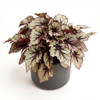
Begonia rex-cultorum 'Rex Cultorum Group (variegated foliage type)'

The Sellum (Thaumatophyllum bipinnatifidum) is a magnificent tropical plant known for its dramatic, deeply lobed leaves and robust growth habit. This easy-to-grow evergreen brings an instant jungle vibe to any interior space while acting as a natural air purifier, making it a favorite for both homes and large office spaces. Its architectural foliage and glossy green sheen make it a standout specimen for plant enthusiasts and beginners alike.
1. Basic Identification
Common Name: Sellum, Lacy Tree Philodendron
Botanical Name: Thaumatophyllum bipinnatifidum
Arabic Name: فيلوديندرون سيلوم
Plant Variant: Standard
Plant Color: Deep Green
Plant Country: South America (Brazil, Paraguay, Argentina)
Stems: Thick, woody trunk-like stems with distinctive leaf scars
Family: Araceae
2. Taxonomy & Classification
Kingdom: Plantae
Clade: Tracheophytes
Order: Alismatales
Family: Araceae
Genus: Thaumatophyllum
Species: T. bipinnatifidum
3. Origin & Distribution
Native to the tropical regions of South America, specifically Brazil, Bolivia, Argentina, and Paraguay. It thrives in humid, subtropical environments but has become a popular ornamental plant worldwide.
4. Visual Characteristics
The plant features massive, glossy, dark green leaves that can reach up to 3 feet in length. The leaves are deeply pinnatifid, meaning they are deeply lobed into finger-like segments. As the plant ages, it develops a sturdy, upright woody stem marked with eye-shaped scars where old leaves have fallen off.
5. Size & Dimensions
When grown indoors, it typically reaches a height and spread of 3 to 5 feet. In its natural outdoor habitat or in large conservatories, it can grow over 10 feet tall and 15 feet wide.
6. Light Requirements
Prefers bright, indirect light to maintain its lush appearance. While it can tolerate medium light, its growth will slow, and the leaves may not develop the signature deep lobes as prominently. Avoid direct afternoon sun, which can scorch the foliage.
7. Watering Needs
Water thoroughly when the top 1 to 2 inches of soil have dried out. The Sellum prefers consistent moisture but is sensitive to "wet feet." Ensure proper drainage to prevent root rot.
8. Soil & Potting
Thrives in a rich, well-draining potting mix. A combination of peat moss, perlite, and pine bark is ideal to provide the necessary aeration and organic matter.
9. Temperature & Humidity
Ideal temperatures range between 65°F and 80°F (18°C–27°C). It is not frost-tolerant. High humidity levels are preferred (50% or higher), so misting or using a humidifier can be beneficial in dry indoor environments.
10. Fertilization
Feed monthly during the spring and summer with a balanced, water-soluble liquid fertilizer diluted to half-strength. Reduce feeding during the dormant autumn and winter months.
11. Maintenance & Care Level
Maintenance Level: Moderate. Care involves regular dusting of the large leaves to ensure efficient photosynthesis and pruning away any older, yellowing leaves at the base to encourage new growth.
12. Growth & Propagation
It is a moderately fast grower under optimal conditions. Propagation is most successful through stem cuttings that include at least one node or by division of large mature specimens. It can also be grown from seed, though this is a slower process.
13. Common Problems
Susceptible to common pests such as spider mites, mealybugs, and scale. Overwatering often leads to yellowing leaves and root rot, while low humidity can cause the leaf tips to turn brown and crispy.
14. Benefits & Uses
An excellent air purifier that removes common toxins like formaldehyde from the air. Due to its large size and dramatic shape, it is widely used in interior design as a "floor plant" to fill corners or as a focal point in lobbies and living rooms.
15. Toxicity & Safety
Contains calcium oxalate crystals, which are toxic to humans, cats, and dogs if ingested. Contact with the sap may also cause skin irritation or a burning sensation in the mouth and throat.