


Best Indoor Plants for Apartments with Limited Light in Iraq Homes
Posted by Mozher Expoerts on 28.02.26
Navigating the Unique Climate of Iraq for Thriving Indoor Plants
The allure of bringing lush greenery into our homes and apartments in Iraq is undeniable, offering a refreshing contrast to the often-intense outdoor environment. However, this desire for indoor plants comes with its own unique set of challenges, distinctly different from generalized plant care advice. During Iraq's long, scorching summers, our indispensable air conditioning systems, locally known as the "السبلت," create a comfortable indoor escape for us, but an artificially arid microclimate for our plants. This constant dehumidification, paired with potential cold drafts from vents and the fine dust that frequently settles on foliage, crafts an often unseen battleground for your beloved indoor plants. Furthermore, plants frequently endure considerable "delivery stress" during their journey from the nursery to your new home, and the mineral content in local tap water can also present unique challenges.
As a senior indoor-plant specialist and horticulture educator, I've observed countless plant owners in Iraq struggle, often with the best intentions, because their care routines don't account for these local realities. This guide aims to bridge that gap, offering climate-aware recommendations to ensure your best house plants don't merely survive, but genuinely flourish within the specific conditions of your Iraqi apartment. It's about empowering you with practical insights that resonate with our environment, leading to healthier plants, fewer losses, and a truly vibrant indoor oasis.
Champions of Resilience: Best House Plants for Iraqi Apartments
For the unique indoor environments of Iraqi apartments, especially those with limited natural light, selecting plants that are naturally robust is crucial. We need varieties that can tolerate less frequent watering, adapt to varied light conditions, and remain unfazed by the pervasive dry air produced by continuous AC use. These are the true survivors, making them ideal companions for busy individuals or anyone embarking on their indoor gardening journey in Iraq.
Snake Plant (Sansevieria trifasciata): The Unyielding Survivor
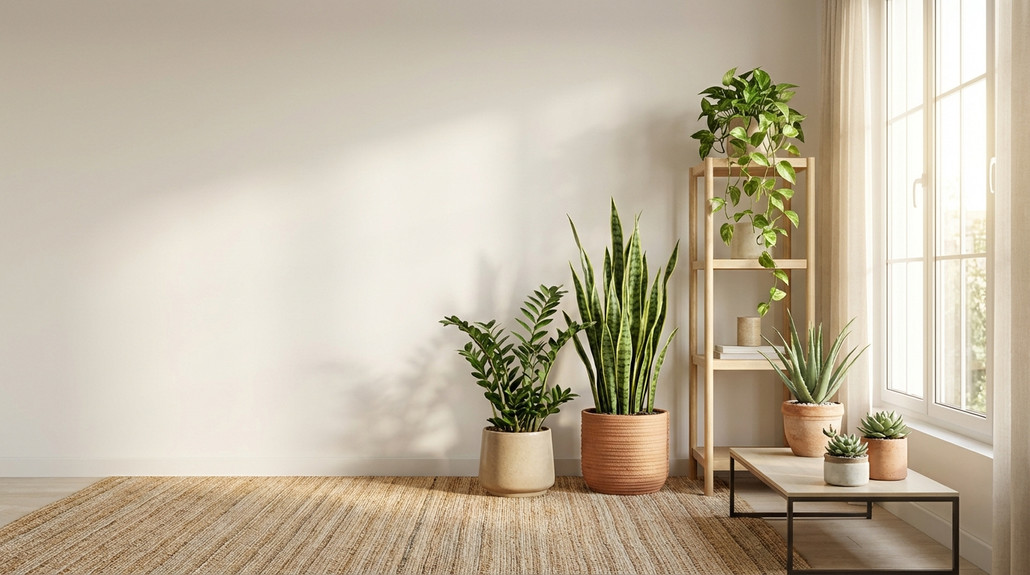
The Snake Plant, widely recognized as Mother-in-Law's Tongue, truly defines the standard for an indestructible indoor plant. Its distinctive upright, sword-like leaves are not only aesthetically striking, adding a modern, sculptural element to any room, but they are also highly efficient natural reservoirs, adept at storing water. This remarkable ability allows the plant to thrive for weeks, or even months, without requiring a drink, making it practically immune to the dry air created by constant air conditioning. What makes it even more appealing for apartments with limited light is its extraordinary versatility across light levels; it thrives equally well in dimly lit corners as it does in bright, indirect light. This adaptability makes it an exceptional choice for various spots within an Iraqi home, including those challenging northern-facing rooms. The most common pitfall with a Snake Plant is ironically overwatering, which can rapidly lead to root rot. Its needs are genuinely minimal, typically requiring only an occasional wipe-down of its leaves to ensure efficient light absorption and to combat the fine dust often found indoors.
ZZ Plant (Zamioculcas zamiifolia): Effortless Elegance in Low Light
If your quest is for an indoor plant in Iraq that is nearly impossible to compromise, even in persistently challenging low-light conditions, the ZZ Plant is your definitive answer. Its signature glossy, dark green leaves emerge gracefully from large, potato-like rhizomes, which are cleverly concealed beneath the soil surface. These rhizomes function as natural water batteries, enabling the plant to endure remarkably long periods of drought with exceptional ease. This inherent resilience makes it an ideal choice for busy individuals, frequent travelers, or anyone who tends to occasionally forget their watering schedule. The ZZ Plant truly excels in consistently low-light environments, positioning it as a perfect candidate for deeper interior rooms, offices, or apartments where natural illumination is inherently limited. It remains completely unfazed by the dry airflow from AC units, showing no visible signs of stress or discomfort. Its characteristically slow, steady growth means it will maintain its elegant form without quickly outgrowing its designated space, thus requiring minimal pruning or repotting for many years. For any Iraqi apartment or office space that demands an enduring touch of stylish greenery, even in the dimmest conditions and through prolonged periods of inattention, this exceptionally hardy indoor plant stands out as a prime candidate.
Pothos (Epipremnum aureum): The Adaptable Trailing Beauty
Often endearingly referred to as "Devil's Ivy," the Pothos is an incredibly versatile and remarkably forgiving trailing plant, making it a standout choice for apartments in Iraq. While it does appreciate more consistent moisture compared to the Snake or ZZ Plant, its most significant virtue lies in its unequivocal communication: its vibrant leaves will visibly begin to droop when the plant is thirsty, providing an unmistakable signal that it needs attention. Crucially, it quickly revives and perks up once thoroughly hydrated, removing much of the guesswork from the watering process. This clear feedback mechanism makes it an excellent, beginner-friendly option among best house plants in Iraq. Pothos demonstrates impressive adaptability across a broad spectrum of lighting conditions, ranging from low light corners to brighter, indirect light, and it copes commendably with the average dry indoor air found in AC-cooled homes. It does, however, appreciate an occasional gentle wipe-down of its leaves to maintain its lush, verdant appearance. Its relatively fast-growing vines offer dynamic greenery; they can be left to cascade elegantly from shelves or hanging planters, adding a sense of abundance and natural charm to any space with minimal ongoing fuss. This inherent flexibility and resilience firmly establish Pothos as a reliable and aesthetically pleasing addition to virtually any Iraqi apartment.
Spider Plant (Chlorophytum comosum): Air Purifier and Pet-Friendly Choice
The Spider Plant holds its classic status for excellent reasons: it is remarkably easy to care for and produces charming "spiderettes" that can be effortlessly propagated, adding a delightful and interactive element to any home. Its adaptability to various light conditions, from bright indirect to medium light, makes it a flexible choice for different areas within an Iraqi apartment, though it typically flourishes best with consistent indirect light for optimal leaf variegation. While it enjoys slightly more humidity than some of the arid-adapted plants on this list, it tolerates the dry indoor air of Iraq reasonably well and is quite forgiving of an inconsistent watering schedule. Beyond its aesthetic appeal and ease of care, the Spider Plant is highly regarded for its air-purifying qualities, actively helping to remove common indoor toxins and thus contributing to a healthier living environment. Furthermore, and of significant importance for many households, it is non-toxic to both pets and children, making it a fantastic choice for family-friendly homes. You can explore more pet-safe indoor plants at Mozher to ensure a harmonious and secure environment for all inhabitants.
Cacti and Succulents: Masters of Arid Environments
Cacti and the majority of succulents are inherently adapted to thrive in arid regions, making them natural champions for indoor environments in Iraq. Their biological design allows them to withstand intense heat and endure prolonged periods of drought with remarkable ease. They achieve this by efficiently storing water within their fleshy leaves or stems, enabling them to go for very extended durations—often weeks to months—without requiring additional water. While many varieties truly flourish in bright, direct sunlight, a significant number of them are also quite tolerant of bright, indirect light. This makes them versatile options, suitable for sunny windowsills that might prove too harsh for other plant types, or even placed slightly away from the immediate window. The paramount factor for their success indoors in Iraq is the provision of extremely well-draining soil and a watering routine that is exceptionally infrequent. Overwatering is almost universally fatal for these resilient plants, quickly leading to root rot. Their diverse and often sculptural forms, coupled with their minimal care requirements, make them excellent choices for those seeking unique, low-maintenance greenery that can not only survive but truly thrive in even the warmest and driest spots within an Iraqi apartment. They stand as a testament to natural resilience under demanding conditions, perfectly embodying drought tolerance.
Essential Care Factors for Thriving Indoor Plants in Iraq
Cultivating vibrant indoor plants in Iraq demands a nuanced approach, one that carefully considers our specific climatic challenges. Beyond simply selecting the right species, understanding and meticulously adapting your care routine to local conditions is paramount for the long-term health and vitality of your greenery. This section delves into the foundational principles that genuinely make a difference for indoor plants in Iraq, ensuring they thrive rather than merely exist.
Mastering Watering: The Gold Standard in an AC Environment
Incorrect watering is, without a doubt, the leading cause of indoor plant problems in Iraq. The cool, dehumidified air relentlessly generated by the السبلت fundamentally alters how quickly potting soil dries, creating a consistently deceptive scenario. The very top layer of soil might quickly appear parched, often misleading well-intentioned owners into believing their plant is desperately thirsty. However, beneath this seemingly dry surface, the root ball can remain saturated with water for days, or even weeks. Adding more water to an already sodden soil effectively starves the roots of vital oxygen, leading to suffocation and irreversible root rot. Therefore, rigidly adhering to a fixed watering schedule is absolutely paramount for successful indoor plant care here. Instead, adopt a meticulous, observation-based approach: the golden rule is to "check the soil, deeply, before every single watering." Insert your finger approximately 5-7 centimeters (2-3 inches) into the potting mix. If it feels completely dry, powdery, or crumbly to the touch, then and only then is it genuinely time for a thorough drink. If there is any lingering moisture or discernible coolness, even slight, wait patiently for a few more days. For absolute clarity and ultimate peace of mind, investing in a reliable moisture meter can prove to be an invaluable tool, entirely removing any guesswork from your essential watering routine.
Decoding Light Levels: Finding the Right Balance for Your Home
Light undeniably serves as the fundamental energy source for every single plant, powering the intricate process of photosynthesis that sustains its life and vibrant growth. In Iraq, the sheer intensity of our sun, even when diffused or filtered through glass, can be overwhelmingly powerful, capable of rapidly scorching delicate leaves. Conversely, many modern apartments and homes are designed with heavy curtains or tinted windows specifically to block this harsh glare and intense heat, inadvertently creating interiors that are dimly lit, where plants visibly struggle to photosynthesize efficiently. The critical objective is to consistently provide "bright, indirect light"—illumination that invigorates the plant without inflicting any scorching damage. This involves strategically positioning your plants to receive ample, consistent light without the harsh, burning effects of direct sun rays. For rooms or corners within your apartment that inherently possess limited natural light, the strategic selection of plants that thrive in lower light becomes an invaluable consideration, ensuring your chosen plant receives precisely what it needs without suffering from either excessive exposure or insufficient energy. Diligent observation is absolutely key, as the light quality within a room can fluctuate dramatically throughout the day and with changing seasons, often necessitating subtle adjustments to your plant's placement.
Humidity and Airflow: Counteracting the AC Effect
The very air conditioning that provides much-needed comfort in our Iraqi homes is frequently the silent saboteur of our indoor plant aspirations. AC units (السبلت) are specifically designed to actively remove moisture from the air, resulting in an exceptionally dry indoor atmosphere. Most tropical indoor plants typically flourish in humidity levels ranging between 40-60%, a stark contrast to the often significantly lower levels—frequently below 30%—found in a continuously air-conditioned room. This relentless dry air actively pulls moisture from the plant's leaves faster than its roots can possibly replenish it, leading to classic, tell-tale symptoms such as crispy, brown leaf tips and edges, even if the soil itself feels adequately moist. Furthermore, direct blasts of cold, dry air from the السبلت vents exacerbate this desiccating situation, causing rapid desiccation, noticeable leaf curling, and overall severe plant stress. To effectively counteract this pervasive low indoor humidity, active intervention is often required. One straightforward and surprisingly effective method is to group your humidity-loving plants together; as each plant naturally releases moisture through transpiration, a small, localized humid microclimate is created, benefiting the entire cluster. Another popular and easy technique is to utilize a pebble tray: fill a shallow tray with decorative pebbles and add water until it just barely sits below the top of the pebbles, then place your plant pot directly on top (ensuring the base does not sit in standing water). As the water gradually evaporates from the tray, it gently humidifies the air immediately surrounding the plant. Critically, always keep plants well away from direct AC vents to prevent rapid drying and minimize stress.
The Foundational Role of Pots and Potting Mix
The very foundation for any healthy indoor plant, particularly in the demanding environment of Iraq, is its chosen growing medium and the pot in which it resides. Here, where unique climate challenges impose specific needs, the common mistake of using a generic or unsuitable soil mix, or a pot lacking adequate drainage, invariably sets plants up for failure. Improper drainage significantly exacerbates watering problems, creating conditions that are ripe for root issues and a slow, insidious decline of the plant. Every pot, without exception, must possess sufficient drainage holes at its base to allow excess water to escape freely. Without these vital openings, water becomes trapped and stagnant, leading to anaerobic conditions and the inevitable onset of root rot. Mozher specifically offers a thoughtfully selected range of pots with proper drainage, meticulously designed to support optimal plant health and proactively prevent root problems in our unique climate. Furthermore, the use of a high-quality, specialized indoor potting mix is absolutely essential. This should be a lightweight and airy blend, incorporating components such as peat moss, perlite, and coco coir. This specific composition is crucial for effectively balancing the soil's moisture retention capabilities with the essential aeration that roots desperately need to breathe. You can consistently find such quality options within our quality potting mixes and care essentials section.
Minimizing Delivery Stress and Ensuring Acclimation
The journey a plant undertakes from the controlled environment of a nursery to its new home in an Iraqi apartment can be remarkably stressful. This transition involves drastic and sudden changes in light intensity, ambient temperature, and, most critically, humidity, which collectively can induce a significant shock for the plant. A common pitfall is the failure to properly acclimate new plants or to overlook the subtle signs of delivery stress, often leading to a slow and disheartening decline. At Mozher, we are acutely aware that this transition can be demanding, which is precisely why our selection process focuses on resilient indoor plants, chosen specifically for safe delivery and their inherent ability to bounce back from environmental shifts. To effectively minimize this impact, it is crucial to provide a stable and consistent environment for new plant arrivals. Place them initially in a spot that offers bright, indirect light, ensuring they are well away from direct السبلت drafts or the intense, unfiltered glare of a window. Crucially, avoid immediate repotting or applying heavy fertilization during the first few weeks. This gentle approach allows the plant to acclimate peacefully, allocating its precious energy to adjusting to its new surroundings. This mindful, gentle introduction is absolutely vital for the long-term vitality of your new green companion, providing it with the best possible chance to successfully settle in and truly thrive.
What to Avoid: Plants That Struggle in Iraqi Indoor Conditions
While many plants exhibit remarkable adaptability, some species are simply ill-suited for the demanding indoor climate of Iraq, particularly when confronting the pervasive constant heat and the continuous operation of AC. Attempting to force these plants to thrive often leads to considerable frustration and, regrettably, inevitable plant loss. It is far wiser to strategically avoid species known for their high humidity requirements or their extreme sensitivity to temperature fluctuations. For example, delicate ferns, with their lush fronds, frequently struggle unless you can consistently provide very high humidity levels, a challenging feat to maintain with central air conditioning. Similarly, Calatheas, known for their intricately patterned, prayer-like leaves, are notorious for developing unsightly browning edges and crispy tips in dry air, despite their captivating beauty. The Ficus lyrata, or Fiddle Leaf Fig, can also prove exceptionally temperamental, often shedding its leaves dramatically in response to drafts or sudden shifts in humidity. These particular plants, while undeniably beautiful, demand a level of microclimate control that is often impractical and unsustainable in the average Iraqi home or apartment. Focus your efforts instead on cultivating plants that are naturally adapted to conditions closely mirroring our dry, indoor environments, thus saving yourself considerable time, effort, and protecting your cherished plants from unnecessary stress and decline.
Selecting Your Perfect Plant: Recommendations by Scenario for Iraqi Homes
Choosing the ideal indoor plant for your Iraqi apartment isn't merely about its general hardiness; it's about meticulously matching its natural tendencies with your specific lifestyle and the precise conditions found in each corner of your home or office. By thoughtfully considering these distinct scenarios, you can confidently select a plant that will naturally excel, thereby minimizing effort on your part and maximizing your enjoyment of vibrant indoor greenery.
For Apartments and Small, Limited-Light Spaces
For compact living areas like smaller apartments, bustling office desks, or charming side tables, you need best house plants that reliably thrive without demanding excessive physical space or constant, intensive attention. The Snake Plant and the ZZ Plant emerge as ideal choices, offering significant architectural interest and exceptional resilience in environments ranging from low to medium indirect light. Their characteristically slow growth rate means you'll face less frequent pruning and minimal repotting over the years, and their inherent drought tolerance graciously forgives those occasional forgotten watering days. Pothos presents another excellent option; its gracefully trailing vines can soften the often-harsh lines of furniture and it readily tolerates diverse light conditions. For even more practical, workspace-friendly options, consider exploring Mozher's specially curated plants ideal for office desks, chosen for both their aesthetic appeal and their effortless care requirements.
For Living Rooms with Varied Light and Entryways
Larger, more impactful plants often enhance living rooms and entryways, creating a statement without necessarily demanding constant attention. Here, taller Snake Plants or a robust ZZ Plant can command attention with their strong, vertical lines or their lush, dark green foliage, adding significant visual weight. These prominent areas typically receive more ambient light, often bright but indirect, a condition that suits these resilient plants perfectly. Pothos also excels when utilized as a hanging plant or elegantly allowed to trail from higher shelves, adding dynamic greenery and a tangible sense of abundance to any space with minimal ongoing fuss. The key for these areas is to select plants that can confidently handle brighter—yet still indirect—light and are inherently capable of tolerating the general dry indoor air without the constant need for misting. Remember to occasionally rotate them to ensure even, balanced growth from all sides.
For Busy Individuals or Frequent Travelers
Life can often be demanding, and consistent, meticulous plant care may not always be feasible. For those with perpetually demanding schedules or who find themselves traveling frequently, drought-tolerant plants are an absolute blessing. The Snake Plant, the ZZ Plant, and various cacti and succulents are the ultimate choices in this category. Their exceptional ability to efficiently store water and their inherent capacity to endure prolonged periods without direct attention means you can truly enjoy the calming presence of greenery without the lingering guilt of unintentional neglect. These are the quintessential "set it and forget it" options (within sensible reason), providing invaluable peace of mind and enduring beauty. Their remarkable hardiness makes them perfectly suited for any Iraqi home that may experience an inconsistent or less frequent care routine.
For Pet-Safe Homes
If your home is shared with curious pets or small children, the potential toxicity of your plants is a paramount consideration. While many common houseplants may only cause mild digestive upset if ingested, some can pose more significant dangers. The Spider Plant stands out as a fantastic, non-toxic option that offers vibrant greenery and remarkable ease of care. Its gracefully arching, variegated leaves and charming "spiderettes" add delightful visual interest, and it is exceptionally forgiving of varied light and watering schedules. It is a truly delightful addition that provides significant peace of mind for pet owners. Always conduct thorough research into a plant's toxicity before introducing it into your home. Mozher can provide expert guidance through a carefully curated selection of pet-safe indoor plants to ensure a harmonious and safe home environment where everyone, including your cherished furry friends, can safely thrive.
Comparison Table: Top Indoor Plants for Iraqi Apartments with Limited Light
| Plant Name | Light Tolerance | Watering Frequency (AC Home) | AC / Dry Air Tolerance | Growth Rate | Toxicity (Pet/Child Safety) |
|---|---|---|---|---|---|
| Snake Plant (Sansevieria) | Low to Bright Indirect | Very Low (3-6 weeks) | Excellent | Slow | Mildly Toxic |
| ZZ Plant (Zamioculcas zamiifolia) | Low to Bright Indirect | Very Low (4-8 weeks) | Excellent | Very Slow | Mildly Toxic |
| Pothos (Epipremnum aureum) | Low to Bright Indirect | Medium (1-2 weeks) | Good | Medium to Fast | Mildly Toxic |
| Spider Plant (Chlorophytum comosum) | Medium to Bright Indirect | Medium (1-2 weeks) | Good | Medium | Non-Toxic |
| Cactus & Succulents | Bright Direct to Indirect | Very Low (weeks to months) | Excellent | Slow | Varies (most non-toxic, some irritating) |
A Simple Rule to Prevent Plant Loss in Iraq
To ensure a truly successful and profoundly rewarding experience with your indoor plants in an Iraqi apartment, always remember this fundamental and often overlooked rule: meticulously choose a plant that genuinely suits the environment you currently have, rather than solely based on the environment you wish you possessed. Be rigorously honest with yourself about the true, prevailing light levels present in your rooms, the continuous and often relentless impact of the "السبلت" on the overall air dryness, and the realistic amount of time and attention you can genuinely dedicate to consistent plant care. Do not fall into the common trap of acquiring a plant that inherently demands tropical humidity and bright, direct sunlight if your specific space is consistently dry and primarily receives only filtered light. This profoundly practical approach not only prevents considerable frustration and disappointment but also actively ensures that you cultivate a genuinely rewarding and thriving indoor garden that truly harmonizes with your unique living space. At Mozher, our carefully curated collection of best house plants is specifically selected with these precise local realities in mind, thereby providing you with the most optimal starting point for your green journey. With our climate-aware recommendations, thoughtfully paired with essential tools and products like properly draining pots and a reliable moisture meter, you will be exceptionally well-equipped to provide the best possible care. Remember that healthy plants genuinely enrich our homes and offices, offering a profoundly calming presence and a tangible connection to nature, even amidst the most urbanized and continuously air-conditioned settings. Embracing this holistic philosophy translates directly into fewer plant losses and significantly more enduring enjoyment from your resilient green companions for many years to come. For an even deeper understanding of plant physiology and robust care practices, consider consulting reputable horticulture resources such as the Clemson University Home & Garden Information Center or the Missouri Botanical Garden's plant care guides.
Frequently Asked Questions About Indoor Plants in Iraq
How can I tell if yellowing leaves are from overwatering or underwatering in an AC-cooled apartment in Iraq?
This is a critical distinction in Iraq's climate. If the yellow leaves are soft, limp, and mushy, and the soil feels wet to the touch even days after watering, this strongly indicates overwatering. The cool air from the السبلت significantly slows water evaporation, trapping moisture. Conversely, if the yellow leaves are dry, crispy, and brittle, and the soil is bone-dry and pulls away from the pot, it's a clear sign of underwatering. Always check the soil moisture deeply with your finger or using a reliable moisture meter before diagnosing the problem or adding water. Understanding this fundamental difference is paramount to providing the correct care.
Can yellow leaves ever revert to their green color?
Unfortunately, once a leaf has turned definitively yellow, the cells responsible for producing chlorophyll have typically died, and it rarely reverts to green. The most effective approach is to promptly address the underlying cause of the yellowing. Once the issue is successfully resolved, your plant will wisely redirect its energy towards producing new, healthy green growth. You can prune off any severely yellowed or damaged leaves using clean, sharp shears to encourage this fresh growth and significantly improve the plant's overall appearance and vigor. Focus your efforts on the future health of your plant rather than attempting to reverse existing, irreversible damage.
My plant has yellow leaves but also brown, crispy tips. What's the problem in an Iraqi apartment?
This common symptom combination observed in Iraqi homes typically points towards critically low ambient humidity levels, primarily caused by the continuous operation of air conditioning. The dry air actively extracts moisture from the leaves faster than the roots can supply it, resulting in the characteristic dry, brown, and crispy tips, even if the soil itself is adequately moist. While ensuring proper watering practices is fundamental, the primary and most impactful solution is to actively increase the humidity surrounding the plant. Consider grouping plants together to create a localized microclimate, or utilize pebble trays filled with water beneath the pots (ensuring the pot bases do not sit directly in the water). Additionally, keeping the plant well away from direct blasts of dry air from the السبلت vents is crucial. Mineral buildup from local tap water can also sometimes contribute to the appearance of brown tips. For broader insights into plant health, the Clemson University Home & Garden Information Center offers valuable advice.
What are the best beginner-friendly best house plants for Iraq?
For Iraqi homes, especially for beginners, you need indoor plants that tolerate low humidity and are forgiving of inconsistent watering. Excellent choices include the Snake Plant (Sansevieria), ZZ Plant (Zamioculcas zamiifolia), and Pothos (Epipremnum aureum). These species are celebrated for their natural hardiness, enabling them to confidently withstand the dry, air-conditioned environments prevalent in Iraq, and they frequently thrive in the lower light conditions often found indoors. Mozher's exceptionally hardy indoor plants collection includes numerous ideal options specifically chosen to build confidence in new plant owners. For a more profound understanding of general plant physiology and care, you can also consult reliable horticulture resources such as the Missouri Botanical Garden's plant care guides.