


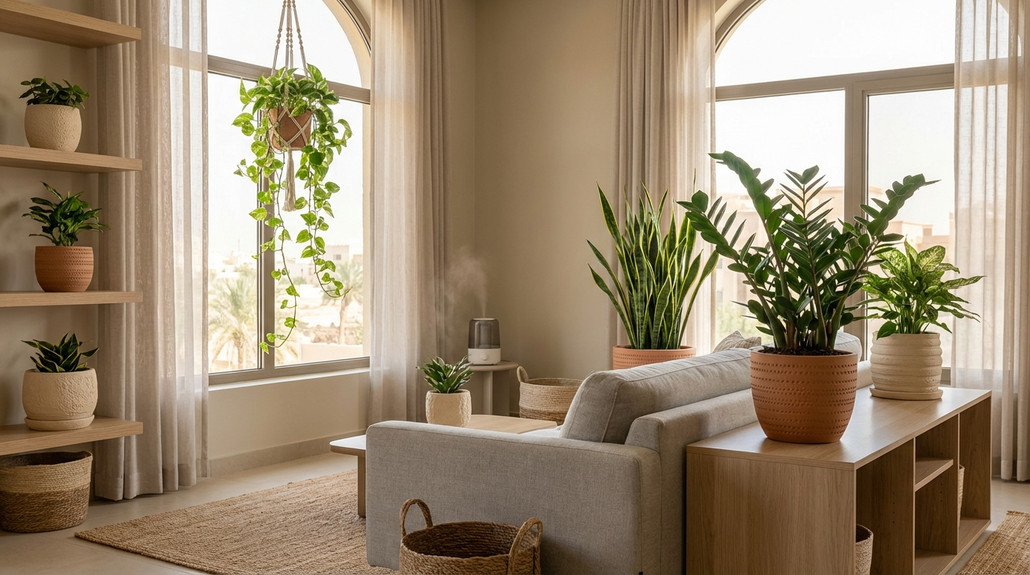
Best Indoor Plants for Apartments with Limited Light in Iraq Homes
Posted by Mozher Experts on 24.02.26
The Unique Challenge of Growing Plants Indoors in Iraq
Maintaining healthy indoor plants in Iraq presents a distinct set of challenges not found in more temperate climates. The primary obstacle is the stark contrast between the intense outdoor heat and the consistently cool, dry environment created indoors by air conditioning. This constant reliance on the AC, or السبلت, creates an artificial climate with extremely low humidity. While it provides comfort for us, it can be stressful for many common houseplants that originate from humid, tropical regions. The dry air pulls moisture from their leaves, leading to brown tips, curling, and a general failure to thrive. Furthermore, dust is a persistent issue, settling on leaves and blocking their ability to photosynthesize effectively. Choosing the right plant is not just about aesthetics; it is about selecting a species that can withstand these specific, demanding conditions. A plant that thrives in a European or North American home may struggle significantly here without very careful management. The key is to identify plants that are naturally resilient to low humidity, infrequent watering, and lower light levels common in many apartments.
Key Traits of a Successful Apartment Plant
When selecting indoor plants for an apartment in Iraq, certain characteristics are non-negotiable for long-term success. Focusing on these traits will save you from the disappointment of a plant that quickly deteriorates. The ideal plant must be adaptable, resilient, and suited to a life dictated by artificial cooling and variable indoor light. Prioritizing these features over fleeting trends ensures your home remains green and vibrant with minimal frustration.
Tolerance to Low and Indirect Light
Many apartments, due to their orientation or surrounding buildings, do not receive hours of direct sunlight. The intense summer sun in Iraq also means that we often keep curtains drawn during the hottest parts of the day. Therefore, the best house plants for this environment are those that have adapted to live in the understory of forests, receiving only dappled light. These species can photosynthesize efficiently without direct sun, preventing scorched leaves and stress. Look for plants known for their ability to maintain their color and health in a north-facing room or several feet away from an east-facing window.
Resilience to Dry Air from Air Conditioning
The single most significant environmental factor inside an Iraqi home is the dry air produced by constant air conditioning. This strips the air of humidity, which most tropical plants require to keep their foliage healthy. Successful indoor plants for this region are often those with waxy, thick, or succulent-like leaves. These adaptations help the plant store water and reduce moisture loss through transpiration. They are less prone to developing crispy brown edges and can withstand the arid indoor atmosphere far better than their delicate, thin-leaved counterparts. This resilience is a critical factor for plant survival through the long summer months.
Forgiving Watering Schedules
A forgiving nature when it comes to watering is another crucial trait. Plants that are highly susceptible to root rot from a single overwatering or that wilt dramatically if dry for a day are less suitable for busy lifestyles. The ideal apartment plant can tolerate periods of dryness and prefers its soil to dry out completely between waterings. This reduces the risk of the most common plant care mistake—providing too much moisture. Species that store water in their roots, stems, or leaves are excellent candidates, as they have their own internal reserves to draw upon, making them much more low-maintenance and durable.
Top Recommendations for Low-Light Iraqi Apartments
Based on years of experience with what truly survives and thrives in local conditions, a few specific plants consistently stand out. These are the workhorses of the indoor plant world, known for their toughness and ability to handle the challenges of a modern Iraqi home. They are not demanding and will reward even the most novice plant owner with steady growth and greenery. We have curated a list of highly resilient indoor plants that are particularly well-suited for these environments.
Snake Plant (Sansevieria trifasciata)
Often considered nearly indestructible, the Snake Plant is a superb choice. Its strong, upright architectural leaves are not just for show; they are incredibly efficient at storing water, allowing the plant to go for weeks without watering. It is exceptionally tolerant of low light conditions, making it perfect for apartment corners or hallways that other plants would not tolerate. Crucially, it is unfazed by the dry air from AC units. The Snake Plant also has air-purifying qualities, filtering common household toxins from the atmosphere. It requires minimal care—in fact, the most common way to kill it is by overwatering. Simply let the soil dry out completely before watering again.
ZZ Plant (Zamioculcas zamiifolia)
The ZZ Plant is another champion of neglect. Its wide, dark green, glossy leaves are so waxy they almost look artificial. This coating serves a vital purpose: it seals in moisture, making the plant incredibly drought-tolerant and resistant to low humidity. The ZZ Plant grows from large, water-storing rhizomes under the soil, which act as a reserve during dry spells. It thrives in very low light and requires infrequent watering, sometimes as little as once a month, depending on conditions. Its slow-growing nature means it will not quickly outgrow its space, and its leaves are easy to wipe clean of dust.
Pothos (Epipremnum aureum)
For those who appreciate a trailing or vining plant, the Pothos is an excellent and forgiving option. It is versatile and can be grown in a hanging basket or trained to climb. Pothos communicates its needs clearly; its leaves will begin to droop slightly when it is thirsty, bouncing back quickly after a drink. While it prefers bright, indirect light to maintain its variegation, it adapts well to lower light levels, though its growth may be slower and less colorful. It is not particularly demanding about humidity and tolerates the dry indoor air better than many other vining species, making it a reliable choice for adding cascading greenery to shelves or desks.
Essential Care Practices for the Iraqi Indoor Climate
Success with indoor plants is not just about selection; it is also about adapting care routines to our specific environment. General advice found online often assumes a different climate. In Iraq, our practices must account for the effects of constant air conditioning, low humidity, and the management of dust.
Watering Wisely
The most critical skill is learning when to water. A fixed schedule, such as "once a week," is unreliable because the AC's usage can dramatically alter how quickly soil dries. Always check the soil first. Insert your finger about two inches deep; if it feels dry, it is time to water. If it is damp, wait. For greater accuracy, consider using a moisture meter to remove the guesswork. When you do water, do so thoroughly until water drains from the bottom of the pot, then discard the excess. This encourages deep root growth and prevents the buildup of salts from tap water.
Managing Light and Placement
Even plants that thrive in low light need some light to survive. "Low light" does not mean no light. A good location is typically a few feet away from a window or in a room with a window that does not receive direct sun. It is equally important to avoid placing any plant directly in the cold draft of an AC unit. This can cause shock, dry out the leaves rapidly, and lead to sudden decline. Rotate your plants every few weeks to ensure all sides get some light exposure for even growth.
Dealing with Dust and Dryness
Dust accumulation on leaves can significantly hinder a plant's ability to photosynthesize. Make it a routine to gently wipe the leaves with a soft, damp cloth every couple of weeks. This keeps them clean and helps the plant breathe. While most of the recommended plants tolerate dry air, they will still appreciate a modest increase in humidity. You can achieve this by grouping plants together, which creates a small microclimate of higher humidity. Occasional misting can also help, but it is a temporary fix and should not be relied upon as a primary solution for humidity-loving plants.
Frequently Asked Questions
How often should I water my indoor plants with the AC on all day?
There is no fixed schedule. With the AC running, the air is very dry, but this does not always mean the soil dries faster, especially if the pot is large or the plant is in low light. The cool air can slow down the plant's metabolic processes. The only reliable method is to check the soil. For drought-tolerant plants like the Snake Plant or ZZ Plant, this could mean watering as infrequently as every 3-4 weeks. For a Pothos, it might be every 10-14 days. Always check the top two inches of soil for dryness before watering.
Are these recommended plants safe for my children and pets?
This is an important consideration. Among the top recommendations, the Snake Plant, ZZ Plant, and Pothos are considered toxic if ingested and can cause irritation. The Cast Iron Plant and Spider Plant are generally considered non-toxic. If you have curious pets or small children, it is best to place potentially toxic plants out of reach or opt for species known to be safe. We offer a curated collection of pet-safe plants to make this choice easier.
Can I use tap water for my plants in Iraq?
Generally, yes, but with a few considerations. Tap water in our region can be hard and may contain high levels of minerals and salts. Over time, these can build up in the soil and appear as a white crust on the surface or the pot. To mitigate this, it is good practice to flush the soil every few months. You can do this by watering the plant thoroughly in a sink or shower, letting a large amount of water run through the drainage holes to wash away excess salts. Alternatively, letting tap water sit out for 24 hours can allow some chemicals like chlorine to dissipate before use.