


Best Indoor Plants for Apartments with Limited Light in UAE Homes
Posted by Mozher Experts on 24.02.26
Understanding the Unique Challenges of Indoor Gardening in the UAE
Selecting the right indoor plant in the UAE requires a different approach than in more temperate climates. The primary challenge is not just the intense outdoor heat, but the stark contrast with the indoor environment. Homes and offices are sealed and heavily reliant on air conditioning, which creates a very specific set of conditions. The AC strips moisture from the air, leading to low humidity that can stress many tropical plants. It also creates cool drafts and maintains a constant, artificial temperature, which can be a shock to plants that thrive on natural fluctuations. Furthermore, dust is a persistent issue, settling on leaves and impeding their ability to photosynthesize. Successful indoor gardening here means choosing resilient plants that can tolerate low light, dry air from the AC, and occasional forgetfulness with watering. It is less about mimicking a natural habitat and more about finding species that are tough enough to adapt to this highly controlled, artificial environment. Selecting from a curated collection of indoor plants specifically chosen for these conditions is the first step toward success.
Top Plant Selections for Low-Light UAE Apartments
For spaces with limited natural sunlight, such as interior rooms or apartments with shaded windows, certain plants consistently outperform others. These are the species that do not require direct sun and can thrive on ambient or indirect light. They are also notably tolerant of the dry conditions created by constant air conditioning. Choosing the right plant from the start prevents the disappointment of watching a sun-loving species slowly fade in a dim corner. The following plants are our top recommendations based on years of experience with UAE homes and offices, valued for their resilience, low-light tolerance, and minimal care demands.
Zamioculcas Zamiifolia (The ZZ Plant)
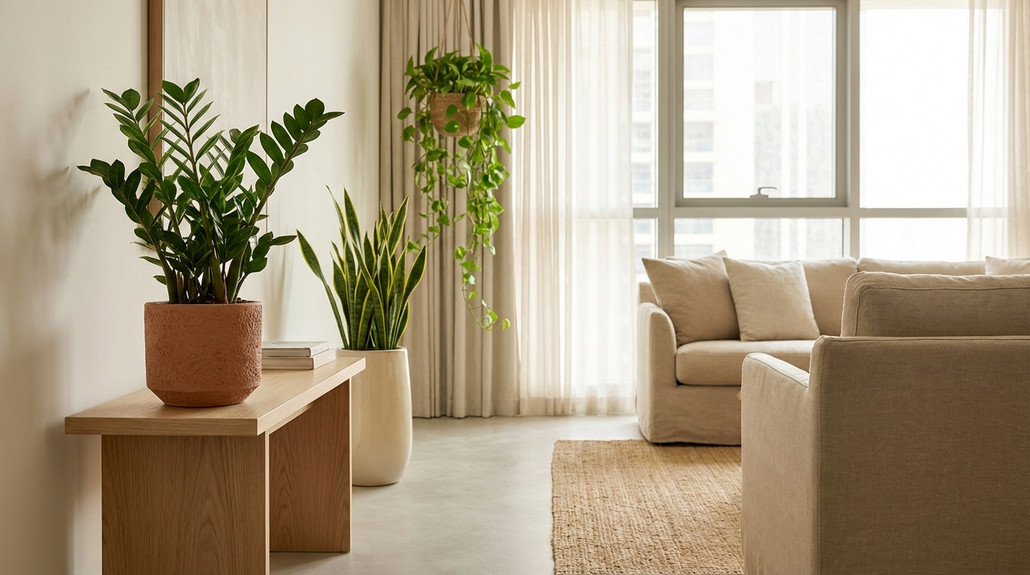
The ZZ Plant is arguably the most resilient houseplant available for difficult indoor conditions. Its ability to tolerate extremely low light levels is unmatched, making it ideal for hallways, offices, and rooms with north-facing windows. Structurally, it is built for survival; its fleshy rhizomes store water, allowing it to withstand long periods of drought. This is particularly useful for busy individuals or frequent travelers. The plant is a slow grower, which means it will not outgrow its space quickly and requires minimal pruning or repotting. Its glossy, dark green leaves are excellent at resisting dust buildup but should be wiped occasionally to maintain their appearance and health. The ZZ Plant is indifferent to the low humidity caused by air conditioning, showing no signs of stress like brown leaf tips. Its one critical need is to avoid overwatering, as this can lead to root rot. Allow the soil to dry out completely between waterings.
Sansevieria Trifasciata (The Snake Plant)
Also known as Mother-in-Law's Tongue, the Snake Plant is a classic choice for modern interiors due to its strong, architectural form. It is exceptionally adaptable and thrives in a wide range of light conditions, from bright, indirect light to very low-light corners. This versatility makes it one of the best house plants for nearly any room in a UAE apartment. Like the ZZ Plant, it is a succulent that stores water in its leaves, making it highly drought-tolerant and forgiving of infrequent watering. It is also known for its air-purifying qualities, making it a functional addition to living spaces and bedrooms. The Snake Plant is unaffected by the dry air from AC units and is generally pest-resistant. There are many varieties available, offering different heights and leaf patterns to suit various decor styles. For a consistently healthy plant, water only when the soil is completely dry to the touch.
Epipremnum Aureum (The Pothos)
The Pothos, or Devil's Ivy, is a fast-growing vine that is incredibly easy to care for, making it a favorite for both beginners and experienced plant owners. It tolerates low light well, although its variegation may become less pronounced in shadier spots. One of its best features is its clear communication; the leaves will visibly droop when the plant is thirsty, providing a clear signal that it's time to water. This removes much of the guesswork from plant care. Pothos is versatile in its display—it can be grown in a hanging basket, trained to climb a support, or allowed to trail along a shelf. It is not demanding about humidity and handles the dry air of an air-conditioned room with ease. Its rapid growth provides a quick sense of accomplishment and can be easily propagated from cuttings to create new plants. This adaptability and ease of care make it a staple for adding lush greenery to any indoor space.
Comparing Key Traits for Apartment Living
When deciding on the right plant, it helps to compare their characteristics side-by-side. Your lifestyle, the specific conditions in your apartment, and whether you have pets or children will all influence the best choice for you. Some plants offer extreme hardiness at the cost of slow growth, while others provide lush, fast growth but may require slightly more attention. This table provides a clear comparison of our top low-light recommendations to help guide your decision-making process. Understanding these trade-offs is key to choosing a plant that you will enjoy for years to come. Remember to consider the plant's mature size and shape to ensure it fits your intended space.
| Plant | Light Tolerance | Watering Needs | AC/Dry Air Tolerance | Growth Rate | Pet Safety |
|---|---|---|---|---|---|
| ZZ Plant | Very High (Tolerates very low light) | Very Low (Drought-tolerant) | Very High | Slow | Toxic if ingested |
| Snake Plant | High (Adapts to low and bright light) | Very Low (Drought-tolerant) | Very High | Slow to Moderate | Toxic if ingested |
| Pothos | High (Prefers medium, tolerates low) | Moderate (Prefers consistent moisture) | High | Fast | Toxic if ingested |
| Aglaonema | High (Prefers medium, tolerates low) | Moderate (Likes to dry out slightly) | Moderate | Moderate | Toxic if ingested |
Plants to Avoid in AC-Dominated Environments
While many plants can adapt, some species consistently struggle in the typical UAE indoor climate. These plants often require high humidity, which is the direct opposite of what a powerful AC system provides. Attempting to grow them can lead to frustration, with common symptoms including crispy brown leaf edges, leaf drop, and a failure to thrive. Calathea and Maranta species, often called "Prayer Plants," are known for their stunning foliage but are notoriously demanding when it comes to humidity. Without a dedicated humidifier, their leaves will quickly crisp in dry, air-conditioned air. Similarly, most Ferns, such as the Boston Fern or Maidenhair Fern, crave moisture in the air and will decline rapidly. Fittonia (Nerve Plant) is another that wilts dramatically without consistent moisture and high humidity. While these plants are beautiful, they are better suited for terrariums or bathrooms with higher ambient moisture rather than a main living area cooled by a powerful AC unit.
Essential Care Adjustments for the Local Climate
Caring for indoor plants in the UAE involves more than just watering. The environment requires specific adjustments to ensure your plants remain healthy. First, assess watering needs carefully. While AC creates dry air, it also cools the room, which can slow soil drying. At the same time, the low humidity can wick moisture from the soil surface faster. The only reliable method is to check the soil moisture with your finger or a moisture meter before watering. Do not water on a fixed schedule. Second, manage dust. A fine layer of dust settles on everything indoors, and this film can block light from reaching a plant's leaves. Wipe leaves with a damp cloth every few weeks to keep them clean and efficient at photosynthesis. Third, consider humidity. For plants that are slightly less tolerant of dry air, grouping them together can create a small microclimate with slightly higher humidity. Using pebble trays filled with water beneath the pots can also help. All the necessary soil, fertilizer, and tools can help you maintain a healthy environment for your plants.
Making the Right Choice for Your Space
Choosing the best house plant comes down to matching a plant's needs with your home's conditions and your lifestyle. If you are a beginner, travel often, or have a room with very minimal light, the ZZ Plant or Snake Plant are the most forgiving options. Their tolerance for neglect is unparalleled. If you desire a sense of lush, active growth and enjoy seeing rapid progress, the Pothos is an excellent choice. Its trailing vines can quickly fill a space with greenery. For those seeking plants that actively improve indoor air quality, consider browsing a collection of air-purifying plants, which includes the highly effective Snake Plant. Ultimately, the most successful plant parent is one who chooses a plant that fits realistically into their life. Start with one or two easy-care plants from a selection of proven low-light tolerant species, learn their rhythms, and build your confidence from there.
Frequently Asked Questions
How often should I water low-light plants in a UAE apartment?
There is no fixed schedule. The frequency depends on the plant, pot size, soil type, and the specific temperature and airflow in your room. The best practice is to check the soil. For drought-tolerant plants like the ZZ Plant and Snake Plant, wait until the soil is 100% dry throughout the pot. For Pothos, water when the top 2-3 inches of soil are dry. Always water thoroughly until it drains from the bottom, then discard the excess water.
Can these plants survive with only artificial light?
Yes, many low-light tolerant plants, especially the ZZ Plant and Snake Plant, can adapt and survive under standard office or home fluorescent or LED lighting. For them to truly thrive and grow, they would benefit from a full-spectrum grow light. However, if the goal is simply to maintain the plant in a windowless space, they are among the best options available.
Are all of these recommended plants safe for pets?
No, the plants listed in this guide (ZZ Plant, Snake Plant, Pothos, and Aglaonema) are considered toxic to cats and dogs if ingested. Ingestion can cause irritation, vomiting, or other adverse reactions. If you have curious pets that tend to chew on plants, it is crucial to either place these plants out of reach or choose from a selection of specifically pet-safe plants.