


Best Indoor Plants for Offices in Hot Countries in Iraq Homes
Posted by Mozher Experts on 24.02.26
Understanding the Iraqi Indoor Environment
Choosing the right indoor plant in Iraq involves more than just aesthetics. Our environment presents a unique challenge: extreme outdoor heat contrasted with intensely air-conditioned indoor spaces. This creates a difficult situation for many common houseplants. The constant operation of air conditioners (السبلت) drastically reduces indoor humidity, creating an arid atmosphere that can stress plants adapted to more tropical conditions. Furthermore, the temperature difference between a sun-exposed window and a cool, air-conditioned corner can be significant, demanding plants that are adaptable. Dust (الغبار) is another critical factor; it settles on leaves, blocking sunlight and impeding the plant's ability to photosynthesize. Selecting plants that can withstand these specific pressures—dry air, temperature fluctuations, and lower light levels away from windows—is the key to success. The goal is to find species that are not just surviving, but thriving within the controlled environments of our homes and offices.
Top Choices for Resilience and Low Maintenance
For those new to plant ownership or with limited time, certain plants consistently perform well in our local conditions. These species are forgiving of occasional neglect and tolerant of the environmental stressors common in Iraqi interiors. Their resilience makes them a practical investment, providing lasting greenery without demanding constant attention. They are selected for their ability to handle lower humidity, inconsistent watering, and varying light levels.
Snake Plant (Sansevieria trifasciata)
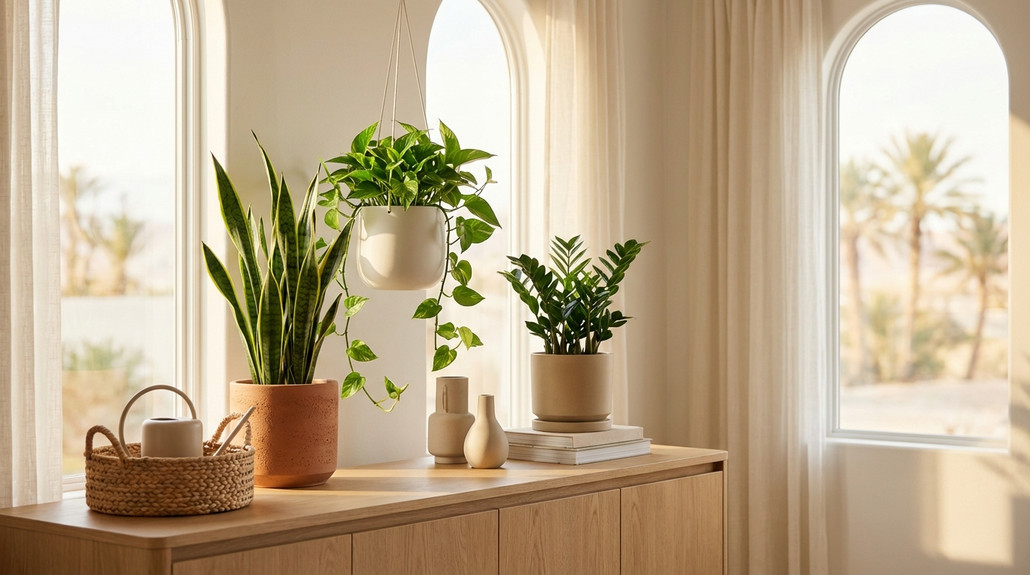
The Snake Plant is arguably the most durable indoor plant available. Its structural, upright leaves are excellent at storing water, making it extremely drought-tolerant. It is perfectly content with being watered only when the soil has completely dried out, a trait that helps prevent the root rot so common in over-watered plants. Critically for our homes, it is indifferent to the low humidity produced by air conditioning. It also thrives in a wide spectrum of light conditions, from the dim corners of a living room to brighter spots, as long as it is protected from the harsh, direct afternoon sun. Its air-purifying capabilities are an added benefit, making it a functional and sculptural addition to any room.
ZZ Plant (Zamioculcas zamiifolia)
The ZZ Plant is the definition of a low-maintenance plant. Its ability to survive with minimal water is exceptional, thanks to its large, potato-like rhizomes that store moisture for long periods. This makes it the ideal choice for busy offices or for individuals who travel frequently. The ZZ Plant is also highly adaptable to low light conditions, making it one of the few plants that can genuinely thrive in areas far from a window. Its glossy, dark green leaves are naturally resistant to dust accumulation and require only an occasional wipe-down. It handles dry, air-conditioned air without any sign of stress, showing no brown tips or wilting. For a truly "set and forget" green element, the ZZ Plant is unmatched.
Pothos (Epipremnum aureum)
Known for its fast-growing, cascading vines, the Pothos is both beautiful and communicative. It is an excellent beginner plant because it visibly droops when it needs water, taking the guesswork out of its care routine. Once watered, it quickly revives. Pothos is versatile in its light requirements; it prefers bright, indirect light to maintain its variegation but tolerates lower light levels well. Its trailing nature makes it suitable for shelves, hanging baskets, or as a desk plant where its vines can be trained. While it appreciates slightly higher humidity, it is remarkably tolerant of the drier air found in most homes here, making it a reliable and attractive option.
Selecting Plants for Specific Light Conditions
Light is the most critical factor for plant health, and Iraqi homes often have areas of intense brightness near windows and deep shade further inside. Understanding the light in your space is the first step to choosing a plant that will succeed. Direct sun coming through glass can act like a magnifying glass, scorching the leaves of even sun-loving plants. Conversely, a room that feels bright to us might be considered low light for a plant. The key is to match the plant to the available light. For darker corners or rooms with small windows, it is essential to choose plants that tolerate low light. For areas that receive plenty of daylight but are shielded from direct sunbeams, a wider variety of plants will thrive in bright, indirect light. Avoid placing most indoor plants in the direct path of unfiltered, intense midday sun, as this is the most common cause of leaf burn.
The Impact of Air Conditioning on Plant Health
While essential for comfort, constant air conditioning is one of the biggest hurdles for indoor plants in our region. AC units function by removing moisture from the air, creating an environment with very low humidity. Most popular houseplants are native to tropical regions where humidity is high. When placed in a dry, air-conditioned room, these plants can suffer from brown, crispy leaf edges, slowed growth, and an increased susceptibility to pests. The most damaging factor is the direct draft of cold air from an AC vent. This can cause sudden temperature shock, leading to leaf drop and plant stress. To mitigate these effects, avoid placing any plant directly in the line of airflow. Grouping plants together can help create a small microclimate with slightly higher humidity. For plants that are particularly sensitive, placing them on a tray filled with pebbles and water can also help increase local moisture as the water evaporates.
Plants to Approach with Caution in Our Climate
Certain popular plants are frequently sold but are notoriously difficult to keep alive in a typical Iraqi home due to their specific needs. Understanding which species struggle can save you from frustration and disappointment. These plants are not impossible to grow here, but they require a level of dedication and environmental modification that is beyond what most people are prepared to provide.
Calathea and Maranta (Prayer Plants)
These plants are prized for their stunning, ornate foliage. However, their beauty comes with a high price: a non-negotiable demand for high humidity. In the dry air of an air-conditioned home, their leaves will almost invariably develop brown, crispy edges and curl up. They require consistently moist soil without being waterlogged, a balance that is very difficult for beginners to achieve. Without a dedicated humidifier, keeping a Calathea looking its best is a constant battle.
Ferns (Boston Fern, Maidenhair Fern)
Similar to Calatheas, ferns are native to damp, shady forest floors and crave high humidity and constantly moist soil. They are extremely sensitive to dry air and will quickly shed their delicate fronds if their environment is not sufficiently damp. The dry atmosphere in our homes makes them a poor choice unless they are kept in a naturally humid area like a well-lit bathroom, away from any AC vents.
Essential Care Practices for a Thriving Indoor Garden
Successful plant ownership relies on a few core principles, adapted to our local environment. Consistency is more important than complex routines. Paying attention to your plant's basic needs and responding to them will lead to better results than blindly following a generic schedule.
Watering Wisely
The single most common mistake is overwatering. In our climate, the surface of the soil can dry out quickly, but the soil deeper in the pot may remain wet. Watering again too soon suffocates the roots, leading to rot. Instead of watering on a fixed schedule (e.g., "once a week"), always check the soil moisture first. Push your finger 2-3 inches deep into the soil. If it feels dry at that depth, it's time to water. For a more precise reading, using a simple moisture meter removes all guesswork and is an invaluable tool for any plant owner.
Managing Dust
The frequent dust in our air settles on plant leaves as a fine film. This layer blocks sunlight and clogs the pores (stomata) that the plant uses for gas exchange. Over time, this can significantly weaken the plant. At least once a month, gently wipe down the leaves of your plants with a soft, damp cloth. For smaller plants, a quick rinse in the shower can also work. This simple act keeps the leaves clean, glossy, and able to function efficiently.
Choosing the Right Foundation
The foundation of a healthy plant is its soil. Using heavy soil from an outdoor garden will compact in a pot, retain too much water, and prevent air from reaching the roots. Always use a high-quality, well-draining potting mix designed for indoor plants. Having the appropriate soil and care tools from the start sets your plant up for long-term health and reduces the risk of common problems like root rot.
Matching Plants to Your Space and Lifestyle
The best indoor plant is one that fits seamlessly into your life and the specific conditions of your space. Consider your daily routine, the intended location for the plant, and any safety concerns before making a choice. A well-chosen plant becomes a source of pleasure, not a chore.
For the Busy Office
An office environment requires plants that are self-sufficient and can tolerate periods of neglect, especially over weekends or holidays. The ZZ Plant and Snake Plant are excellent choices for office environments. They thrive under artificial fluorescent light, require minimal watering, and maintain their appearance without fuss. Their clean, architectural lines also complement a professional workspace.
For Homes with Pets or Children
If you have curious pets or small children, safety is a primary concern. Many common houseplants are toxic if ingested. Fortunately, there are many beautiful, non-toxic options. The Spider Plant, Parlor Palm, and Haworthia are all considered safe for pets and children. Always double-check a plant's toxicity profile before bringing it into a home with vulnerable family members.