


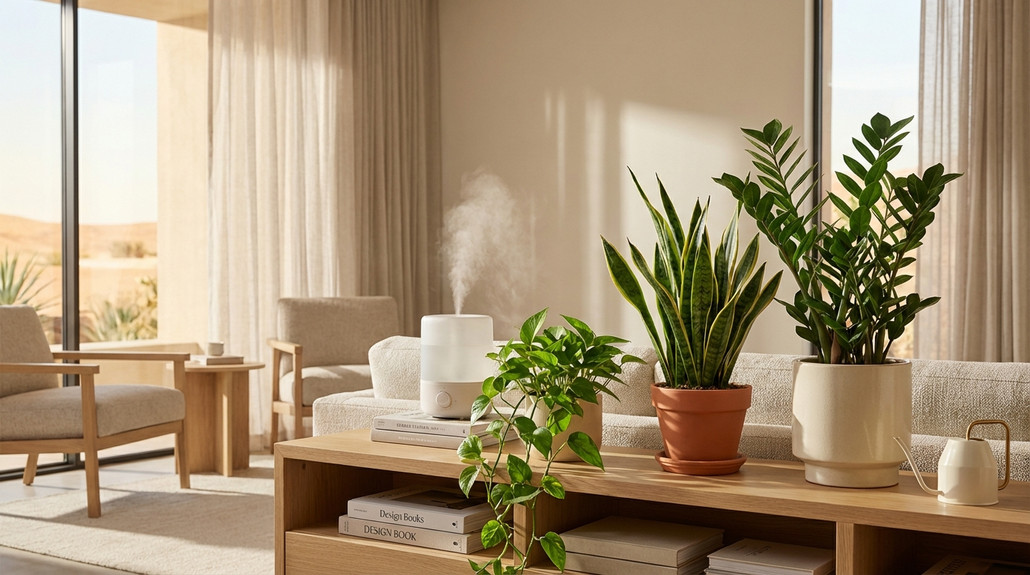
Best Indoor Plants for Offices in Hot Countries in Saudi Arabia Homes
Posted by Mozher Experts on 24.02.26
Understanding the Indoor Environment in Saudi Arabia
Choosing the right house plants in Saudi Arabia presents a unique set of challenges not found in more temperate climates. The primary factor is not the outdoor heat, but the indoor environment created to combat it. Homes and offices rely heavily on air conditioning, which leads to extremely dry air and significant temperature fluctuations. This constant, cold, dry airflow is the single biggest stressor for most tropical plants. Furthermore, modern architecture often uses heavily tinted windows to reduce heat gain, which can drastically lower the amount of natural light available indoors. Dust is another constant factor that can coat leaves, hindering photosynthesis. The best house plants for this region are not just those that tolerate heat, but those that can withstand low humidity, variable light, and the draft from an AC unit. Success depends on selecting resilient species adapted to these specific indoor conditions, rather than simply choosing what looks appealing at a nursery.
Top Resilient Plants for Dry, Air-Conditioned Homes
For a plant to thrive in a typical Saudi home, it must be exceptionally forgiving. These selections are known for their toughness and ability to handle the dry air and inconsistent care that often accompanies a busy lifestyle. They are the foundation of any successful indoor garden in this climate.
The Snake Plant (Dracaena trifasciata)
Often considered nearly indestructible, the Snake Plant is an ideal choice. Its structural, upright leaves are excellent at storing water, making it highly drought-tolerant. It can survive for weeks without watering, a useful trait if you travel. More importantly, it is indifferent to the low humidity produced by air conditioning. It also adapts to a wide range of light conditions, from low-light corners to bright, indirect sunlight, though it will grow more slowly in darker spots. Its vertical growth habit makes it suitable for tight spaces. The Snake Plant is also recognized for its air-purifying capabilities, filtering common indoor toxins. Given its resilience, it is one of the most reliable indoor plants you can own.
The ZZ Plant (Zamioculcas zamiifolia)
The ZZ Plant is another champion of neglect. Its glossy, dark green leaves grow from large, water-storing rhizomes hidden beneath the soil. This structure allows it to endure long periods of drought, making overwatering a greater risk than underwatering. The ZZ Plant is exceptionally well-suited to the dry air of an air-conditioned room and is a top performer in low-light environments. It requires minimal attention and is slow-growing, meaning it will not quickly outgrow its space. Its waxy leaves are also easy to wipe clean of dust, which is a practical benefit in the region. It is the perfect plant for a busy office or a part of the home that does not receive much natural light.
The Pothos (Epipremnum aureum)
Known for its fast-growing, cascading vines, the Pothos is both resilient and rewarding. It is highly adaptable to different light levels, though its leaf variegation will be more pronounced in brighter light. While it prefers slightly higher humidity, it tolerates the dry conditions of an AC-cooled room better than most vining plants. A key advantage of the Pothos is its clear communication; the leaves will visibly droop when it needs water, taking the guesswork out of your watering schedule. It recovers quickly once watered. This makes it an excellent learning plant for beginners. It can be grown in a hanging basket, on a shelf, or trained to climb, offering versatile decorative options.
Selecting Plants Based on Your Space and Lifestyle
The best plant is one that fits your environment. A plant that thrives in a bright living room may struggle in a dimly lit office. Consider the specific conditions of the intended location and your daily routine before making a choice.
For the Low-Light Office or Hallway
Spaces far from windows or in internal corridors require plants that are highly efficient at photosynthesis. The ZZ Plant and Snake Plant are the primary candidates here. Another excellent choice is the Cast Iron Plant (Aspidistra elatior), which lives up to its name by tolerating deep shade, infrequent watering, and poor air quality. These species maintain their appearance without direct sun, making them ideal for adding greenery to challenging spots. For those who need durable greenery for their workspace, our collection of office and desk plants includes many of these hardy varieties.
For Homes with Pets or Small Children
Safety becomes the priority when pets and children are present. Many common houseplants are toxic if ingested. The Spider Plant (Chlorophytum comosum) is a classic choice that is completely non-toxic and highly resilient. It also produces "pups" or baby plants, which are easy to propagate. The Prayer Plant (Maranta leuconeura) and various Calathea species are also safe, though they require more humidity than other plants on this list. Always verify a plant's toxicity before bringing it home. You can explore a curated selection of pet-safe plants to ensure peace of mind for your entire family.
For the Busy Professional or Frequent Traveler
If your schedule is unpredictable, you need a plant that can manage on its own. Succulents and cacti are the obvious choice, as they are desert natives built to withstand drought. However, for a more lush, leafy look, the ZZ Plant and Snake Plant are superior options. They require watering only once every 3-4 weeks, or even less in low light. They do not demand any special attention and will continue to look good even when you are away for extended periods. Their slow growth also means less frequent repotting and maintenance.
Plants That Often Struggle in Saudi Indoor Conditions
It is equally important to know which plants to avoid. Certain popular species are consistently set up for failure in dry, air-conditioned environments. Ferns, such as the Boston Fern or Maidenhair Fern, require very high humidity to prevent their delicate fronds from becoming brown and crispy. They suffer quickly from the dry air produced by AC units. Many Calathea varieties, while beautiful, are also humidity-lovers that will develop brown, curling leaf edges without supplemental moisture from a humidifier. Fittonia (Nerve Plant) is another that wilts dramatically at the slightest hint of dryness. While these plants can be kept alive with dedicated effort, they are not recommended for beginners or for those seeking low-maintenance greenery in this climate.
Essential Care Adjustments for the Local Climate
Caring for houseplants in Saudi Arabia requires a shift in standard practices. The most common mistake is overwatering. With the AC running constantly, soil does not dry out as quickly as one might think, even if the air feels dry. Always check the soil moisture at least a few inches deep before watering again. A moisture meter can be an invaluable tool. Second, dust accumulation is a significant issue. Leaves coated in dust cannot photosynthesize effectively. Wipe leaves regularly with a damp cloth. Do not place sensitive plants directly in the line of an AC vent, as the constant cold draft can cause stress and leaf drop. Finally, because the tap water can be high in mineral content, it is beneficial to occasionally use filtered or distilled water to prevent mineral buildup in the soil. Investing in the proper soil, fertilizer, and tools will make these tasks much simpler and more effective.
Comparison of Recommended House Plants
| Plant | Light Tolerance | Watering Needs | Humidity Tolerance | Best For |
|---|---|---|---|---|
| Snake Plant | Very High (Low to Bright Indirect) | Very Low | Very High | Beginners, Low Light, Busy People |
| ZZ Plant | High (Low to Medium Indirect) | Very Low | Very High | Offices, Forgetful Owners, Dark Corners |
| Pothos | High (Low to Bright Indirect) | Medium | Medium | Hanging Baskets, Fast Growth, Visual Cues |
| Spider Plant | Medium (Medium to Bright Indirect) | Medium | Medium | Pet-Friendly Homes, Air Purification |
| Cast Iron Plant | Very High (Very Low to Medium) | Low | High | Deep Shade, Extremely Low Maintenance |
Frequently Asked Questions
How often should I water my plants with the AC on all day?
Watering frequency is reduced, not increased, by constant AC. The cold air slows down evaporation from the soil. Instead of a fixed schedule, rely on touch. Water only when the top 5-7 cm of soil feels completely dry. For drought-tolerant plants like the Snake Plant or ZZ Plant, this could be as infrequent as once every 3-6 weeks. Overwatering is the most common way plants are killed in air-conditioned environments.
Do I need a humidifier for my indoor plants in Riyadh?
For the resilient plants recommended here (Snake, ZZ, Pothos), a humidifier is not necessary. They are chosen specifically for their ability to tolerate dry air. However, if you wish to grow more sensitive tropical plants like Calatheas, ferns, or Alocasias, a humidifier becomes essential to prevent brown, crispy leaves and promote healthy growth. For most people, selecting plants that do not require one is the more practical approach.
What are the signs of heat stress for a plant placed near a window?
Even indoors, a plant touching hot glass can suffer. Signs of heat stress include wilting or drooping leaves during the hottest part of the day, even if the soil is moist. You may also see yellowing leaves, or brown, scorched spots where the sun's rays have been magnified by the glass. To prevent this, ensure there is at least a few inches of space between the plant's leaves and the window pane, or use a sheer curtain to diffuse the intense midday sun.