


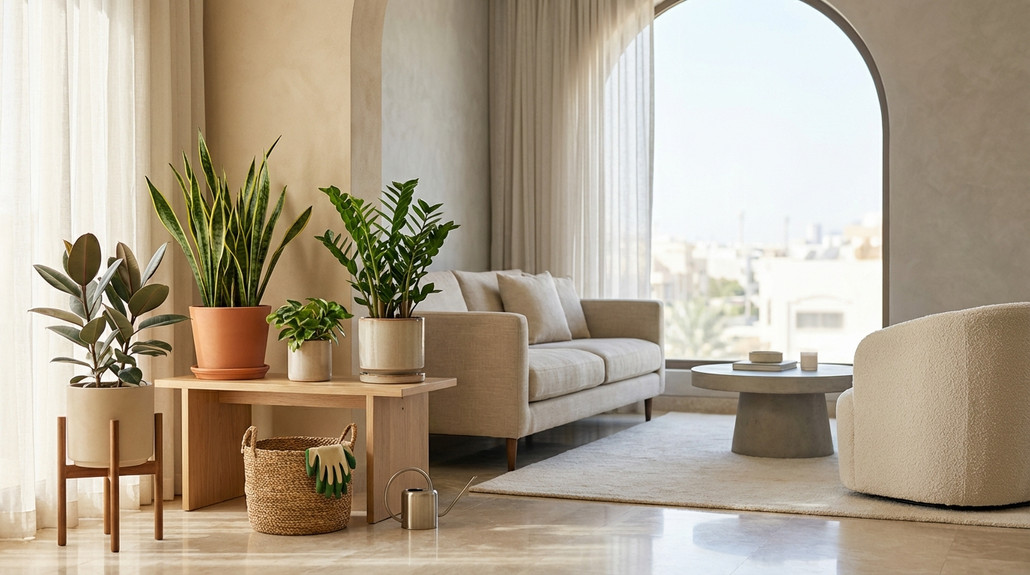
Best Indoor Plants That Survive Heat and AC in Iraq Homes
Posted by Mozher Experts on 21.02.26
Why Heat and AC Change the Rules for Indoor Plants in Iraq
Choosing the best indoor plants in Iraq is not the same as choosing plants in Europe or coastal climates. Here, summer heat is extreme, sunlight is intense, and most homes rely heavily on continuous AC for six to eight months of the year. That combination changes how plants grow, how fast soil dries, and how roots behave inside pots.
Air conditioning lowers humidity and creates constant dry airflow. Leaves lose moisture faster, especially if they sit directly in the AC path. At the same time, many apartments have limited natural light because curtains stay closed to block heat. So plants must tolerate both dryness and uneven light levels.
Another issue specific to indoor plants Iraq homeowners face is watering inconsistency. During heatwaves, soil dries quickly near windows. In cooler months, the same plant may stay wet for too long. This fluctuation causes root stress and is one of the most common reasons for plant loss.
The right choice, therefore, is not just about beauty. It is about heat tolerance, flexibility under low light, and forgiveness if watering is not perfect. When curated correctly, plants can thrive even in AC-heavy environments. The key is understanding which types adapt and which quietly decline.
What Makes a Plant Truly Suitable for Iraqi Homes
Not every “easy plant” online performs well under desert conditions. In Iraq, the best indoor plants share specific traits that allow them to handle AC, temperature swings, and dry air.
Heat Tolerance and Light Flexibility
Plants must tolerate indirect heat buildup near windows. Even indoors, sunlight passing through glass can intensify leaf burn. Species that survive in bright indirect light and adapt to medium or low light zones are more reliable. You can evaluate your space first by browsing plants organized by exposure, such as the light-based plant selection guide, which helps match plants to actual room conditions.
Controlled Water Needs
Plants that store some moisture in their stems or leaves handle inconsistent watering better. Overly thirsty tropical species often struggle in AC because humidity drops below what they prefer.
Moderate Growth Rate
Fast growers require more pruning and more frequent watering. In apartments and offices, moderate growth is easier to manage and less messy.
Resilience to Dry Indoor Air
Thin, delicate leaves suffer first under direct AC airflow. Thicker foliage generally performs better. Positioning still matters, but starting with tolerant species prevents avoidable stress.
Top Performers That Handle Heat and AC
Below are consistent performers in Iraqi homes. These are not trendy choices; they are reliable under real conditions.
Snake Plant
One of the most dependable options available through curated indoor plant collections. It tolerates low light, bright indirect light, and irregular watering. AC rarely affects it unless placed directly in airflow. Growth is slow and controlled, making it ideal for apartments and offices.
ZZ Plant
Excellent for busy households. It stores water in thick rhizomes, so missed watering is rarely fatal. It tolerates medium to low light and adapts well to office environments with artificial lighting.
Pothos
Flexible and forgiving. It performs well in bright indirect light and tolerates medium light. However, in very dark corners growth becomes thin. Keep it away from direct AC drafts to avoid leaf edge dryness.
Peace Lily
Suitable for homes with medium light. It shows visible signs when thirsty, which helps beginners learn watering rhythm. It may need slightly higher humidity, so avoid placing it under constant cold airflow.
Rubber Plant
Thicker leaves give it better tolerance to indoor dryness. It prefers bright indirect light and stable positioning. Once adjusted, it handles Iraqi summers well indoors.
If you want proven choices selected for performance, reviewing top-performing indoor best sellers can narrow the decision to plants already thriving in similar homes.
Comparison Table: Choosing Based on Your Situation
| Plant | Light Tolerance | Watering Frequency | AC Tolerance | Growth Rate | Best For |
|---|---|---|---|---|---|
| Snake Plant | Low to Bright Indirect | Every 2–3 weeks | High | Slow | Bedrooms, offices |
| ZZ Plant | Low to Medium | Every 2–3 weeks | High | Slow | Busy owners, low light apartments |
| Pothos | Medium to Bright Indirect | Every 7–10 days | Moderate | Moderate | Living rooms, shelves |
| Peace Lily | Medium | Weekly | Moderate | Moderate | Homes needing flowering plants |
| Rubber Plant | Bright Indirect | Every 10–14 days | High | Moderate | Statement corners |
Best Choices by Living Scenario
For Small Apartments
Compact plants with vertical growth work best. Snake plants and ZZ plants handle light variation and do not demand constant care. Explore options curated for apartments and compact living to avoid overcrowding your space.
For Offices with Continuous AC
Choose hardy, low-maintenance species. ZZ plants and snake plants tolerate artificial light and dry air. For structured workspaces, collections designed for desks and office environments simplify placement decisions.
For Low Light Rooms
Not every plant tolerates dim areas. Prioritize species categorized under low light tolerant plants. Even then, ensure some indirect daylight reaches the area.
For Busy Lifestyles
Slow growers with low watering frequency reduce risk. Overwatering kills more plants than neglect in Iraq. If travel is frequent, choose plants that tolerate drying cycles rather than those requiring strict schedules.
Plants That Often Fail in Iraqi Conditions
Some popular species struggle despite good intentions.
- Ferns: Require consistent humidity and suffer under dry AC air.
- Calatheas: Sensitive to water quality and airflow; leaf edges brown quickly.
- High-humidity tropical orchids: Need stable moisture and filtered light.
- Thin-leaf tropical plants: Burn easily near windows in summer.
These plants are not impossible, but they demand humidity control and careful placement. For most households, especially beginners, they result in frustration.
Watering and Care Adjustments for AC Homes
AC changes soil drying patterns. The surface may appear dry while the root zone remains moist. Always check soil depth before watering. In summer, plants near bright windows may need slightly more frequent watering. In winter, reduce frequency.
Rotate plants every few weeks to ensure even growth. Keep them away from direct airflow vents. If leaves show dry tips, adjust positioning first before increasing watering.
For evidence-based plant care principles under hot climates, refer to horticultural guidance such as the University of Florida IFAS Extension and the Royal Horticultural Society, both of which publish reliable indoor plant care research.
Decision Guide: If Your Home Is X, Choose Y
If your apartment receives limited daylight and runs AC most of the year, choose snake plant or ZZ plant.
If your living room has bright indirect light and you want visible growth, choose rubber plant or pothos.
If you want flowers and can maintain consistent watering, peace lily works well in medium light rooms.
If you travel frequently or forget watering schedules, prioritize slow-growing, drought-tolerant species.
When selecting from curated collections, focus on plants proven to adapt locally rather than trending species. The best indoor plants are those that remain stable across seasons, not just those that look impressive on the first day.
Frequently Asked Questions
Which plant survives strongest under constant AC?
Snake plant and ZZ plant consistently perform best. They tolerate dry air, inconsistent watering, and low to medium light conditions.
How often should I water indoor plants during Iraqi summer?
It depends on light and pot size, but most hardy indoor plants need watering every 10–21 days. Always check soil depth instead of following a fixed schedule.
Are flowering plants suitable for AC environments?
Some are. Peace lilies adapt reasonably well if kept away from direct airflow and provided medium light. Many delicate flowering tropical species struggle without added humidity.
What is the safest choice for beginners in Iraq?
Start with snake plant or ZZ plant. They are forgiving, stable under temperature shifts, and require minimal adjustment throughout the year.