


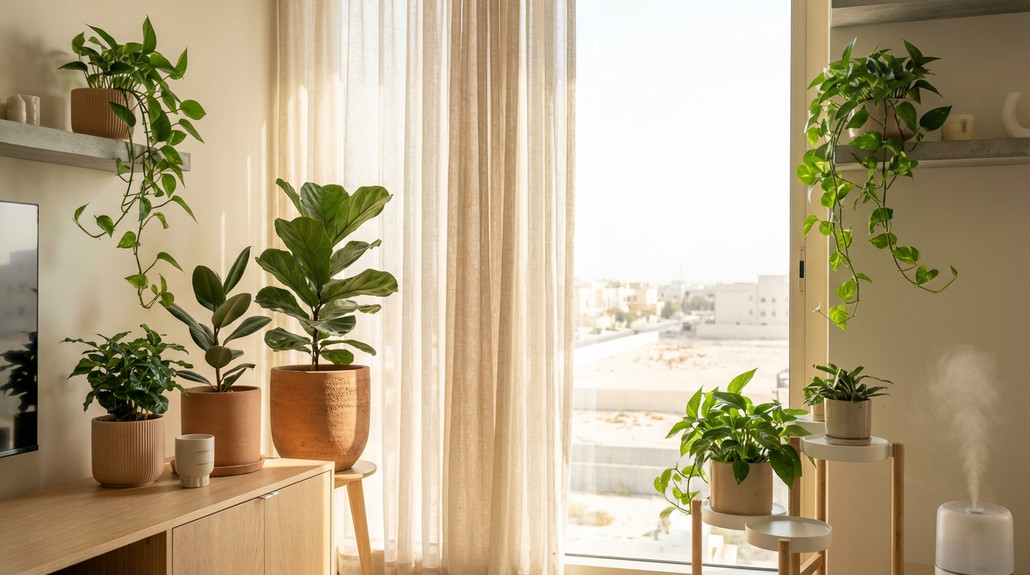
How Indoor Plants Behave Differently in Hot Climates in Saudi Arabia Homes
Posted by Mozher Experts on 19.02.26
The Heat Outside, the AC Inside: Why Plants React Differently Here
Step into a typical Saudi home in August. Outside, temperatures push past 45°C. Inside, the AC runs almost constantly. Curtains filter harsh sun, windows stay closed, and air circulates in cycles of cooling and drying. This environment is comfortable for people. For indoor plants, it is complex.
In hot climates, plant stress rarely comes from heat alone. It comes from contrast. Roots sit in cool soil while leaves face dry, moving air from the AC. Light levels fluctuate depending on window direction and dust buildup. Humidity can drop below 30% indoors, especially under direct airflow. That combination changes how indoor plants behave compared to temperate climates.
If you want a deeper technical breakdown of this pattern, see how indoor plants respond to Saudi home conditions. The key principle is simple: growth slows, water use becomes irregular, and small care mistakes show up quickly.
In indoor plants Saudi Arabia homes, survival depends less on temperature and more on managing light, water, airflow, soil structure, and acclimation. When these factors align, plants stabilize. When one is off balance, decline can be fast.
Light Intensity vs. Light Duration: A Subtle but Critical Difference
In cooler regions, a bright window often equals healthy growth. In Saudi Arabia, sunlight is more intense and more concentrated. Glass amplifies heat, and reflective surfaces increase leaf temperature. Even when indoor air is cool, leaf surfaces near south- or west-facing windows can overheat.
Why Leaves Burn Faster Near Glass
Direct sun through glass can raise leaf temperature well above room temperature. Combined with dry AC air, this increases transpiration. Plants lose water faster than roots can replace it, especially in dense soil. The result is crisp edges, faded patches, or sudden yellowing.
Not all plants handle this equally. If you are selecting species for strong exposure, use the bright indirect light plant collection as a reference point. These varieties tolerate intensity but still prefer filtered light.
Artificial Light and Long AC Hours
Many apartments rely heavily on artificial lighting. Plants under LED lighting with long AC cycles behave differently. Growth becomes slower and more compact. Water needs decrease. Overwatering becomes common because evaporation slows in cooler indoor air.
If your home has limited natural light, consider options categorized under plants that tolerate artificial lighting. They adapt better to stable, low-transpiration environments.
The rule that breaks here: “More light equals more growth.” In Saudi homes, more light sometimes equals more stress.
Watering Patterns Change Under AC
In desert climates, many assume plants need more frequent watering. Indoors, the opposite often happens. Air is dry, but soil dries unevenly because rooms are cooled. Roots stay cool and sometimes damp longer than expected.
Surface Dry Does Not Mean Root Dry
Topsoil can look dry within a day due to airflow. Deeper layers may remain wet for a week. Watering based only on surface appearance leads to root suffocation. This is one of the most common beginner mistakes with indoor plants.
Use finger checks at depth, not just visual inspection. Better yet, monitor moisture levels consistently. Tools under soil, fertilizer and plant care tools can help you read conditions accurately instead of guessing.
Seasonal Differences Inside the Same House
Winter in Saudi Arabia is mild. AC use drops. Evaporation slows further. Plants that tolerated weekly watering in summer may now require water every two to three weeks. Overwatering during this period is common.
Healthy indoor plants in Saudi Arabia homes are watered based on soil behavior, not calendar schedules.
Humidity, Airflow, and Leaf Stress
Humidity indoors often falls below what tropical plants prefer. Continuous airflow from vents increases transpiration and can distort new growth.
Direct AC Exposure
Plants placed directly under vents experience cold drafts and constant drying. Symptoms include curled leaves, brown tips, and stalled growth. Move plants at least one meter away from direct airflow whenever possible.
Closed Windows and Stagnant Corners
While AC circulates air, some corners remain stagnant. Poor airflow encourages fungal issues if soil remains damp. Balance is critical: avoid drafts, but do not trap plants in still, humid pockets.
If your goal is improved indoor air quality and resilience, explore carefully selected air-purifying plant options suited to climate-controlled interiors. Species choice matters more than misting routines.
The rule that breaks: “Just mist the leaves.” In low-humidity homes, misting offers only short-term relief. Placement and airflow adjustments are more effective long term.
Soil Structure and Pot Choice in Hot Regions
Standard potting soil used in temperate regions often holds too much water under AC conditions. Drainage must be sharper. Aeration is critical.
Why Dense Soil Causes Faster Decline
In cool indoor environments, roots respire more slowly. Oxygen availability becomes essential. Heavy soil compacts, trapping moisture and reducing airflow to roots. This leads to root rot even when watering seems moderate.
Pot Material and Heat Transfer
Near windows, dark plastic pots can overheat in direct sun. Ceramic or light-colored pots moderate temperature better. Always ensure drainage holes. Decorative outer pots without drainage increase risk.
If you are building a stable setup from the start, browse curated indoor plant selections paired with climate-appropriate containers. Balanced combinations reduce early failure.
Acclimation After Delivery or Relocation
Plants delivered in Saudi Arabia often move from greenhouse environments into air-conditioned homes within hours. That shift is significant.
The First Two Weeks
Expect minor leaf drop or slowed growth. This is adjustment, not necessarily decline. Avoid repotting immediately unless the plant is rootbound. Let it adapt to light levels and airflow first.
Gradual Light Adjustment
If placing a plant near a bright window, introduce it gradually. Start slightly away from direct exposure and move closer over one to two weeks. Sudden light increases cause shock.
Understanding plant hardiness categories helps set realistic expectations. Review classifications under plant hardiness levels to match resilience with your home environment.
Common Myths vs. Reality in Saudi Homes
| Myth | Reality |
|---|---|
| Plants need daily watering in hot countries. | Indoor AC slows soil drying; overwatering is more common than underwatering. |
| Misting solves dry air problems. | Placement away from vents and stable soil moisture matter more. |
| Any bright window works. | Intensity through glass can burn leaves; filtered light is safer. |
| Yellow leaves mean more water. | Often the opposite; check roots before adjusting. |
University extension research, such as guidance from the University of Florida IFAS Extension and the Royal Horticultural Society, confirms that overwatering and poor light adaptation are leading causes of indoor plant decline in climate-controlled homes.
Quick-Start Stability Checklist
- Place plants away from direct AC airflow.
- Check soil moisture at root depth before watering.
- Use well-draining soil with aeration components.
- Filter intense sunlight with sheer curtains.
- Allow two weeks for acclimation after moving locations.
- Adjust watering frequency between summer and winter.
These fundamentals prevent most losses. Indoor plants respond predictably when environmental variables stay consistent.
Frequently Asked Questions
Why do my indoor plants decline even though my home is cool?
Cool air from AC reduces evaporation at the soil level but increases leaf moisture loss due to airflow. This imbalance often leads to root stress from overwatering combined with leaf dehydration.
How often should I water indoor plants in Saudi Arabia?
There is no fixed schedule. In summer with heavy AC use, many plants need watering every 7–14 days. In winter, it may extend to 2–3 weeks. Always confirm by checking soil depth rather than following a calendar.
Is bright sunlight through a window safe?
Filtered bright light is usually safe. Direct midday sun through glass in Saudi Arabia can scorch leaves. Gradual exposure and sheer curtains reduce risk.
Are certain indoor plants better suited for Saudi homes?
Yes. Species that tolerate fluctuating humidity and moderate light adapt more reliably. Selecting plants categorized by light level and hardiness improves long-term stability.
Building Confidence with Indoor Plants in Saudi Arabia
Success with indoor plants here is not about frequent intervention. It is about controlled conditions. When light is moderated, soil drains properly, airflow is managed, and watering is measured, plants stabilize and growth becomes steady.
Beginners often fear making mistakes. The reality is that most problems are reversible when detected early. Observe leaf texture, growth speed, and soil moisture trends. Adjust gradually, not drastically.
Indoor plants Saudi Arabia homes can thrive beautifully under AC and intense sun when care decisions reflect local realities. Stability, not perfection, is the goal.