


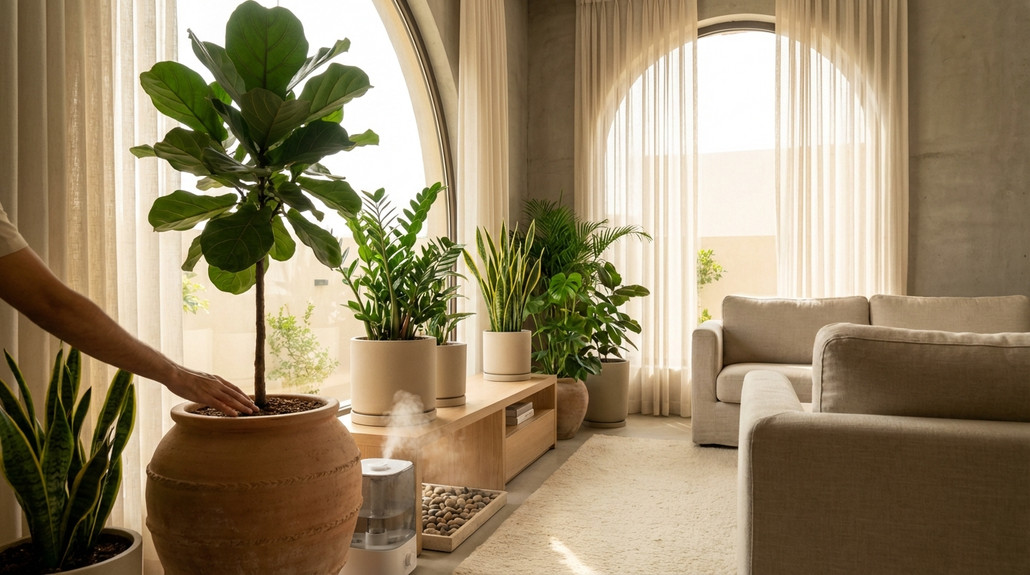
How Indoor Plants Behave Differently in Hot Climates in Saudi Arabia Homes
Posted by Mozher Experts on 24.02.26
Understanding the Indoor Environment in Saudi Arabia
Caring for indoor plants in Saudi Arabia presents a unique set of challenges not covered by generic online advice. The core issue is the conflict between the extreme outdoor heat and the intensely controlled indoor environment. Outside, temperatures are high and the sun is harsh. Inside, air conditioning runs almost constantly, creating an artificially cool and very dry atmosphere. This constant AC operation is the single most significant factor affecting houseplants. It actively removes moisture from the air, creating low-humidity conditions that are stressful for many popular tropical plants. It also creates cold drafts, which can shock plants placed directly in the airflow. Furthermore, dust from the outside environment can quickly settle on leaves, blocking light and hindering the plant's ability to photosynthesize. Successfully growing indoor plants here requires acknowledging and managing this specific microclimate, not just following standard care instructions.
The Critical Role of Light Indoors
Light is a plant's primary source of energy, but the sunlight in Saudi Arabia is exceptionally intense. While you might assume more light is always better, direct sun exposure through a window can scorch the leaves of most houseplants within hours. The goal is to provide bright, but indirect, light. A common mistake is underestimating the intensity of light even from a north-facing window. What might be considered "medium light" in a European country can be "bright indirect light" here. Observe how the light moves through your rooms during the day. A spot that gets direct sun for more than an hour or two is unsuitable for most common indoor plants like Monsteras or Philodendrons. Sheer curtains are an excellent tool for diffusing harsh sunlight, providing the bright, filtered conditions that many species thrive in. If your home has limited natural light, consider plants adapted to low light, such as the Snake Plant (Sansevieria) or ZZ Plant (Zamioculcas zamiifolia), which are more forgiving of less-than-ideal lighting.
Mastering Watering in an Air-Conditioned Climate
Watering is the most common area where new plant owners fail, especially in our climate. The dry air from the AC can cause the top layer of soil to dry out very quickly, which often tricks people into thinking the entire pot is dry. This leads to frequent watering, saturated soil at the bottom of the pot, and ultimately, root rot. A fixed watering schedule (e.g., "water every Saturday") is not a reliable method. Instead, you must learn to check the soil moisture directly. The most dependable technique is to insert your finger 2-3 inches into the soil. If it feels dry at that depth, it is time to water. If you feel any moisture, wait a few more days and check again. For greater accuracy and to eliminate guesswork, using a moisture meter is a practical solution. When you do water, do so thoroughly until water drains from the bottom of the pot. This ensures the entire root system has access to moisture. Then, allow the soil to dry out appropriately for that specific plant before watering again.
Managing Humidity and Airflow Challenges
Most popular houseplants are native to humid, tropical regions. The air inside a heavily air-conditioned home in Saudi Arabia is the opposite of this—it is extremely dry. This lack of ambient moisture can cause issues like brown, crispy leaf tips, slow growth, and increased susceptibility to pests like spider mites. You must actively work to increase the humidity around your plants. Simple methods include grouping plants together, which creates a small pocket of higher humidity as they transpire. Placing pots on a tray filled with pebbles and water (ensuring the pot sits on the pebbles, not in the water) can also help as the water evaporates. For more sensitive plants like Calatheas or Ferns, using an electric humidifier is the most effective solution. At the same time, be mindful of airflow. While stagnant air can encourage fungal issues, a direct, cold draft from an AC vent is highly damaging. Position your plants where they receive gentle air circulation but are shielded from the direct blast of the AC unit.
Soil, Pots, and Acclimation for Long-Term Health
The foundation of a healthy plant is its root system, which depends entirely on the quality of the soil and the suitability of the pot. Using poor-quality soil that compacts easily or retains too much water is a primary cause of failure. A good indoor potting mix should be light and airy, allowing for both moisture retention and proper drainage. Using proper soil and tools from the start prevents many future problems. The pot itself must have drainage holes. Without them, excess water has nowhere to go, guaranteeing root rot. When you first bring a new plant home, it needs time to acclimate. It has gone from a controlled nursery environment to your specific home conditions. Expect some minor stress, like the dropping of a leaf or two. Avoid immediate repotting unless the plant is severely root-bound. Give it a couple of weeks in its new spot to adjust to your home's unique light, temperature, and humidity levels before making any major changes.
Selecting the Right Plants for Your Home
The easiest way to ensure success is to choose plants that are well-suited to the conditions you can realistically provide. Fighting to keep a high-humidity, high-maintenance plant alive in a very dry, dark corner is a frustrating experience. Instead, assess your home environment first, then select plants that match. If you are a beginner or have a busy lifestyle, start with durable and resilient species. Plants like the ZZ Plant, Snake Plant, Pothos, and Spider Plant are famously tolerant of a wide range of conditions, including lower light and inconsistent watering. They are excellent choices for building confidence. As you gain experience, you can explore other varieties. When choosing, consider the plant's mature size and growth habit to ensure it will fit your space long-term. Browsing a curated selection of indoor plants specifically chosen for regional homes can help you make an informed decision and avoid species that are known to struggle in our climate.
Common Misconceptions About Plant Care in the Region
Several myths can lead new plant owners astray. It's important to separate fact from fiction for better results.
Myth: Misting leaves is an effective way to raise humidity.
Reality: While misting provides a momentary moisture boost, its effects are very short-lived, often lasting only a few minutes in a dry, air-conditioned room. It does little to change the overall ambient humidity. Consistent methods like humidifiers or pebble trays are far more effective. Frequent misting can also encourage fungal diseases on the leaves if airflow is poor.
Myth: Yellowing leaves always mean the plant is thirsty.
Reality: Yellow leaves are a general symptom of stress and are more often caused by overwatering than underwatering. When soil is waterlogged, roots cannot absorb oxygen, and the plant begins to decline, often presenting with yellow leaves. Always check the soil moisture deeply before adding more water. Underwatering typically causes wilting, drooping, and dry, crispy leaves.
Myth: All indoor plants need to be placed right next to a window.
Reality: Only a few indoor plants can tolerate the direct, intense sun found at a south or west-facing window in Saudi Arabia. Most require bright but indirect light. Placing them several feet back from a window or behind a sheer curtain is often the ideal position. Some low-light tolerant plants can thrive even further into a room, away from any direct window light.