


How Often You Should Really Water Indoor Plants in Iraq Homes
Posted by Mozher Experts on 24.02.26
The Challenge: Watering in Extreme Heat and Air Conditioning
Maintaining indoor plants in Iraq presents a unique set of challenges not found in more temperate climates. The primary issue is the dual stress of extreme external heat and the constant, dry air produced by indoor air conditioning units. Home environments often become a paradox for plants: while the temperature is controlled, the humidity plummets. Air conditioners are extremely effective at removing moisture from the air, creating an environment that can be as dehydrating as a desert. This dry air accelerates transpiration, causing plants to lose water through their leaves more quickly than they would in a naturally humid setting. Furthermore, the constant airflow from an AC unit can cause soil to dry out unevenly, with the surface appearing dry while the lower root zone remains damp. This often leads to confusion and incorrect watering practices, which are the leading cause of plant failure. Understanding this specific indoor climate is the first step toward successful proper indoor plant care. It requires a shift away from generic advice and a move toward observing the plant's direct environment—the pot, the soil, and its immediate surroundings.
Ditch the Schedule: Learn to Read Your Plant and Soil
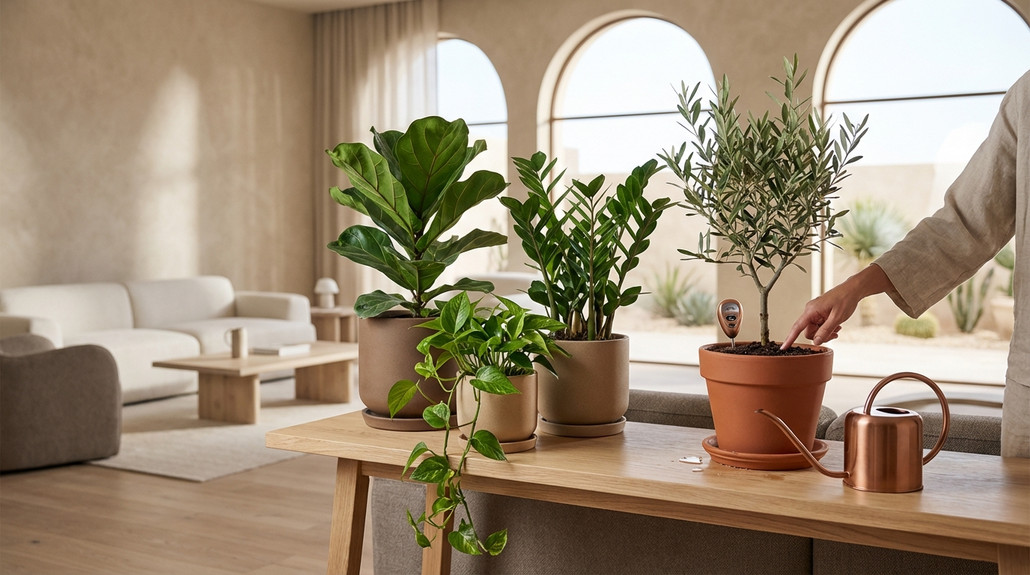
The most common mistake plant owners make is adhering to a rigid watering schedule, such as watering every Saturday. This approach ignores the plant's actual needs, which fluctuate based on light, temperature, humidity, and its growth cycle. In an air-conditioned Iraqi home, this method is especially unreliable. Instead, you must learn to assess the soil moisture directly. The most dependable method is the finger test. Insert your index finger into the soil up to your second knuckle. If the soil feels damp or sticks to your finger, the plant does not need water. If it feels dry and falls off your finger easily, it is time to water. This simple technique prevents the leading cause of plant decline: overwatering and subsequent root rot. Another manual check is the weight of the pot; a pot with dry soil is significantly lighter than one with wet soil. Lift the pot after a thorough watering to gauge its maximum weight, and then lift it every few days to feel the difference. For those seeking greater precision, investing in a reliable moisture meter removes all guesswork, providing a clear reading of moisture levels at the root zone where it matters most.
The Importance of Proper Watering Technique
How you water is as critical as when you water. Many people provide small, frequent sips of water, which only moistens the top layer of soil. This encourages shallow root growth and leaves the deeper roots, which are essential for stability and nutrient absorption, completely dry. The correct technique is to water thoroughly and deeply. When you water, apply it slowly and evenly around the base of the plant until you see it flowing freely from the drainage holes at the bottom of the pot. This ensures that the entire root ball is saturated. After watering, allow the pot to drain completely for 15-20 minutes in a sink or bathtub. It is absolutely crucial to discard any excess water that collects in the saucer. Letting a plant sit in standing water is the fastest way to induce root rot, a fatal condition where roots suffocate and decay due to lack of oxygen. Regarding water quality, tap water in many areas can be high in chlorine. While most houseplants can tolerate it, sensitive species may show brown leaf tips. An easy solution is to let your watering can sit out overnight, allowing the chlorine to evaporate before you use it.
How Light, Pot Type, and Soil Affect Watering Frequency
Several environmental factors directly influence how quickly a plant's soil dries out. Understanding these variables is key to establishing a successful watering rhythm. Light is the most significant factor; a plant situated in a spot with bright, indirect light will photosynthesize more actively and use water much faster than a plant in a low-light corner. This is why choosing plants based on light conditions in your home is a foundational step. The material of the pot also plays a major role. Porous materials like unglazed terracotta allow moisture to evaporate through their walls, causing the soil to dry out very quickly. This can be beneficial for plants prone to root rot, like succulents, but means they require more frequent checking. Conversely, plastic or glazed ceramic pots are non-porous and retain moisture for much longer. Finally, the soil composition is critical. A dense, heavy potting mix will hold water for extended periods, increasing the risk of overwatering. A high-quality, well-aerated mix containing components like perlite or orchid bark promotes excellent drainage and allows air to reach the roots. Always ensure your plant is in a well-draining container with at least one drainage hole.
Recognizing Signs of Overwatering vs. Underwatering
Plants communicate their needs through visual cues. Learning to interpret these signs will help you correct your watering habits before serious damage occurs. It's a common misconception that wilting always means a plant is thirsty. In fact, both overwatering and underwatering can cause wilting, but the other symptoms will differ.
Signs of Overwatering
Overwatering is the more dangerous of the two, as it leads to root rot. Look for lower leaves turning yellow and dropping off, while new growth may be weak. The base of the stem might feel soft or mushy. You may notice a musty or rotten smell coming from the soil, and small flying insects like fungus gnats may appear, as they are attracted to consistently damp soil. The soil surface might even develop a layer of green algae or mold. If the plant is wilting but the soil is wet to the touch, you are almost certainly overwatering.
Signs of Underwatering
An underwatered plant will also wilt, but its leaves will feel dry and papery, not soft. The edges or tips of the leaves may turn brown and crispy. The soil will be visibly dry and may have pulled away from the sides of the pot, creating a gap. The entire plant may look limp and droopy, but it will typically perk up quickly within a few hours of receiving a thorough watering. Growth will be stunted, and you may notice lower leaves shriveling up and falling off as the plant sacrifices them to conserve moisture for new growth. This condition is generally easier to recover from than severe overwatering.
Adjusting Your Routine Through the Seasons
Even though your plants live indoors, their needs change with the seasons. These adjustments are particularly important in Iraq, where the contrast between summer and winter indoor conditions can be stark. During the long, intense summer, air conditioners run almost nonstop. This keeps the temperature stable but creates very low humidity, which can increase a plant's water usage. You will likely need to check your plants for dryness more often. However, resist the urge to water more frequently without checking the soil first, as the cool indoor air can slow down soil drying compared to the ambient heat outside. In contrast, during the milder winter months, homes are not cooled as aggressively and daylight hours are shorter. This means plant growth slows down considerably. With less light and less active growth, plants require significantly less water. This is the period when the risk of overwatering is highest. You must extend the time between waterings, perhaps checking weekly instead of every few days. Always rely on the finger test rather than the calendar to determine when to water.
Special Considerations for Different Plant Types
Not all plants have the same thirst. Grouping your plants mentally by their water requirements can simplify your care routine. Understanding the native environment of a plant offers clues to its needs. For example, succulents and cacti are adapted to arid climates and store water in their leaves and stems. They need a "soak and dry" approach—water them thoroughly, then allow the soil to dry out completely before watering again. For these, it is always better to err on the side of underwatering. Tropical plants like Ferns, Calatheas, and Alocasias originate from rainforest floors where the soil is consistently moist. They should not be allowed to dry out completely, but their soil should never be soggy or waterlogged. They are particularly sensitive to the dry air from AC units. Aroids, a popular group that includes Monsteras, Philodendrons, and Pothos, prefer to dry out partially. A good rule of thumb for them is to water when the top 50% of the soil is dry. You can explore our curated collection of indoor plants to find species that match your home's conditions and your care style.
Frequently Asked Questions About Watering Plants
Should I mist my plants?
Misting provides a very temporary spike in humidity around a plant's leaves, which can feel beneficial in our dry, air-conditioned homes. However, the effect lasts only for a few minutes and does not replace the need for proper soil watering. For humidity-loving tropical plants, misting is insufficient. A more effective long-term solution is to group plants together to create a microclimate, place them on a pebble tray filled with water, or use a small humidifier in the room. Misting can also sometimes encourage fungal leaf spot diseases if done too frequently or in a room with poor air circulation.
What is the best time of day to water?
The best time to water your indoor plants is in the morning. Watering early in the day gives the plant ample time to absorb the moisture it needs for photosynthesis during the peak daylight hours. It also allows any excess water on the leaves or soil surface to evaporate, reducing the risk of fungal growth and pests that thrive in damp, dark conditions. Watering at night can leave the soil saturated for too long in cooler temperatures with no light, which can contribute to root rot and other issues. If you cannot water in the morning, early afternoon is the next best option.
Is filtered or bottled water better than tap water?
For the majority of common indoor plants, regular tap water is perfectly acceptable. A practical step is to leave the water in an open container for 24 hours to allow chlorine to dissipate. However, certain sensitive plants, such as Calatheas, Marantas (prayer plants), and some Dracaenas, can be susceptible to the salts and minerals found in tap water, which may cause brown, crispy leaf edges. For these specific plants, using filtered, distilled, or rainwater can prevent this issue. Before spending extra on special water, try the simple 24-hour tap water method first, as it is often sufficient for most plants to thrive.