


How Often You Should Really Water Indoor Plants in UAE Homes
Posted by Mozher Experts on 24.02.26
The AC Effect: Understanding Your Indoor Climate
In the UAE, the primary challenge for indoor plants is not the outdoor heat but the indoor environment created by constant air conditioning. While the AC provides relief from high temperatures, it also drastically reduces indoor humidity and can create cold drafts. This creates an artificially dry atmosphere that is stressful for many popular houseplants, especially those native to tropical regions. The continuous airflow from an AC unit accelerates moisture evaporation from both the soil and the plant's leaves. As a result, soil can dry out much faster than expected, yet the cooler temperatures might slow the plant's water uptake. This paradox is the single most important factor to understand. Placing a plant directly in the path of an AC vent is a common mistake, leading to leaf drop, brown tips, and a constant struggle for survival. Your watering strategy must account for this dry, cool air, which is fundamentally different from the ambient conditions in a non-air-conditioned home. The goal is to provide consistent moisture to the roots without letting the soil become waterlogged, a delicate balance made more complex by the dehydrating effects of your cooling system.
Moving Beyond a Fixed Watering Schedule
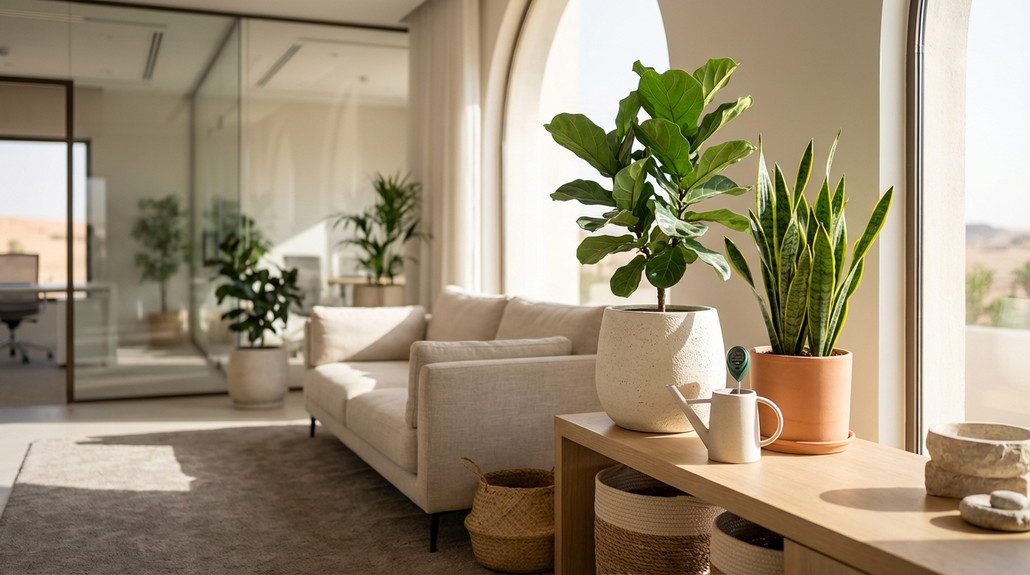
The idea of watering your plants on a fixed schedule, such as every Saturday, is impractical and often harmful in a UAE home. A plant's water needs are dynamic and change based on several interacting variables. These include the type of plant, its size, the material and size of its pot, the type of soil mix, the amount of light it receives, and the ambient temperature and humidity in its specific location. A Fiddle Leaf Fig in a bright corner will require water far more frequently than a Snake Plant in a low-light area. Similarly, a plant in a porous terracotta pot will dry out faster than one in a glazed ceramic or plastic container. Instead of relying on a calendar, adopt a "check first" approach. The most reliable method is to physically check the soil moisture before adding any water. For most common houseplants, the rule is to water thoroughly when the top 5-7 cm of soil feels dry to the touch. This simple test prevents the two most common causes of plant failure: chronic overwatering, which leads to root rot, and severe underwatering, which causes stress and leaf loss. You can also explore a curated selection of resilient and hardy plants that are more forgiving of occasional watering inconsistencies.
Essential Techniques for Proper Hydration
How you water is as important as when you water. The objective is to moisten the entire root ball evenly, not just the surface. The most effective method is top watering. Pour room-temperature water slowly and evenly over the soil surface until it begins to drain freely from the bottom of the pot. Using cold water directly from the tap can shock the plant's root system, so it is best to let it sit for a few hours to reach ambient temperature. Continue watering until about 15-20% of the water has passed through the drainage holes into the saucer or cachepot below. This ensures all roots have access to moisture and helps flush out any accumulated mineral salts from the soil. After about 15 minutes, discard any excess water from the saucer. Allowing a plant to sit in standing water is a direct path to root rot, a fungal disease that is difficult to reverse. For those who want more precision, using a reliable moisture meter can remove the guesswork entirely by providing a clear reading of the moisture level deep within the root zone.
Recognizing Signs of Thirst and Overwatering
Your plants will communicate their needs through visual cues. Learning to interpret these signs allows you to intervene before significant damage occurs. It is crucial to distinguish between the symptoms of underwatering and overwatering, as they can sometimes appear similar to the untrained eye.
Symptoms of Underwatering
An underwatered plant is dehydrated. The most common signs include drooping or wilting leaves that feel soft and limp. The soil will pull away from the edges of the pot, and the pot itself will feel unusually light. Leaves may start to turn yellow or brown, often becoming dry and crispy at the tips or edges. In flowering plants, buds may fail to open or may drop off prematurely. Growth will be stunted. For most plants, these signs are a clear indication that immediate, thorough watering is required.
Symptoms of Overwatering
Overwatering is more dangerous because it suffocates the roots, preventing them from absorbing oxygen and leading to rot. The earliest signs often include yellowing leaves, particularly lower ones, that fall off easily. The plant may look wilted, but the soil will be wet to the touch. Other indicators include soft, mushy stems near the soil line, a musty or sour smell from the soil, and the presence of fungus gnats. If you suspect overwatering, it is critical to stop watering immediately, improve air circulation, and assess the health of the roots. Chronic overwatering is the leading cause of houseplant demise.
The Critical Role of Soil and Pot Selection
Proper watering practices are ineffective if the plant's foundation is flawed. The right soil and pot are essential components of your indoor plant care system, directly impacting moisture retention and aeration. Most standard potting soils are too dense for indoor use, especially in an air-conditioned environment where the surface might dry while the core remains saturated. A high-quality indoor potting mix should be light and airy, amended with ingredients like perlite, coco coir, or orchid bark to improve drainage and create air pockets for the roots. This structure allows water to flow through freely while retaining enough moisture for the plant to absorb. Furthermore, the choice of container is critical. Every indoor plant pot must have at least one drainage hole. Without it, excess water has nowhere to go, pooling at the bottom and inevitably causing root rot. If you prefer to use a decorative pot without holes (a cachepot), keep the plant in its plastic nursery pot and place it inside. After watering, you can easily remove the inner pot to drain the excess. Investing in the right quality soil mixes and tools is a fundamental step toward ensuring your plants can thrive.
Adapting to Humidity and Dust Challenges
The UAE environment presents two specific challenges for indoor foliage: low humidity from AC and accumulating dust. Most popular houseplants are tropicals that prefer humidity levels between 40-60%, whereas a cooled UAE home can easily drop below 30%. This dry air can lead to brown, crispy leaf tips and make plants more susceptible to pests like spider mites. While misting provides a temporary boost, its effects are short-lived. A more sustainable approach is to group plants together to create a microclimate of higher humidity. Placing pots on a tray filled with pebbles and water (ensuring the pots sit on the pebbles, not in the water) can also increase ambient moisture through evaporation. For truly sensitive species, a small humidifier is the most effective solution. Dust is another persistent issue. A fine layer of dust on leaves can block light and clog the plant's stomata (pores), hindering its ability to photosynthesize and transpire. At least once a month, gently wipe down the leaves of your plants with a soft, damp cloth. This simple act of cleaning not only improves the plant's appearance but is vital for its long-term health and efficiency. You might also consider placing specific plants that thrive in higher humidity in areas like bathrooms to meet their needs naturally.
Seasonal Adjustments to Your Care Routine
Even though your indoor climate is controlled, your plants are still influenced by seasonal changes, primarily the duration and intensity of natural light. During the longer, brighter days of summer, plants are typically in an active growth phase. They are photosynthesizing more and using water more quickly. You will likely find that you need to water more frequently during these months. Conversely, during the shorter days of winter, light levels decrease, and most plants enter a period of dormancy or slower growth. Their metabolic processes slow down, and so does their water consumption. It is critical to reduce watering frequency in winter. Continuing to water on a summer schedule during the winter is a common cause of overwatering and root rot. Always revert to the primary rule: check the soil. The time it takes for the soil to dry out will naturally lengthen as the seasons change, and your watering habits should adjust accordingly. Understanding these growth cycles is key to providing consistent, appropriate care throughout the year, especially for those who position their greenery to take advantage of sunlight from windows. You can also organize your collection by finding plants based on their light requirements to better manage their seasonal needs.
Frequently Asked Questions on Plant Hydration
Can I use tap water for my indoor plants in the UAE?
Yes, for most hardy houseplants, tap water is acceptable. However, tap water in the region is often desalinated and can be high in minerals like chlorine and fluoride, which can accumulate in the soil over time and cause brown leaf tips on sensitive plants like Calatheas or Dracaenas. To mitigate this, let the water sit in an open container for 24 hours before use. This allows some of the chlorine to evaporate. For highly sensitive or valuable plants, using filtered or distilled water is the safest option.
How do I know if my plant's pot has good drainage?
Good drainage means two things: the pot must have holes, and the soil mix must be porous. When you water, you should see water begin to exit the drainage holes within a minute or so. If water pools on the surface for a long time or takes many minutes to drain through, your soil is likely too dense and compacted. If no water ever comes out, your pot either has no holes or they are blocked. Always physically check for drainage holes before purchasing a pot.
Should I mist my plants to increase humidity?
Misting provides a very temporary humidity boost and can be beneficial for some plants like ferns. However, its effects last only a few minutes once the water evaporates. It is not a substitute for addressing chronically low ambient humidity. Furthermore, if done improperly in a room with poor air circulation, it can encourage fungal leaf spots on certain species. Grouping plants or using a pebble tray are more effective passive methods for increasing local humidity.