


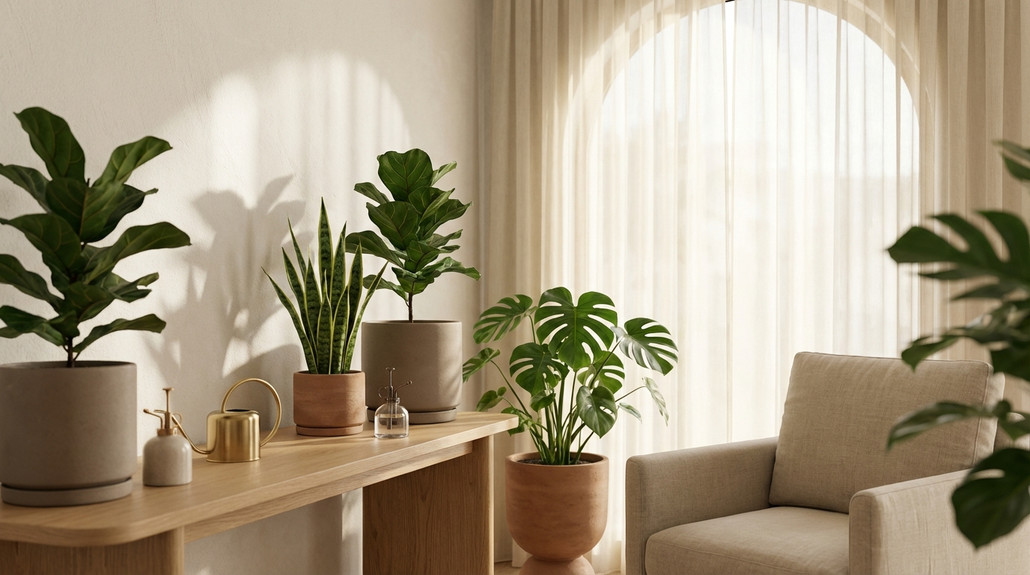
How to Care for Indoor Plants During Extreme Summer Heat in Iraq Homes
Posted by Mozher Experts on 19.02.26
Why Iraqi Summer Heat and AC Change the Way You Care for Plants
Extreme summer in Iraq is not just “hot.” It is sustained heat above 45°C outside, combined with continuous air-conditioning indoors. That combination changes everything about watering indoor plants. The air becomes artificially dry, soil dries from the top faster than roots can absorb moisture, and cold AC airflow stresses foliage while the root zone remains warm.
Many losses happen because people follow generic advice written for mild climates. In Baghdad, Basra, or Erbil apartments, the rules shift. Plants near a split AC unit lose moisture rapidly through their leaves, yet their roots may sit in compacted, poorly drained soil. This mismatch leads to root rot even during extreme heat.
If you are growing climate-adapted indoor plants in Iraq, the goal is balance: steady moisture, strong drainage, stable airflow, and gradual acclimation. Watering indoor plants becomes less about fixed schedules and more about observation and root health.
Before adjusting anything else, evaluate three things: distance from the AC vent, light intensity during peak afternoon hours, and the type of pot and soil mix. These three factors determine how often you water and how much.
Step 1: Assess Your Environment Before Changing the Watering Schedule
Do not increase watering just because temperatures are high. First, assess the microclimate inside your home. A plant beside a west-facing window with direct afternoon sun will behave differently from one in a shaded bedroom.
Check Light and Heat Exposure
If the plant receives direct sun after 1 pm, soil evaporation accelerates. In this case, you may need slightly more frequent watering, but only if drainage is correct. For shaded areas, excessive watering during summer is a common mistake.
Evaluate AC Airflow
If leaves are directly hit by cold air, edges may dry and curl. This does not always mean the roots are dry. Move the plant away from direct airflow before increasing water. Constant AC reduces humidity, so foliage may lose moisture faster than soil.
Inspect the Pot and Drainage
Lift the pot. If it feels unusually heavy several days after watering, drainage may be restricted. Choose containers with proper holes from the breathable pots collection to prevent water accumulation at the base. Good drainage is non-negotiable in extreme climates.
Step 2: Adjust Watering Frequency Using Soil Moisture, Not the Calendar
In Iraq, rigid weekly schedules fail during peak summer. Watering indoor plants should depend on actual soil moisture at root level.
Use the Finger Test or a Moisture Tool
Insert your finger 3–5 cm into the soil. If it feels dry at that depth, water thoroughly. If still slightly moist, wait another day or two. For larger containers, a reliable moisture meter provides more accurate readings deeper in the root zone.
Water Deeply, Not Frequently
When you water, soak the soil evenly until excess drains from the bottom. Light surface watering encourages shallow roots and weakens overall plant resilience.
Morning Is Better Than Night
Water early in the day. This allows roots to absorb moisture before peak heat and reduces prolonged dampness overnight, which can encourage fungal problems.
If leaves wilt but soil is wet, stop watering immediately. That is often a sign of root stress rather than thirst.
Step 3: Improve Soil Mix and Drainage for Root Health
Extreme heat exposes poor soil structure quickly. Dense, compact soil traps water and suffocates roots. Healthy roots are the foundation of successful watering indoor plants.
Use a Well-Draining Mix
Indoor plants in Iraq benefit from soil blends that include aeration components such as perlite or coarse materials. Explore suitable blends and tools within soil and drainage essentials to improve airflow around roots.
Repot When Roots Are Crowded
If water runs straight through the pot or roots circle tightly at the base, repotting may be necessary. Crowded roots dry out faster and demand more frequent watering.
Avoid Oversized Pots
Moving a small plant into a much larger container during summer can backfire. Excess soil holds moisture longer than roots can use, increasing rot risk under AC conditions.
If repotting, allow the plant to acclimate in bright indirect light for a few days before resuming normal watering frequency.
Step 4: Manage Humidity and Airflow Without Creating Stress
Humidity in air-conditioned homes often drops below 30 percent. Many tropical species prefer higher levels, but misting alone is not a full solution.
Group Plants Strategically
Placing plants together creates a localized humidity pocket. This reduces leaf moisture loss without overwatering.
Use Gentle Air Circulation
Airflow prevents fungal issues, but strong direct AC flow damages leaves. Redirect vents or reposition plants to avoid constant cold drafts.
Choose the Right Species for Each Room
Bathrooms with natural humidity are ideal for certain varieties. Review suitable options under plants that thrive in humid rooms to reduce summer stress.
If leaf tips brown while soil remains moist, increase ambient humidity before adjusting watering frequency.
Step 5: Be Careful with Fertilizing During Peak Heat
Fertilizing during extreme summer must be reduced. High temperatures combined with active fertilizer salts can burn stressed roots.
If growth slows significantly, pause feeding until temperatures moderate slightly. Light feeding once per month is usually sufficient for actively growing plants under stable indoor conditions.
If a plant shows yellowing leaves but soil is consistently wet, check drainage before assuming nutrient deficiency. Overwatering is a more common cause than lack of fertilizer in Iraqi homes.
Always water the soil lightly before applying diluted fertilizer to prevent root shock.
Common Summer Mistakes and How to Correct Them
Most problems I see each year come from overreaction to heat.
Mistake: Watering Every Day
Correction: Check soil first. Daily watering suffocates roots unless the plant is in very fast-draining soil and intense light.
Mistake: Moving Plants Frequently
Correction: Sudden relocation from shaded interior to bright balcony causes shock. Acclimation should be gradual over 7–10 days.
Mistake: Ignoring Delivery Stress
Newly delivered plants need adjustment time. Place them in bright indirect light and wait several days before modifying watering. Guidance from the indoor plant care hub can help with safe settling procedures.
If leaves drop within the first week but stems remain firm, this is often acclimation stress rather than permanent damage.
Tools That Make Summer Plant Care Easier
Having the right basic tools reduces guesswork and prevents root damage.
- A long-spout precision watering can for controlled deep watering.
- A moisture meter for larger containers.
- Clean pruning shears to remove heat-damaged leaves.
- Well-draining pots with proper holes.
Avoid decorative containers without drainage unless you use an inner nursery pot. Decorative outer pots can trap excess water during heavy watering sessions.
Maintain a Realistic Weekly and Monthly Care Routine
Consistency prevents emergency interventions.
Weekly
- Check soil moisture of each plant individually.
- Inspect leaves for curling, yellowing, or pests.
- Rotate pots slightly for balanced light exposure.
Monthly
- Flush soil lightly with clean water to reduce salt buildup.
- Trim damaged growth.
- Review placement relative to AC vents and sunlight shifts.
If you want deeper climate-specific insights, research from university horticulture extensions such as the University of Florida IFAS Extension and the Royal Horticultural Society provides reliable guidance adapted to high-heat regions.
Frequently Asked Questions
How often should I be watering indoor plants during Iraqi summer?
There is no fixed number of days. Most medium-sized indoor plants require watering every 5–10 days under AC conditions, but always confirm with soil moisture testing. Light, pot size, and soil mix change the interval.
Why are leaves wilting even though the soil is wet?
This usually indicates root stress or rot. Stop watering, check drainage holes, and allow the soil to partially dry before the next watering. Improve aeration if needed.
Is misting enough to compensate for AC dryness?
No. Misting offers temporary surface moisture. Improving humidity through grouping plants and managing airflow is more effective.
Should I repot during extreme heat?
Repot only if rootbound or suffering from severe drainage problems. Otherwise, wait for slightly milder conditions to reduce stress and support healthier acclimation.