


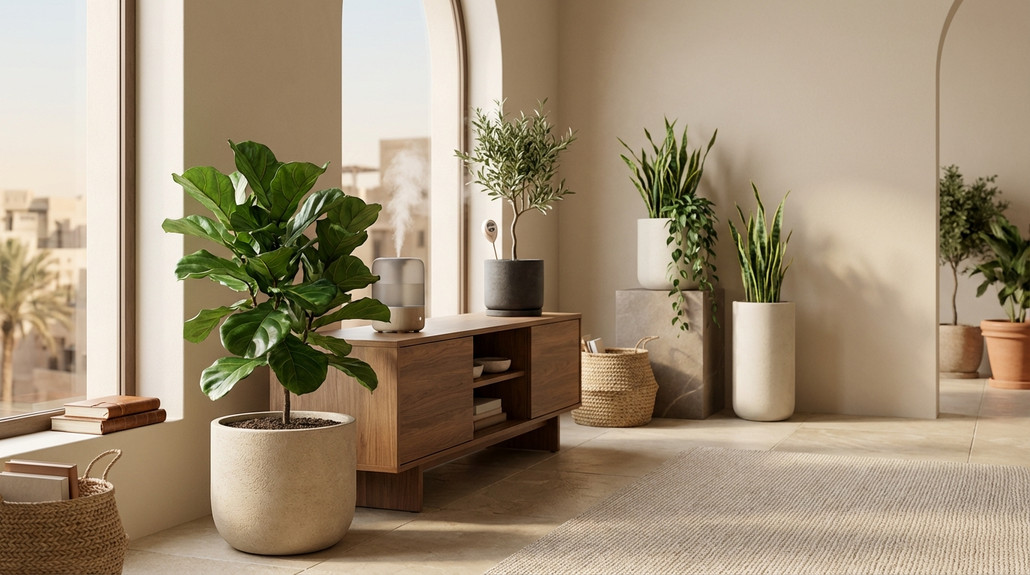
How to Save a Dying Indoor Plant Step by Step in UAE Homes
Posted by Mozher Experts on 20.02.26
Start With the Environment: Heat Outside, AC Inside
Most indoor plant problems in UAE homes begin with one simple contradiction: extreme outdoor heat and constant air conditioning indoors. A plant that looked fine in the nursery can decline within days after being placed under a direct AC vent. Cold drafts combined with very dry air stress leaves, roots, and soil microbes at the same time.
In apartments and villas across Dubai and Abu Dhabi, the AC often runs 24/7 for much of the year. This creates low humidity, fluctuating temperatures, and faster soil drying near vents. At the same time, many homes have limited natural light because of tinted windows or deep layouts. The result is a stressed plant that cannot balance water uptake and transpiration.
If your plant is drooping, developing yellow leaves, or showing brown tips, pause before watering or fertilizing. First, check three things:
- Is it directly under an AC vent or strong airflow?
- Is it placed in the wrong light zone?
- Is the soil drying unevenly or staying wet for too long?
For light corrections, review plant placement based on exposure through a curated guide such as plant light requirements by room type. Many issues resolve simply by moving the plant 1–2 meters away from harsh airflow and matching it to the correct light level.
Diagnose Before You Treat: Symptom-to-Cause Mapping
Guessing is the fastest way to lose a plant. Proper diagnosis separates temporary stress from root damage or pest infestation. Below is a simplified diagnostic table tailored to indoor plants UAE conditions.
| Symptom | Likely Cause | Quick Test | First Fix |
|---|---|---|---|
| Yellow lower leaves | Overwatering or low light | Insert finger 5 cm into soil; check moisture | Reduce watering; improve light |
| Brown crispy tips | Low humidity or salt buildup | Check proximity to AC vent | Move away from airflow; flush soil |
| Drooping despite wet soil | Root rot | Smell soil; check for mushy roots | Repot into fresh, well-draining mix |
| Sticky leaves or small flies | Pests or fungus gnats | Inspect underside of leaves | Isolate plant; treat promptly |
Notice how similar symptoms can have opposite causes. Yellow leaves from dryness feel papery. Yellow leaves from overwatering feel soft and limp. In UAE homes, overwatering combined with cool indoor temperatures is far more common than underwatering.
For a deeper breakdown of recurring indoor plant problems and structured troubleshooting, consult practical plant care guidance for hot climates.
Watering Errors: The Most Common Root Cause
Improper watering is responsible for most indoor plant problems. In air-conditioned homes, the top layer of soil may appear dry while the root zone remains wet. This misleads many owners into watering again too soon.
How to Check Properly
Use your finger or, preferably, a reliable moisture tool such as a soil moisture meter for accurate watering decisions. Insert it deep into the root zone, not just the surface. Only water when the lower half of the pot approaches dryness for most tropical plants.
Corrective Steps for Overwatering
- Stop watering immediately.
- Improve drainage and airflow.
- Trim damaged roots if rot is confirmed.
- Repot using a fast-draining mix if soil is compacted.
Corrective Steps for Underwatering
If the root ball has shrunk from the pot edges, soak the pot thoroughly until water drains freely. Avoid small sips of water. A full saturation helps rehydrate evenly.
Recovery timeline: mild watering stress improves within 7–14 days once corrected. Severe root rot can take 4–8 weeks, and some leaves may not recover at all.
Light Mismatch: Silent Stress in Modern Apartments
Light issues are often misdiagnosed as watering problems. Many indoor plants UAE customers choose are labeled “low light tolerant,” but tolerance does not mean thriving.
Signs of Insufficient Light
- Leggy, stretched growth
- Small new leaves
- Soil staying wet for too long
When Light Is Too Harsh
South-facing windows with intense summer exposure can scorch foliage, especially if glass amplifies heat. Brown patches in the center of leaves often signal sunburn rather than dryness.
If natural light is limited, select species categorized under plants suitable for artificial light environments. Matching plant genetics to your space reduces long-term stress significantly.
Expect visual improvement in new growth, not old leaves. Damaged leaves rarely turn green again.
Pests and Fungus Gnats in AC Environments
Low airflow corners and consistently moist soil attract pests. Fungus gnats are especially common in overwatered pots. They indicate excess moisture rather than poor hygiene.
Common Indoor Pests
- Spider mites in dry air
- Mealybugs on stems
- Fungus gnats in wet soil
Action Plan
- Isolate affected plants.
- Reduce watering frequency.
- Rinse foliage gently where appropriate.
- Prune infested sections using clean tools such as precision pruning shears for indoor plants.
Most pest issues resolve within 2–4 weeks with consistent monitoring. Sudden heavy chemical use often worsens plant stress, especially indoors.
For science-based pest management references, review integrated pest management resources from the University of California Agriculture and Natural Resources and the Royal Horticultural Society.
When to Repot and When to Wait
Repotting is not always the answer. In fact, repotting a severely stressed plant can increase shock.
Repot Immediately If:
- Roots are black and mushy.
- The soil smells sour.
- The plant is severely root-bound and water runs straight through.
Delay Repotting If:
- The plant is only mildly drooping.
- The issue is clearly light-related.
- It was recently delivered and still acclimating.
Choose breathable containers from a reliable indoor pots collection designed for airflow. In humid countries clay dries quickly, but in AC-heavy UAE homes it often provides healthier oxygen exchange for roots.
After repotting, avoid fertilizing for at least 3–4 weeks. Let the root system stabilize first.
What Not to Do During Plant Rescue
Panic causes more damage than neglect. Avoid these common mistakes:
- Do not fertilize a stressed plant immediately.
- Do not water daily without checking soil depth.
- Do not move the plant repeatedly between rooms.
- Do not cut all leaves off at once.
Each intervention requires time to show results. Constant changes confuse recovery signals and delay stabilization.
Prevention Habits for Long-Term Stability
Healthy plants in UAE homes depend on consistency. Choose species appropriate for your conditions, especially if you travel often or keep AC running continuously. Explore resilient options within climate-adapted indoor plant selections to reduce future stress.
Establish a weekly check routine:
- Inspect leaves for pests.
- Check soil moisture properly.
- Rotate plants slightly for balanced light.
- Keep them away from direct AC drafts.
Most plants recover gradually. New growth is the true indicator of success. Expect cosmetic damage to remain on older leaves. Focus on stability rather than perfection.
Frequently Asked Questions
How long does it take to revive a dying indoor plant?
Mild stress may improve within two weeks. Root damage or pest infestation can require one to two months. Judge progress by new growth rather than old leaves.
Should I cut off all yellow leaves immediately?
Remove fully yellow or dead leaves, but keep partially green ones. They still contribute to energy production during recovery.
Is AC directly harmful to indoor plants?
Constant cold airflow reduces humidity and stresses foliage. Plants placed directly under vents often develop brown tips and drooping. Moving them slightly away usually improves condition quickly.
Are indoor plants UAE homes harder to maintain than in cooler climates?
They require different management. Heat outside and dry AC inside create unique stress patterns. With correct light placement, controlled watering, and stable positioning, most indoor plants adapt well.