


Indoor Plant Care Mistakes That Kill Plants Slowly in Saudi Arabia Homes
Posted by Mozher Experts on 22.02.26
The Core Challenge: Air Conditioning and Indoor Dryness
In Saudi Arabia, the primary challenge for indoor plants is not the outdoor heat, but the indoor environment we create to escape it. Constant air conditioning is essential for our comfort, yet it wages a silent war on our houseplants. The AC unit acts as a powerful dehumidifier, stripping moisture from the air and creating an artificially arid climate. This dry air causes the potting soil to dry out much faster than it would in a more temperate region. It also increases the rate at which water evaporates from the plant's leaves, a process called transpiration. Many plant owners make the logical but incorrect assumption that plants in a hot country always need more water. The reality is that plants in a climate-controlled, AC-heavy home face conditions similar to a desert, requiring a precise and observant approach to hydration. Overwatering in an attempt to compensate is the single most common reason plants fail here. The goal is to provide consistent moisture to the roots without saturating the soil, which can lead to fatal root rot in an indoor setting.
Abandoning the Rigid Watering Schedule
The idea of watering your plants every Saturday morning is a convenient habit, but it is not an effective horticultural practice, especially in our dynamic indoor environments. A fixed schedule ignores the multiple variables that influence a plant's thirst. The intensity and duration of your AC use can change daily, directly affecting soil moisture. A plant sitting near a bright window will use water far more quickly than one in a dimmer corner. The type of pot also plays a significant role; porous terracotta pots lose moisture rapidly, while glazed ceramic or plastic pots retain it much longer. As plants grow, their water requirements increase. Even seasonal shifts can alter indoor light patterns and ambient humidity, changing a plant's needs. Relying on a calendar rather than the plant's actual condition is the root of many common problems. Successful plant care depends on observation. You must learn to assess the plant's specific needs at any given moment, moving from a fixed routine to a responsive, flexible approach to providing water.
The Correct Method: Assessing Soil Moisture Accurately
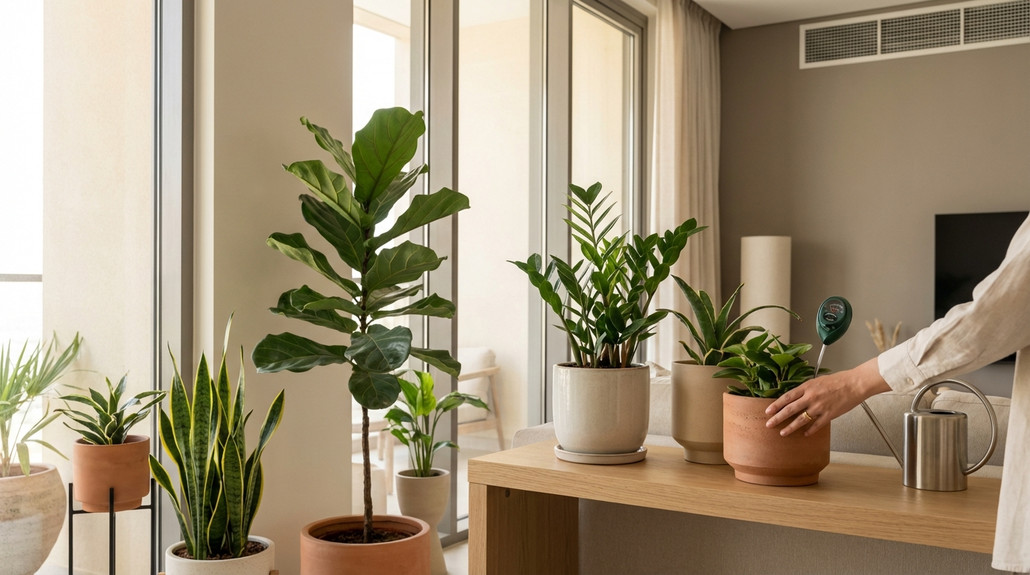
Instead of relying on a schedule, the proper technique involves checking the soil directly. The most reliable tool is your own finger. For most common houseplants, the rule is to check the top 5-7 cm of soil. Gently insert your finger into the soil to that depth. If the soil feels dry and crumbly, it is time to water. If you feel coolness and moisture, wait a few more days and check again. This simple test prevents the premature watering that leads to soggy roots. For a more precise reading, especially with larger or more sensitive plants, a dedicated moisture meter is an invaluable tool. It provides a quick, clear indication of moisture levels deep within the pot, where your finger cannot reach. Another method is to learn the weight of your plant. A freshly watered plant in its pot will be noticeably heavier than one with dry soil. Lift the pot before and after watering to become familiar with the difference. While visual cues like wilting or drooping leaves are indicators of thirst, they are signs of stress. Consistently waiting for a plant to wilt before watering can cause long-term damage. The goal is to water just before this stress occurs.
Mastering the Watering Technique for Root Health
How you water is as important as when you water. Avoid giving your plants small, frequent sips of water. This practice encourages weak, shallow root systems to develop near the surface and can lead to a buildup of mineral salts from our tap water. The most effective method is to water thoroughly and deeply. When the soil is dry, slowly pour water over the entire soil surface until it begins to flow freely from the drainage holes at the bottom of the pot. This ensures that the entire root ball has access to moisture, promoting strong, deep roots. Allow the plant to drain completely for 10-15 minutes in a sink or bathtub. It is critical to then discard any excess water that has collected in the saucer or decorative cachepot. Letting a plant sit in a puddle of standing water is the fastest way to induce root rot, a fungal condition that will quickly kill the plant. This "soak and dry" method mimics natural rainfall and is the foundation of healthy hydration for nearly all common indoor plants.
Understanding Water Quality in the Region
The tap water in many parts of Saudi Arabia is desalinated and treated, which can make it high in dissolved mineral salts and chlorine. While this water is perfectly safe for humans, it can be problematic for some sensitive houseplants over time. Chlorine can be harsh on delicate root systems, and a gradual accumulation of salts in the soil can appear as white crust on the surface and eventually inhibit the plant's ability to absorb water and nutrients, leading to brown, crispy leaf edges. There are simple ways to mitigate these issues. The easiest is to fill your watering can and let it sit uncovered for at least 24 hours before use. This allows most of the chlorine to evaporate into the air. For particularly sensitive species like Calatheas, Marantas, or carnivorous plants, using filtered or bottled drinking water is a worthwhile investment in their long-term health. Periodically, about every 4-6 months, it is good practice to flush the soil. Take the plant to a sink and let room-temperature water run through the pot for several minutes to wash away excess salt buildup.
The Critical Role of Drainage and Potting Medium
Proper hydration is impossible without proper drainage. This is a non-negotiable rule of indoor gardening. Every plant must be in a pot with one or more drainage holes at the bottom. Without an escape route, excess water pools at the base of the pot, suffocating the roots by cutting off their oxygen supply. This waterlogged environment is the perfect breeding ground for fungal and bacterial diseases that cause root rot. When selecting containers for your houseplants, always prioritize function over form and ensure drainage is present. The potting medium itself is the other part of the equation. A high-quality soil mix is designed to retain adequate moisture while also allowing excess water to pass through. It should be light and airy, not dense and compacted like garden soil. Different plants have different needs; succulents require a gritty, fast-draining mix, while ferns prefer a mix that holds more moisture. Using the right soil and plant care amendments ensures a healthy balance of water and air in the root zone, which is the foundation of a thriving plant.
Frequently Asked Questions on Plant Hydration
How do I know if I've overwatered or underwatered my plant?
Underwatering and overwatering can present similar symptoms, which is often confusing. Both can cause yellowing leaves and wilting. The key difference is in the soil. An underwatered plant will have dry, often compacted soil and will feel light when lifted. The leaves may look crispy or brown at the edges. An overwatered plant will have consistently damp or soggy soil, may have a musty smell, and the yellowing leaves will feel soft and limp, not crispy. The base of the stems might be soft or black. Always check the soil moisture first to make a correct diagnosis.
Should I water my plants differently in summer versus winter?
Yes, absolutely. Even though our indoor temperatures are relatively stable thanks to AC, light levels change significantly between seasons. During the longer, brighter days of summer, plants are in a state of active growth, photosynthesizing more and using water more quickly. You will likely need to water more frequently. In the shorter, often dimmer days of winter, most plants enter a period of rest or slower growth. Their water requirements decrease significantly. It is crucial to reduce watering frequency during winter to prevent root rot. Continue to check the soil and only water when it is appropriately dry.
Is it better to water from the top or the bottom?
Top watering, as described earlier, is the standard and most effective method for the majority of houseplants. It mimics natural rain and helps flush mineral salts from the soil. Bottom watering, where you place the pot in a tray of water and let it absorb moisture up through the drainage holes, can also be useful. It is excellent for plants with leaves that are sensitive to getting wet, like African Violets, or for ensuring a very dry plant becomes fully rehydrated. However, it does not flush the soil, so if you primarily bottom water, you should still top water every 4-5 times to wash out any salt buildup. For general guidance on plant wellness, top watering is the recommended primary technique.