


Indoor Plant Care Mistakes That Kill Plants Slowly in Saudi Arabia Homes
Posted by Mozher Experts on 25.02.26
The Challenge of Indoor Environments in Saudi Arabia
Maintaining healthy indoor plants in Saudi Arabia presents a unique set of challenges not found in more temperate climates. The primary issue is the constant battle between extreme external heat and intensive indoor air conditioning. While the AC provides comfort for us, it creates an artificially dry environment that is stressful for most tropical plants. The air from the unit rapidly strips moisture from both the plant's leaves and its soil. This accelerated drying effect means that standard watering advice, such as "water once a week," is often inaccurate and can lead to chronic underwatering. Conversely, a fear of the heat can lead owners to overcompensate, watering too frequently and causing root rot in soil that doesn't get enough airflow. The key to success is to ignore rigid schedules and instead learn to read the specific needs of your plant within your home's unique microclimate. Understanding this dynamic is the first and most critical step to ensuring your plants do not just survive, but thrive.
How to Correctly Assess Soil Moisture
The most common mistake is watering on a fixed schedule. A plant's water needs change based on the season, its growth cycle, the intensity of the AC, and the amount of light it receives. Instead of relying on the calendar, you must learn to check the soil directly. This is the only reliable method for proper watering. There are several effective ways to determine if it's time to water.
The Finger Test
This is the most fundamental and accessible technique. Insert your index finger into the soil up to your second knuckle, about 5 cm deep. Do not just test the surface, as it often dries out first while the lower soil remains wet. If the soil at your fingertip feels dry and crumbly, it is time to water. If you feel moisture or if damp soil sticks to your finger, wait another day or two and check again. This method gives you a direct sense of the conditions where the roots are most active. For very large pots, you may need to check a little deeper to get an accurate reading.
Lifting the Pot
With practice, you can gauge a plant's water needs by its weight. A pot with thoroughly watered, saturated soil is significantly heavier than one with dry soil. Get a feel for the weight of your plant right after you have given it a good soak and allowed it to drain. Then, lift it every few days. When it feels noticeably lighter, the soil has dried out, and it is likely time to water. This method works best for small to medium-sized plants that are easy to lift. It becomes impractical for large, heavy floor plants, but it is an excellent secondary check for your smaller collection.
Using a Soil Moisture Meter
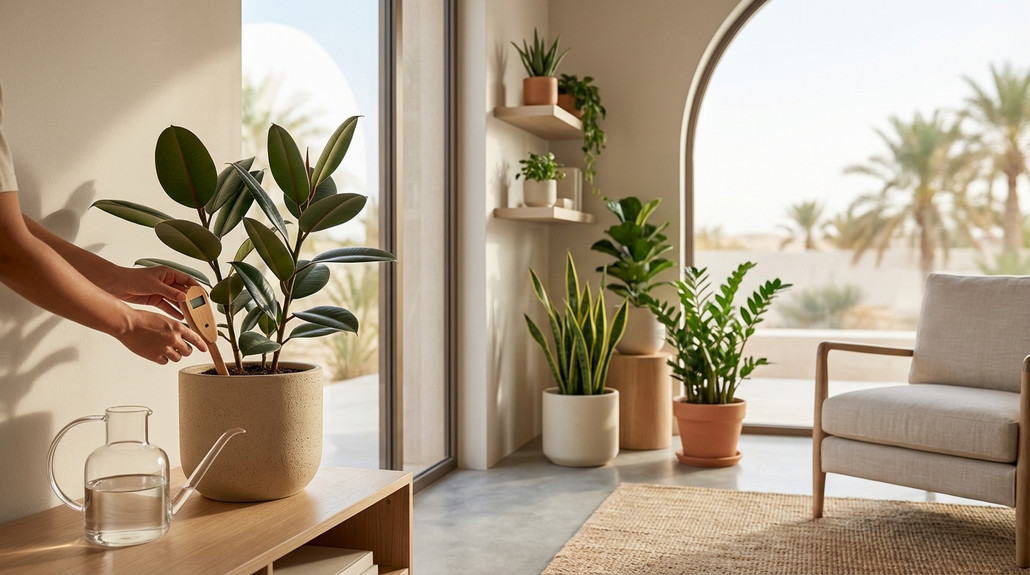
For a more precise and data-driven approach, consider using a moisture meter. This tool has a metal probe that you insert into the soil, and it provides a reading on a scale from 'Dry' to 'Moist' to 'Wet'. It removes the guesswork entirely. When using a meter, insert the probe into a few different spots in the pot, away from the very edge, to get a comprehensive reading of the entire root ball. This is especially useful for larger pots where the finger test may not reach deep enough. It helps prevent both overwatering and underwatering by giving you a clear, objective signal.
The Proper Technique for Watering
How you water is just as important as when you water. The goal is to moisten the entire root system evenly, not just the top layer of soil. The best practice is to water thoroughly until you see excess water running out of the drainage holes at the bottom of the pot. This ensures that even the deepest roots have access to moisture and also helps to flush out any buildup of salts or minerals from fertilizers that can accumulate in the soil over time. After watering, allow the pot to drain completely for 10-15 minutes in a sink or bathtub. Never let a plant sit in a saucer full of standing water, as this is the primary cause of root rot. This condition occurs when roots are deprived of oxygen and begin to decay, a problem from which few plants can recover. For hanging plants or those in delicate locations, taking them to a sink for watering is the most effective approach.
Water Quality and Essential Equipment
The type of water you use can impact plant health over the long term. Tap water in many parts of Saudi Arabia can be high in salts and chlorine, which can build up in the soil and cause brown, crispy leaf tips. If you notice this happening, letting tap water sit out overnight in an open container can allow some of the chlorine to evaporate. For more sensitive plants like Calatheas or Ferns, using filtered or distilled water is a better option. Regardless of the water source, always use water that is at room temperature. Cold water can shock the root system, causing unnecessary stress to the plant. Having the right tools also makes the task easier and more effective. Investing in a quality watering can with a long, narrow spout allows you to deliver water directly to the soil surface, avoiding wetting the foliage, which can lead to fungal issues for some species. Having a collection of essential plant care tools will make all aspects of maintenance more manageable.
Identifying and Correcting Watering Issues
Plants are very good at communicating their needs; you just have to learn their language. Both overwatering and underwatering have distinct symptoms that can help you diagnose the problem and adjust your routine.
Signs of Underwatering
An underwatered plant will often look sad and lifeless. Common signs include wilting or drooping leaves, soil pulling away from the sides of the pot, and slow or stunted growth. The lower leaves may turn yellow or brown and become crispy before falling off. The plant is sacrificing its older leaves to conserve water for new growth. If you see these signs, check the soil. If it is bone dry, a thorough watering as described above will usually lead to a quick recovery. For extremely dry soil that has become hydrophobic (water-repellent), you may need to try bottom-watering. Place the pot in a sink or basin with a few inches of water and let it soak up moisture from the bottom for 30-60 minutes, until the top of the soil is damp.
Symptoms of Overwatering
Overwatering is more dangerous and harder to fix than underwatering. The symptoms can be confusingly similar, often including yellowing leaves. However, with overwatering, the leaves will be soft and limp rather than crispy. You might also notice a musty smell from the soil, the presence of fungus gnats, or brown, mushy stems at the soil line. These are all signs of root rot. If you suspect overwatering, immediately stop watering and check the roots. Gently remove the plant from its pot. Healthy roots are firm and white or light-colored. Rotted roots will be brown, black, and mushy. If you find root rot, you must trim away all affected parts with clean shears and repot the plant in fresh, well-draining soil.
Adapting to Humidity and Airflow Needs
The dry air produced by constant AC is a major hurdle for many popular houseplants that originate from humid, tropical environments. While proper soil watering is critical, you must also consider the moisture in the air. Low humidity causes issues like brown, crispy leaf edges and tips, especially on thin-leaved plants like ferns and Calatheas. To increase ambient humidity, you can group plants together, which creates a small, humid microclimate as they transpire. Placing a humidifier near your plants is the most effective solution. A less effective but still helpful method is to place plants on a pebble tray: a shallow tray filled with pebbles and water. The pot sits on top of the pebbles, above the water line, and as the water evaporates, it raises the humidity around the plant. Misting is often suggested but provides only a very temporary benefit and can encourage fungal diseases if done improperly. Choosing plants that thrive in higher humidity and placing them in naturally damper rooms like bathrooms can also be a successful strategy. Good airflow is also important to prevent stagnant, damp conditions that can lead to pests and disease.
Choosing Plants Suited to the Indoor Environment
Your success begins with plant selection. While any plant can be grown indoors with enough effort, some are naturally better suited to the typical conditions of a home in Saudi Arabia. When choosing resilient indoor plants, look for species known for their tolerance to lower humidity and periods of dryness. Snake Plants (Sansevieria), ZZ Plants (Zamioculcas zamiifolia), and Pothos (Epipremnum aureum) are excellent choices for beginners. They are forgiving of occasional watering mistakes and are not overly demanding about humidity levels. They store water in their leaves or rhizomes, making them more resilient to the dry air from the AC. When purchasing a new plant, always check its specific care requirements for light, water, and humidity. Matching the plant to the conditions you can realistically provide in your home is the most effective way to ensure long-term health and avoid the frustration of a struggling plant. Consider starting with these hardier varieties to build your confidence before moving on to more sensitive species.