


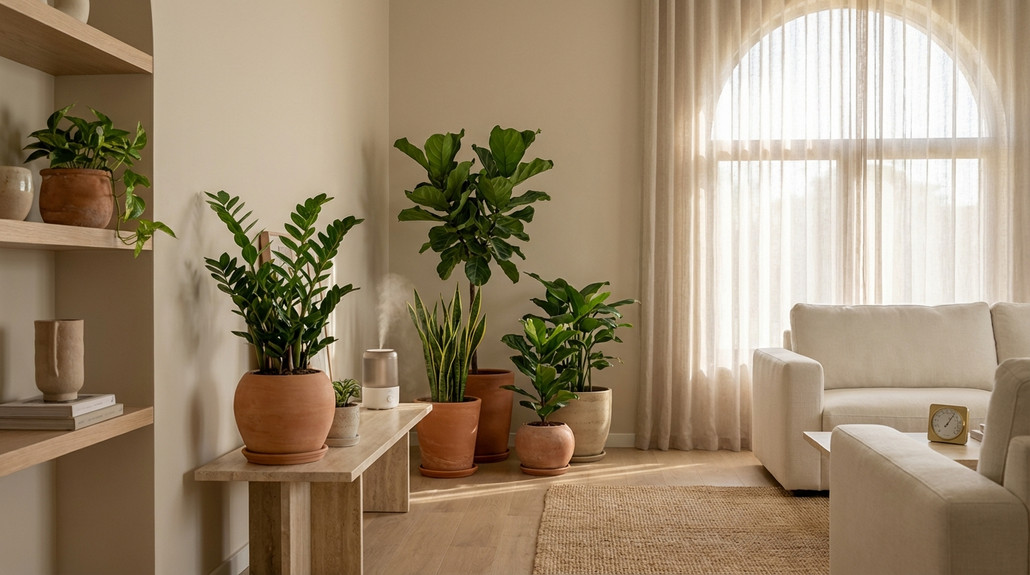
Indoor Plants Explained for First-Time Owners in Iraq Homes
Posted by Mozher Experts on 19.02.26
Why Indoor Conditions in Iraq Are Harder Than They Look
It is 46°C outside. Inside, the AC is running most of the day. Curtains are half-closed to block glare. The air feels cool, but dry. This is the typical Iraqi home environment where most indoor plants must survive.
Beginners often assume that once a plant is indoors, it is protected. In reality, indoor plants in Iraq face a different kind of stress. Extreme outdoor heat leads to sealed windows, limited airflow, and constant AC drafts. The AC removes humidity from the air, dries soil faster near vents, and creates cold pockets that roots dislike. Meanwhile, light is often weaker than people expect because heavy curtains and tinted windows filter intensity.
This combination—heat outside, artificial cooling inside, filtered light, and low humidity—changes how plants behave. Leaves may curl even when soil is wet. Growth slows in summer despite long daylight hours. Some plants drop leaves after delivery because they move from greenhouse humidity into dry AC air too quickly.
If you understand these cause-and-effect relationships early, you avoid most beginner losses. Indoor plants Iraq homes require climate-aware decisions. The plant itself matters, but the room matters more. Before buying anything, observe light direction, distance from vents, and how dry the air feels by mid-afternoon. That simple habit prevents many common mistakes.
Light: The Real Driver of Growth (Not Water)
Water gets blamed for most problems. Light is usually the real issue. Without sufficient light, roots cannot use water efficiently. Soil stays wet longer, and beginners assume the plant needs more water when it actually needs brighter placement.
In Iraq, strong sun outdoors does not equal strong light indoors. Glass blocks intensity. Curtains reduce it further. A plant placed three meters from a window receives a fraction of the light compared to one directly beside it.
Understanding Window Direction
South and west-facing windows provide the strongest light. However, in peak summer, direct sun through glass can scorch leaves, especially behind closed windows. East-facing light is softer and often safer. North-facing windows may be too dim unless the plant is very tolerant.
If you are unsure, use a simple rule: if you can comfortably read without turning on a lamp during the day, medium-light plants will manage. If the room feels dim even at noon, choose varieties suited for low-light indoor environments.
Distance Matters More Than Brightness
Moving a plant from 50 cm to 2 meters away from a window dramatically reduces usable light. Many struggling indoor plants are simply placed too far inside the room for aesthetic reasons. Keep most foliage plants within one meter of a bright window unless they are specifically adapted to shade.
Artificial Light in AC-Heavy Homes
Some apartments rely heavily on artificial lighting. In that case, choose plants categorized as suitable for artificial light conditions. These tolerate lower natural intensity and adjust better to office-like spaces with constant cooling.
When growth is slow but leaves remain healthy, light is adequate. When stems stretch and leaves shrink, increase brightness before adjusting watering.
Watering in a Dry AC Environment
The most common beginner mistake in indoor plants Iraq homes is watering on a fixed schedule. AC changes drying speed. A plant near a vent may dry in four days. The same plant across the room may stay moist for ten.
Instead of following a calendar, check the soil. Insert your finger 3–4 cm deep. If it feels dry at that depth, water thoroughly. If still damp, wait. Roots need oxygen as much as moisture.
Thorough Watering vs Frequent Sips
Light surface watering encourages shallow roots. Always water until excess drains from the bottom. Then empty the saucer. This flushes salts, which accumulate faster in hot climates.
Humidity and Leaf Symptoms
Brown leaf tips are common in AC rooms. This is usually dry air, not lack of water. Increasing humidity slightly—grouping plants together or placing them away from direct vents—helps more than increasing watering frequency.
For controlled watering, especially with beginners, tools like a soil moisture meter for indoor plants reduce guesswork. It prevents both overwatering and drought stress.
Soil, Pots, and Root Health in High Heat Regions
Roots suffer quietly before leaves show symptoms. In Iraq’s climate, soil structure is critical. Dense soil holds moisture too long in shaded rooms and becomes compacted under frequent watering.
Choose breathable containers with drainage holes. Decorative outer pots are fine, but the inner nursery pot must drain freely. Explore stable options from curated indoor plant pots with proper drainage to avoid root rot.
Why Drainage Holes Are Non-Negotiable
Without drainage, salts concentrate and roots suffocate. Many first-time owners lose plants simply because excess water has nowhere to escape. In AC-cooled spaces where evaporation is slower, this risk increases.
Repotting After Delivery
Do not rush to repot immediately. Let the plant acclimate for two to three weeks unless roots are visibly circling heavily. Moving from greenhouse humidity to dry indoor air is already a major adjustment. Adding root disturbance can shock it further.
When repotting, use structured mixes available through soil and plant care essentials designed for indoor conditions, not heavy outdoor garden soil.
Acclimation: The First 30 Days Decide Everything
Many indoor plants look perfect on arrival, then decline after two weeks. This is acclimation stress. Plants grown in controlled nurseries experience higher humidity and consistent light. Iraqi homes differ significantly.
Expect minor leaf drop. This is normal adjustment. Do not immediately change position, fertilize, and increase watering all at once. Stability is key.
Where to Place a New Plant
Start in bright indirect light, away from direct AC airflow. After two weeks, observe growth and leaf firmness. Only adjust if clear stress signs appear.
Fertilizing Too Early
New owners often fertilize to “help” the plant. During acclimation, roots are adapting. Extra nutrients can burn sensitive roots in already stressed conditions. Wait at least one month before feeding, especially in peak summer.
Understanding plant adaptation in hot regions is discussed further in this regional climate behavior guide, which explains why indoor performance differs from cooler countries.
Quick-Start Checklist for First-Time Owners
If you want to reduce risk immediately, follow this practical checklist:
- Place the plant within one meter of a suitable window.
- Keep it away from direct AC vents.
- Water only when the top few centimeters of soil are dry.
- Ensure the pot has drainage holes.
- Avoid fertilizing during the first month.
- Rotate the plant slightly every two weeks for even growth.
For those choosing their first plant, start with varieties known for beginner-friendly resilience. Tough plants forgive small mistakes while you learn how your home environment behaves.
Common Myths vs Reality in Iraq Homes
| Myth | Reality |
|---|---|
| Indoor plants need daily watering in summer. | AC slows evaporation indoors; overwatering is more common than drought. |
| All plants love direct sun. | Glass magnifies heat; many foliage plants scorch behind closed windows. |
| Brown tips mean the plant is thirsty. | Usually caused by low humidity or salt buildup, not underwatering. |
| Bigger pots help plants grow faster. | Oversized pots retain excess moisture and increase root rot risk. |
Accurate diagnosis saves plants. Observe patterns rather than reacting to single leaves.
When Problems Appear: Calm Troubleshooting
Yellow leaves at the bottom can be normal aging. Sudden widespread yellowing often signals overwatering. Crispy edges suggest dry air or salt accumulation. Limp stems may indicate root damage.
Before taking action, pause. Check soil moisture. Check light exposure. Consider recent changes. Most plant decline follows a recent shift—new location, new watering habit, or AC adjustment.
Reliable horticulture guidance from institutions such as the Royal Horticultural Society and university extension services like the University of Florida IFAS Extension supports this structured approach: diagnose environment first, then adjust gradually.
Indoor plants are resilient when conditions are stable. They respond slowly but clearly. With careful placement, measured watering, and patience during acclimation, even first-time owners in Iraq can maintain healthy growth despite extreme outdoor heat.
Reducing Beginner Anxiety and Building Confidence
Perfection is not required. Plants are living organisms, not decorative objects. Minor leaf loss, seasonal slowdown, and gradual adjustment are normal parts of ownership.
Start with one or two plants. Observe how your space behaves in summer versus winter. Notice how quickly soil dries near windows compared to interior walls. This awareness is more valuable than memorizing care charts.
Over time, you will recognize subtle signals—slight leaf softening before watering is needed, slower growth during intense heat, stronger development when light improves. That confidence replaces guesswork.
Indoor plants Iraq households can thrive, even in extreme climates, when decisions are based on environment rather than habit. With realistic expectations and steady care, your home becomes more stable, greener, and easier to manage than you might expect.
Frequently Asked Questions
How often should I water indoor plants in Iraq?
There is no fixed schedule. Check soil moisture first. In AC environments, many plants need watering every 7–12 days, but placement and pot size change this significantly.
Can indoor plants survive constant air conditioning?
Yes, but avoid direct airflow. AC reduces humidity and can stress leaves. Position plants away from vents and monitor soil drying speed carefully.
Why do leaves drop after I bring a new plant home?
This is usually acclimation stress. The plant is adjusting from greenhouse humidity to dry indoor air. Maintain stable light and watering, and avoid sudden changes.
What is the easiest type of plant for beginners?
Choose resilient varieties known for tolerance to light variation and occasional watering delays. Beginner-friendly categories focused on ease of care reduce early losses and build confidence.