


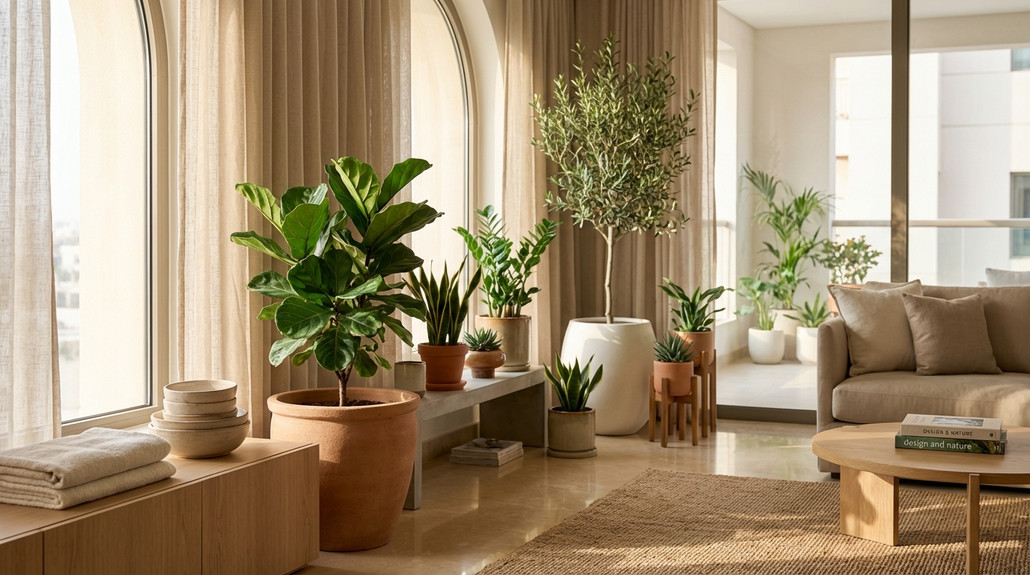
Indoor Plants Explained for First-Time Owners in Iraq Homes
Posted by Mozher Experts on 20.02.26
The Reality of Growing Plants Inside Iraqi Homes
Step into a typical home in Baghdad, Basra, or Erbil in July. Outside temperatures push past 45°C. Inside, the AC runs most of the day. Curtains are half-closed to block harsh sun. Air is cool but dry. This environment shapes how house plants survive—or fail.
Many first-time owners assume indoor plants iraq behave like they do in mild European climates. They do not. Continuous air conditioning reduces humidity, dries soil faster near vents, and creates uneven airflow. A plant placed directly under a split AC can decline within weeks, even if you water regularly. Leaves curl, edges brown, and growth slows.
Heat is not the only issue. Sudden transitions between hot balconies and chilled interiors shock roots. Delivery stress in summer can weaken plants before they even settle in. This is why climate-aware sourcing matters. Collections curated for local conditions, such as those in the Indoor Plants collection, focus on varieties proven to adapt to AC-heavy homes.
Understanding cause and effect is your advantage. Dry air increases transpiration. Cool rooms slow evaporation from soil. Direct sun through glass can burn foliage even when the room feels comfortable. When you see problems, look at the environment first—not just your watering routine.
Light: The First Decision That Prevents Most Failures
Light is the main driver of plant health. In Iraq, light is abundant but often misused. South- or west-facing windows deliver intense afternoon sun that scorches leaves behind glass. North-facing windows may be too dim for flowering varieties.
Before buying any of your house plants, stand in the intended spot at three times of day. Observe how long direct sun touches the floor. Bright indirect light means strong daylight without direct sun rays hitting leaves.
When Direct Sun Becomes a Problem
Glass magnifies heat. A plant that tolerates outdoor sun may still burn indoors if placed against a hot window. Leaf bleaching and crisp patches are common signs. Move the plant 1–2 meters away or diffuse light with a sheer curtain.
Choosing Based on Actual Room Conditions
Do not guess. If your home has limited daylight, choose from the low light indoor options. For strong but filtered daylight, explore plants suited for bright indirect areas. Matching plant to light is more reliable than trying to “train” a plant to adapt.
Artificial lighting can support some species, but standard ceiling bulbs are rarely enough. Supplemental grow lights may be necessary in darker apartments.
Watering in AC Environments: Why Overwatering Is Common
In hot climates, beginners assume plants need constant watering. Inside an air-conditioned room, soil often dries slower than expected—especially in shaded corners. Roots suffocate in constantly wet soil, leading to rot.
Check moisture 3–5 cm below the surface before watering. The top layer can feel dry while deeper soil remains damp. A simple tool like a reliable moisture meter for indoor soil removes guesswork and prevents root damage.
Seasonal Adjustments Matter
In peak summer, evaporation is faster near windows but slower in cool central rooms. In winter, watering frequency usually drops. There is no fixed schedule. Always respond to soil condition, not the calendar.
Water Quality Considerations
High mineral content in tap water may cause leaf tip burn over time. If buildup appears on soil or pot edges, flush the soil occasionally with distilled or filtered water to reduce salt accumulation.
Humidity and Airflow: The Hidden Stress Factors
AC units reduce indoor humidity significantly. Some tropical species prefer 50–60% humidity, while many Iraqi homes sit far below that level. Dry air causes crispy leaf edges and stalled growth.
Avoid placing plants directly under air vents. Even hardy house plants struggle when cold air blows constantly on foliage. Grouping plants together can slightly raise local humidity. Pebble trays help modestly but are not a full solution.
Bathrooms with natural light are often more stable environments. For humidity-loving species, consider those selected for moisture-rich spaces, such as options within the bathroom-friendly indoor selection.
Airflow should be gentle. Stagnant air encourages fungal issues, while strong drafts cause stress. Balance is key.
Soil and Pots: The Foundation Below the Surface
Healthy roots require oxygen. In Iraq’s climate, dense soil mixes hold too much moisture indoors. Choose well-draining soil with perlite or similar aeration material. Containers must have drainage holes. Decorative outer pots should never trap standing water.
Size matters. Overpotting is a common beginner mistake. A large pot retains excess moisture around roots. Select a container only slightly larger than the root ball. Practical tools and materials can be found under soil and plant care essentials, which focus on indoor-appropriate mixes.
Terracotta dries faster than plastic. In bright, hot rooms, this can help prevent rot. In cool shaded areas, plastic may retain needed moisture longer. Adjust based on your home’s microclimate.
Acclimation: The First Two Weeks After Purchase
Plants transported during extreme heat experience stress. Even if they look perfect on arrival, internal adjustment is happening. Avoid repotting immediately unless roots are severely bound. Let the plant adapt to your room for 10–14 days.
Expect minor leaf drop. This is normal acclimation. Sudden repositioning between rooms adds stress. Choose a stable location from the start.
Beginners often overreact to small changes. Instead of increasing water or fertilizer immediately, observe. Stability supports recovery better than constant adjustment.
Quick-Start Checklist for New Owners
- Place plants away from direct AC airflow.
- Confirm light level before selecting species.
- Check soil moisture below the surface before watering.
- Use pots with proper drainage.
- Avoid fertilizing during the first month after purchase.
- Rotate plants every few weeks for balanced growth.
This short list prevents most early losses.
Common Myths vs Reality
| Myth | Reality in Iraqi Homes |
|---|---|
| More water helps in hot weather. | Indoor AC slows soil drying; excess water causes root rot. |
| All plants need direct sunlight. | Many thrive in bright indirect or shaded conditions. |
| Misting replaces humidity. | It offers only brief surface moisture, not lasting humidity change. |
| Bigger pots mean faster growth. | Oversized pots increase risk of overwatering problems. |
Frequently Asked Questions
How often should I water house plants in Iraq?
There is no universal schedule. Most indoor plants require watering when the top few centimeters of soil are dry. In strong light, this may be weekly. In shaded, cool rooms, it could be every 10–14 days. Always check soil first.
Can I place plants on a balcony during cooler months?
Yes, if temperatures are moderate and sunlight is filtered. Transition gradually to avoid shock. Move them back indoors before extreme heat returns.
Why are my leaves turning brown at the edges?
Common causes include low humidity from AC, salt buildup in soil, or inconsistent watering. Evaluate airflow and water quality before increasing irrigation.
Are indoor plants difficult to maintain in Iraq?
Not when matched correctly to light and managed carefully around AC. Most beginner failures come from environmental mismatch rather than plant weakness.
With careful placement, moderate watering, and attention to airflow, house plants can thrive even in Iraq’s extreme climate. Focus on stability, observe changes calmly, and adjust based on evidence—not assumption. Over time, you will read your plants with confidence.