


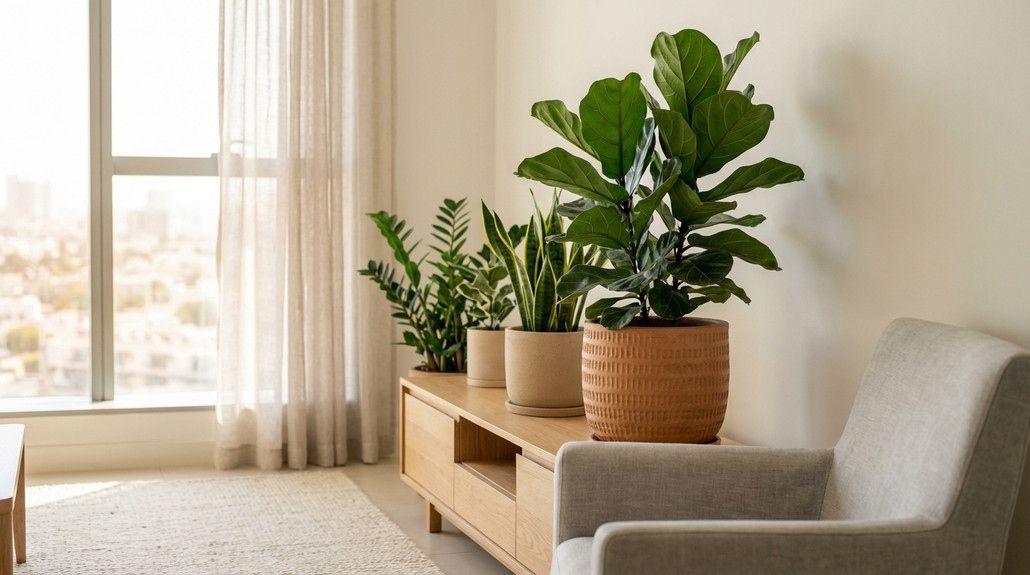
Indoor Plants Explained for First-Time Owners in UAE Homes
Posted by Mozher Experts on 20.02.26
The Reality of Growing Greenery in UAE Apartments
Step into a typical UAE home at midday. Outside, temperatures push past 40°C. Inside, the AC runs constantly. Curtains filter harsh sunlight. Windows stay closed for months. This combination—intense heat outdoors and chilled, dry air indoors—defines how house plants behave here.
Most beginner mistakes happen because people follow advice written for mild European or North American climates. In the UAE, your plant is not adjusting to seasons. It is adjusting to air conditioning, low humidity, artificial light, and sudden transitions from nursery to apartment.
Cold air from a ceiling vent can dry leaf edges within days. A bright window can scorch foliage by afternoon. A shaded corner may look bright to you but still be too dim for healthy growth. Understanding cause and effect is essential. Light drives growth. Water supports it. Airflow and humidity regulate stress. Soil and pots determine root survival.
If you are starting with indoor plants UAE residents commonly choose, focus on climate-fit options from curated collections like indoor plants suitable for Gulf homes. Selection is half the success. The rest is adjusting care to your specific space.
Light: The First Decision That Determines Success
Light is not about how bright a room feels. It is about measurable exposure. In UAE apartments, south- and west-facing windows deliver intense afternoon sun. East-facing windows provide softer morning light. Many high-rise units rely heavily on reflected light from neighboring buildings.
Bright but Indirect Is Not the Same as Sunny
Direct sunlight through glass in Dubai or Abu Dhabi can burn leaves within hours, especially during summer. Bright indirect light means strong ambient brightness without sun rays touching foliage. Plants placed one to two meters away from a hot window often perform better than those on the sill.
Low-Light Corners and Artificial Lighting
Hallways, bathrooms without windows, and shaded bedrooms rarely provide enough natural light. If you depend on ceiling LEDs, choose varieties tolerant of artificial conditions from collections like plants that adapt to artificial lighting. Even then, growth will be slower. Expect stability rather than rapid expansion.
When leaves stretch toward a window, growth becomes thin, or color fades, light is insufficient. Move the plant before increasing water. Water cannot compensate for lack of light.
Watering in an AC-Controlled Environment
In the Gulf, people assume heat equals more watering. Indoors, this is rarely true. Air conditioning cools rooms and reduces evaporation from soil surfaces. As a result, pots can stay moist longer than expected.
Why Overwatering Is the Most Common Beginner Mistake
Roots need oxygen. When soil remains saturated, oxygen disappears. In AC-heavy homes, the top layer may appear dry while deeper soil remains wet. This leads to root rot within weeks. Yellow leaves and soft stems are often signs of excess water, not dryness.
How to Judge Moisture Accurately
Insert your finger at least 3–5 cm into the soil. If it feels cool and damp, wait. For more precision, especially with larger pots, use a reliable soil moisture meter to check deeper levels before watering. Always empty saucers after irrigation. Standing water accelerates fungal problems in closed apartments.
Water thoroughly but less frequently. Allow partial drying between sessions unless the plant specifically requires constant moisture.
Humidity, Airflow, and the Hidden Stress from AC
Outdoor humidity in coastal UAE cities can be high, but indoor air under AC becomes extremely dry. Leaf tips turn brown not because of underwatering, but because of low humidity combined with airflow from vents.
Positioning Away from Direct Cold Drafts
Never place house plants directly under AC units or in the path of continuous airflow. Cold drafts shock foliage and dry it simultaneously. Move plants at least one meter away from vents.
Practical Humidity Adjustments
Bathrooms with filtered light can support moisture-loving varieties. You can also group plants together to create a small microclimate. Misting offers temporary relief but does not replace consistent humidity. For humidity-loving options, explore plants suited to humid bathroom environments.
Airflow should be gentle and indirect. Stagnant air invites pests. Constant cold wind stresses foliage. Balance is key.
Soil and Pots: What Happens Below the Surface
Roots determine survival. In UAE homes, heavy soil mixes that retain water too long are risky. Fast-draining blends reduce the chance of rot, especially when combined with ceramic or plastic containers.
Choosing the Right Container
Every pot must have drainage holes. Decorative containers without drainage require an inner nursery pot. Browse appropriate indoor plant pots with proper drainage that match both aesthetics and function.
Repotting After Purchase
Do not rush to repot immediately after delivery. Plants need acclimation time. Wait two to three weeks unless roots are visibly bound or soil is compacted. When repotting, use well-aerated mixes available under soil and plant care essentials. Avoid garden soil. It compacts quickly in indoor conditions.
Acclimation: The Overlooked Transition Period
Most indoor plants UAE buyers receive come from nurseries with filtered shade and consistent humidity. Your apartment is different. Light levels shift. Air becomes drier. Temperatures fluctuate between chilled nights and warmer days.
What to Expect in the First Two Weeks
Minor leaf drop is normal. Do not respond by overwatering or fertilizing. Stability is more important than action. Keep the plant in one location during adjustment.
When to Intervene
If yellowing accelerates rapidly or stems soften, review watering and light first. Fertilizer is rarely the solution during acclimation. Patience prevents most losses.
Quick-Start Checklist for First-Time Owners
- Place plants according to actual light exposure, not room brightness.
- Keep away from direct AC airflow.
- Water only after checking soil depth.
- Use pots with drainage holes.
- Avoid immediate repotting unless necessary.
- Expect a short adjustment period after delivery.
For beginners, starting with resilient varieties from easy-care indoor selections reduces early frustration and builds confidence.
Common Myths Versus Reality in Gulf Homes
| Myth | Reality |
|---|---|
| Hot country means daily watering. | AC slows drying; overwatering is more common than drought. |
| Any bright room works for all plants. | Light intensity varies drastically by direction and distance. |
| Misting fixes dryness. | Humidity control requires positioning and grouping, not occasional spraying. |
| Fertilizer solves yellow leaves. | Improper watering or light is usually the cause. |
For deeper climate-specific behavior patterns, research from university extension programs such as the University of Florida IFAS Extension and the Royal Horticultural Society provides valuable plant physiology insights under controlled environments.
Frequently Asked Questions
How often should I water house plants in UAE apartments?
There is no fixed schedule. Most medium-sized plants in AC environments need watering every 7–14 days, depending on light and pot size. Always check soil moisture first. Frequency changes with season and room temperature.
Why are leaf tips turning brown even though I water regularly?
Brown tips are commonly caused by low humidity and AC drafts. Move the plant away from vents and consider grouping plants to increase local humidity before increasing watering.
Can I place plants on a sunny balcony and move them inside?
Sudden transitions from extreme heat to air-conditioned interiors cause shock. If using a balcony, introduce plants gradually and avoid peak summer sun. Consistency is safer than frequent relocation.
Are indoor plants UAE homes safe for beginners?
Yes, when chosen correctly and placed according to light conditions. Start with adaptable varieties, monitor watering carefully, and focus on environmental balance rather than frequent intervention.
Growing house plants in the UAE is not about copying foreign advice. It is about reading your space—light patterns, AC flow, humidity levels—and adjusting calmly. Once you understand these fundamentals, plant care becomes predictable and manageable rather than stressful.