


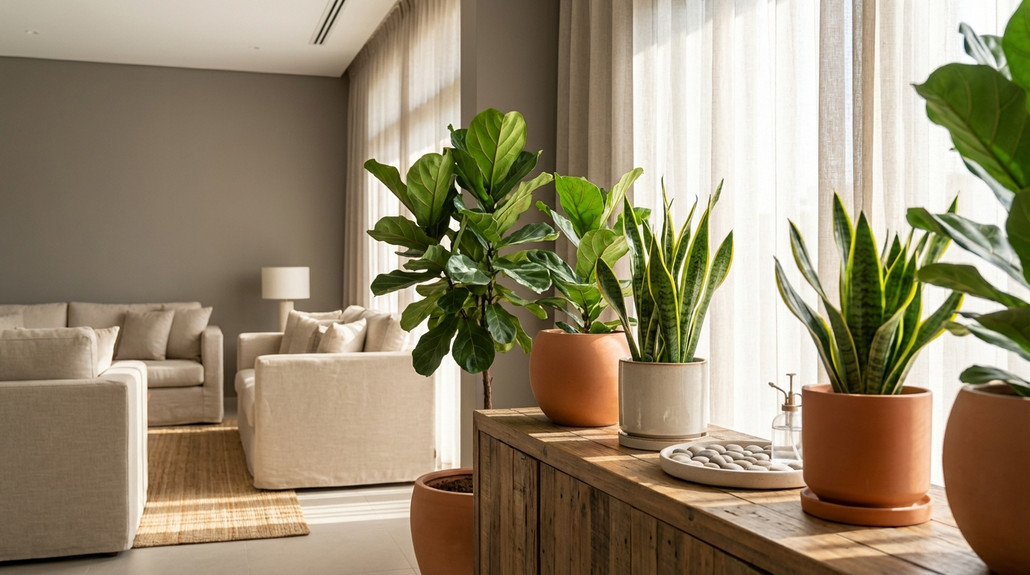
Indoor Plants Explained for First-Time Owners in UAE Homes
Posted by Mozher Experts on 24.02.26
Managing the Unique Indoor Climate of a UAE Home
The primary challenge for indoor plants in the UAE is not just the outdoor heat, but the indoor environment we create to escape it. Intense sunlight streams through windows, while powerful air conditioning units run constantly. This creates a unique combination of conditions: bright light, low humidity, and consistent cool drafts. The dry air from the AC is one of the most significant factors affecting plant health, often leading to brown leaf tips and rapid soil drying. It strips moisture from both the leaves and the soil, creating a desert-like microclimate even within a cool room. Unlike temperate climates where humidity is more stable, here we must actively manage a plant's immediate environment to counteract the dehydrating effects of our essential cooling systems. Understanding this balance between light, temperature, and AC-induced dryness is the first step to success. Your goal is not to fight the environment, but to select and place plants in a way that works within it.
Understanding Light Requirements Inside Your Home
Light is a plant's food. In the UAE, assuming all window spots are "bright" is a common mistake. A window receiving direct afternoon sun can scorch the leaves of most houseplants, which are native to forest understories. Conversely, a room with a north-facing window may not provide enough light for a sun-loving succulent. The key is to observe the light in your space throughout the day. "Bright, indirect light" is the most common requirement. This refers to a spot near a window where the sun's rays do not fall directly on the plant's leaves for more than an hour or two. A good test is to hold your hand up; if it casts a sharp, defined shadow, the light is direct. If the shadow is soft and fuzzy, it's indirect. Many homes have excellent locations for plants that tolerate low light, such as hallways or corners of living rooms, which are perfect for species like the ZZ Plant or Sansevieria. Do not place delicate plants directly in the path of intense sunbeams filtered through glass, as the magnified heat can be damaging.
The Correct Approach to Watering in a Dry Climate
Overwatering is the single most common reason indoor plants fail, yet the dry air from AC units complicates this. The top layer of soil can feel bone-dry while the root zone remains saturated. This leads many beginners to water too frequently, suffocating the roots and causing rot. The correct method is to check the soil moisture before adding any water. For most common houseplants, insert your finger two inches into the soil. If it feels dry at that depth, it is time to water. If you feel any moisture, wait a few more days and check again. When you do water, do so thoroughly until water drains from the bottom of the pot. Discard this excess water; never let the pot sit in a saucer of water. This deep-watering method encourages strong root growth. For those who want more precision, using a simple soil moisture meter can remove all the guesswork, giving you an accurate reading of conditions at the root level.
Balancing Humidity and Airflow
Most popular indoor plants are tropical in origin and thrive in humidity levels between 40% and 60%. An air-conditioned room in the UAE can easily have humidity below 30%. This disparity causes issues like crispy leaf edges and stunted growth. While you cannot change the entire room's climate, you can create a more humid micro-environment around your plants. Grouping several plants together is a simple and effective strategy, as they release moisture through transpiration, raising the local humidity. Misting the leaves with a spray bottle provides temporary relief but is not a long-term solution. A more sustainable method for humidity-loving plants like ferns or Calatheas is to place them on a pebble tray. This is a shallow tray filled with pebbles and water, where the pot sits on top of the pebbles, not in the water. As the water evaporates, it increases the humidity directly around the plant. At the same time, avoid placing plants directly in the line of an AC vent, as the constant cold, dry draft is extremely stressful for them.
Choosing Suitable Pots and Soil
The container and growing medium are just as important as light and water. The single most critical feature of any pot is a drainage hole. Without it, excess water has no escape, leading inevitably to root rot. If you have a decorative pot with no hole, use it as a cachepot. Keep your plant in a plastic nursery pot with drainage, and simply place that pot inside the decorative one. When it's time to water, remove the inner pot, water it in a sink, let it drain completely, and then return it to the cachepot. The soil itself should be appropriate for the plant. Most foliage plants thrive in a well-draining, peat-based potting mix. Succulents and cacti require a grittier, sandier mix that dries out very quickly. Using the wrong soil can doom a plant; for example, putting a cactus in dense, water-retentive soil is a recipe for failure. Investing in quality planters with proper drainage is a foundational step for plant health.
Selecting Resilient Plants to Start Your Journey
Your chance of success increases dramatically when you begin with forgiving plants. Resist the temptation to start with delicate, high-maintenance species. Instead, choose plants known for their toughness and adaptability. These varieties can tolerate occasional neglect and are less sensitive to the environmental fluctuations in a typical UAE home. They provide a learning opportunity without the constant stress of potential failure. Excellent starter options include the Snake Plant (Sansevieria), ZZ Plant (Zamioculcas zamiifolia), and Pothos (Epipremnum aureum). These plants handle a wide range of light conditions and are not overly demanding about watering frequency. By starting with a selection of hardy and resilient houseplants, you can build your confidence and learn the fundamentals of care before moving on to more challenging specimens. This approach makes the hobby more enjoyable and sustainable.
Common Questions from New Plant Owners
How often should I really water my plants in an AC room?
There is no fixed schedule. The "water once a week" rule is a myth that harms more plants than it helps. The frequency depends on the plant type, pot size, soil mix, and the amount of light it receives. The only reliable method is to check the soil moisture. For most plants, this might mean watering every 7-14 days, but for a thirsty fern in a small pot, it could be every 4-5 days. Always check first.
Is direct sunlight from a UAE window too strong?
Yes, for most common indoor plants, prolonged direct sun through a window is too intense. It can scorch leaves, causing brown or yellow patches. The glass can magnify the sun's heat, effectively cooking the plant. The only exceptions are desert plants like cacti and certain succulents. For all others, position them where they get bright but filtered light, or pull them back a meter from the window.
What does it mean when a plant's leaves turn yellow?
Yellowing leaves (chlorosis) are a symptom, not a disease. The most common cause is overwatering, where the saturated soil prevents roots from absorbing nutrients. However, it can also be caused by underwatering, nutrient deficiency, pest issues, or even natural aging where the plant sheds its oldest leaves. Observe the plant and its conditions carefully to diagnose the root cause before taking action. Our detailed plant care guides can help you identify specific issues based on how the leaves are yellowing.