


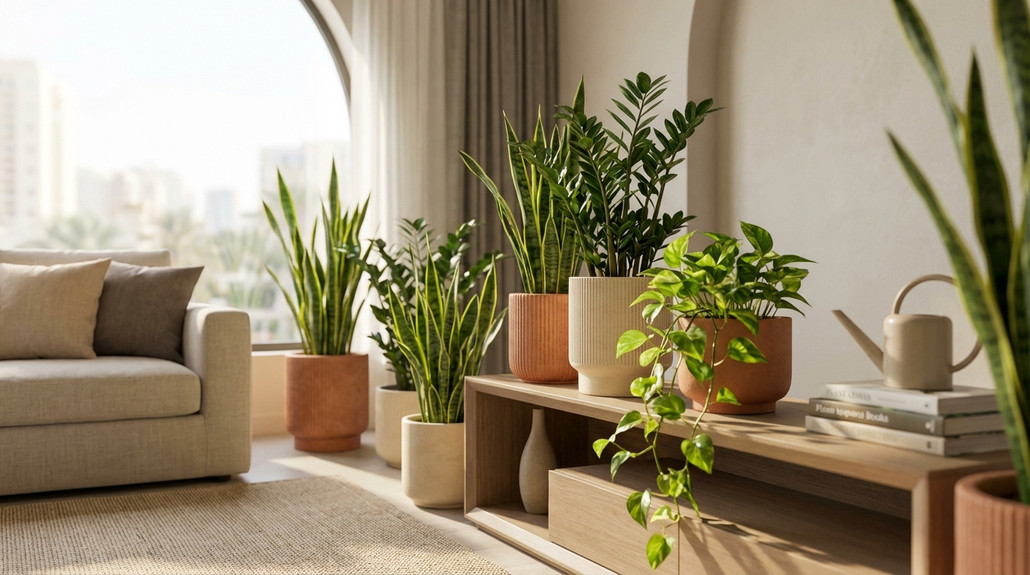
Indoor Plants That Don’t Require Constant Attention in UAE Homes
Posted by Mozher Experts on 23.02.26
The Challenge of Indoor Greening in the UAE
Maintaining indoor plants in the UAE presents a unique set of challenges not found in more temperate climates. The core issue is the stark contrast between the intense outdoor heat and the consistently air-conditioned indoor environment. While we rely on AC for comfort, it creates an artificially dry and cool atmosphere that can be stressful for many plants. The constant removal of humidity from the air, combined with potential drafts of cold air, means that plants selected for our homes must be exceptionally resilient. They need to tolerate not just potential neglect from a busy schedule, but also this specific, demanding microclimate. The goal is not simply to find a plant that can survive being forgotten, but to select one that is genetically predisposed to thrive in low-humidity, stable-temperature conditions, making it a truly low maintenance choice for local homes and offices.
Top Selections for Forgiving Greenery
For those seeking resilient companions that ask for very little, a few species consistently outperform others in UAE conditions. These are the plants that tolerate infrequent watering, adapt to lower light levels, and are not troubled by the dry air produced by constant air conditioning. They provide the aesthetic and wellness benefits of greenery without demanding a complex or time-consuming care regimen, making them ideal for both new plant owners and seasoned collectors with busy lives.
The Snake Plant (Sansevieria trifasciata)
Often called the mother-in-law's tongue, the Snake Plant is the epitome of a set-it-and-forget-it species. Its structural, upright leaves are not just visually striking; they are highly efficient water storage organs. This adaptation allows the plant to withstand long periods of drought, making it the perfect choice for frequent travelers or forgetful waterers. It is exceptionally adaptable to a wide range of lighting conditions, from bright, indirect sunlight to dimmer corners of a room. Its resilience and minimal needs make it a foundational piece in any low-effort plant collection.
The ZZ Plant (Zamioculcas zamiifolia)
The ZZ Plant is arguably the most indestructible houseplant available. Its ability to survive is rooted in its large, potato-like rhizomes hidden beneath the soil. These rhizomes store significant amounts of water, allowing the plant to go for weeks, or even months, without irrigation. Its wide, waxy, dark green leaves are excellent at conserving moisture and resisting dust buildup. Furthermore, the ZZ Plant is renowned for its tolerance of extremely low light, making it one of the few plants that thrive in low light conditions such as windowless offices or dimly lit hallways.
The Golden Pothos (Epipremnum aureum)
Known for its fast-growing, vining nature, the Golden Pothos is both hardy and communicative. Its heart-shaped leaves will visibly droop when the plant is thirsty, providing a clear and timely signal for when to water. It recovers quickly once hydrated. Pothos is highly versatile, capable of flourishing in a hanging basket, climbing a support, or simply trailing from a shelf. It is not fussy about light, thriving in bright indirect light but readily tolerating lower light levels, although its variegation may fade in dimmer conditions. This adaptability makes it a forgiving and rewarding choice for beginners.
The Biological Basis for Neglect Tolerance
The resilience of these specific plants is not accidental; it is a product of their evolutionary history. Many low maintenance indoor plants originate from arid or seasonally dry environments in Africa and Asia, where they developed sophisticated survival mechanisms. The Snake Plant, for instance, utilizes a specialized form of photosynthesis (Crassulacean acid metabolism, or CAM) which allows it to open its stomata—the pores on its leaves—at night instead of during the day. This drastically reduces water loss in hot, dry conditions. Similarly, the ZZ Plant's rhizomes are a direct adaptation to survive prolonged drought in its native habitat. By understanding these biological advantages, we can better appreciate why these plants do not just tolerate, but often prefer, a less-is-more approach to care. They are genetically wired to handle periods of scarcity, which translates perfectly to a low-maintenance routine in our homes.
A Minimalist Care Routine That Succeeds
Achieving success with hardy plants involves embracing a minimalist approach. The most common cause of failure is not neglect, but over-caring, particularly overwatering. A simple, effective routine is all that is required. First, water thoroughly only when the soil is completely dry to the touch. In the UAE's air-conditioned spaces, the top layer of soil can be deceptive; always check a few inches down. A good rule is to water less often but more deeply. Second, place the plant in a suitable light location and leave it there. Constant relocation causes unnecessary stress. Most hardy plants prefer stable, indirect light. Third, wipe the leaves with a damp cloth every one to two months. Dust accumulation is common in the region and can block light, impeding photosynthesis. For anyone wanting to refine their watering technique, using a simple moisture meter removes all guesswork. This basic regimen respects the plant's natural adaptations and prevents the most common care errors.
Recognizing the Signs of Too Much Attention
Ironically, the toughest plants are often the ones most susceptible to being killed with kindness. It is crucial to recognize the symptoms of excessive care to ensure your low maintenance plant remains healthy. The number one sign is yellowing leaves, especially lower ones, which almost always indicates overwatering. The soil may be waterlogged, depriving the roots of oxygen and leading to rot. Another symptom is soft, mushy stems or a foul odor coming from the soil, which are advanced signs of root rot. Brown, crispy leaf tips can sometimes indicate low humidity, but in these hardy species, it is more often a sign of inconsistent watering or a buildup of salts from tap water or excessive fertilizer. If you see these signs, your first action should be to reduce the frequency of watering and allow the soil to dry out completely. Remember, these plants are built to be self-sufficient; your role is to provide a stable environment, not constant intervention.
Matching the Right Resilient Plant to Your Space
Choosing the right plant is as much about the space as it is about the species. Matching a plant’s characteristics to a room's function and conditions ensures long-term success with minimal effort. For a corporate setting or home office, consider the ZZ Plant or Snake Plant. They have a clean, architectural look and can handle the fluorescent lighting and climate control typical of these areas. We have a curated list of suitable options for office and desk environments that are proven to perform well. For a living room shelf or the top of a cabinet, a Golden Pothos provides a beautiful cascading effect, softening hard lines and adding dynamic greenery. In a bedroom, the upright form of a Snake Plant is an excellent choice, taking up little floor space while adding a touch of calm. The key is to assess the light and space once, choose an appropriate plant from our vast selection of indoor plants, and then allow it to settle in.
Frequently Asked Questions for UAE Plant Owners
What is the single most indestructible indoor plant for a beginner?
For a true beginner in the UAE, the ZZ Plant (Zamioculcas zamiifolia) is the most forgiving option. Its water-storing rhizomes make it extremely drought-tolerant, and it can survive in very low light conditions where other plants would fail. It is the closest one can get to a plant that truly thrives on neglect, making it an excellent confidence-builder for new plant owners.
How does constant air conditioning impact these hardy plants?
The primary effect of constant AC is the reduction of ambient humidity, creating a very dry environment. The plants recommended here—Snake Plant, ZZ Plant, and Pothos—are well-adapted to tolerate this dry air. The secondary risk is a direct draft of cold air. You should avoid placing any plant directly in the path of an AC vent, as the constant cold blast can shock the plant and cause leaf damage, even on these tough species.
Do I ever need to fertilize these types of plants?
Fertilizer is not a primary concern for these species. They are slow growers and have very low nutritional requirements. Over-fertilizing is a far greater risk than under-fertilizing. If you choose to feed them, a balanced, all-purpose liquid fertilizer diluted to half-strength once or twice a year during the spring or summer is more than sufficient. Many of these plants will live happily for years with no supplemental feeding at all, relying solely on the nutrients in their potting soil. For more guidance, you can review our foundational plant care instructions for general best practices.