


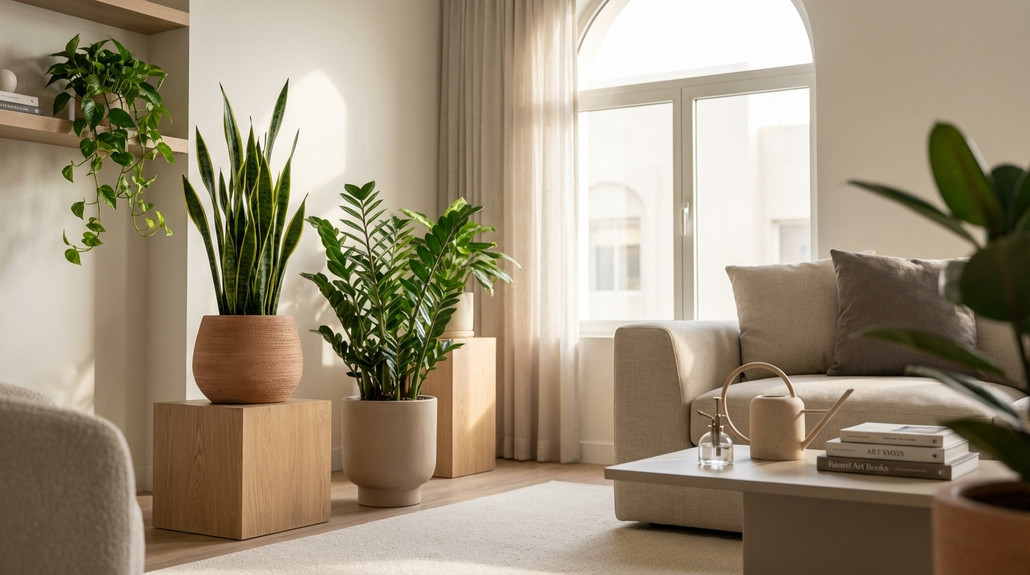
Indoor Plants That Survive Neglect and Irregular Care in UAE Homes
Posted by Mozher Experts on 25.02.26
Understanding the UAE's Indoor Environment
Keeping indoor plants alive in the UAE presents a unique set of challenges. It is not the outdoor heat that poses the primary threat, but the indoor environment created to combat it. Homes and offices rely heavily on air conditioning, which leads to consistently cool but extremely dry air. This artificial climate can desiccate plant foliage and alter soil moisture evaporation rates in ways that are counterintuitive. The constant airflow from AC units can cause rapid drying of leaves, while the cool temperatures may cause the soil in the pot to remain wet for longer than expected. This creates a confusing situation where the leaves look thirsty, but the roots are at risk of rot from overwatering. Furthermore, dust is a significant factor. It settles on leaves, blocking light and hindering photosynthesis. Choosing low maintenance indoor plants is not just about finding species that tolerate infrequent watering; it's about selecting plants resilient enough to withstand the specific pressures of an air-conditioned, low-humidity, and often dusty indoor life. True resilience in this context means a plant that can handle inconsistent care schedules and is not sensitive to the dry atmosphere produced by constant AC.
Top Selections for Minimalist Plant Care
Certain plants have evolved to survive in harsh conditions, making them ideal for a hands-off approach. Their biological structure allows them to tolerate periods of neglect that would be fatal for more demanding species. These are not just "easy" plants; they are anatomically equipped for survival. By understanding their natural adaptations, you can provide the minimal care they need to thrive. Here are a few reliable choices for any UAE home.
Sansevieria (Snake Plant)
The Snake Plant, or Dracaena trifasciata, is perhaps the most durable indoor plant available. Its resilience comes from its semi-succulent, sword-like leaves that store water efficiently, allowing it to withstand long periods of drought. It is exceptionally tolerant of low light conditions, making it suitable for corners and hallways where other plants would fail. Its vertical growth habit means it has a small footprint, ideal for apartments. The primary cause of failure with a Snake Plant is overwatering. It thrives on neglect and should only be watered when the soil has completely dried out. Its strong architectural form makes it a popular choice for modern interior design.
Zamioculcas Zamiifolia (ZZ Plant)
The ZZ Plant is another top contender for the most indestructible houseplant. Its survival mechanism is its large, potato-like rhizomes located beneath the soil surface. These rhizomes store significant amounts of water, enabling the plant to endure extended periods without any moisture. Its glossy, dark green leaves are so waxy they almost look artificial, a feature that helps reduce water loss through transpiration. Much like the Snake Plant, the ZZ Plant is highly susceptible to root rot from excessive watering. It performs well in a wide range of lighting conditions, from low to bright, indirect light, though it should be kept out of direct sun. Its tolerance for neglect is legendary, making it perfect for frequent travelers or those with very busy schedules.
Epipremnum aureum (Pothos)
Pothos, also known as Devil's Ivy, is a versatile and forgiving trailing plant. While it appreciates more consistent moisture than a Snake or ZZ Plant, it is remarkably communicative, visibly drooping when it needs water and quickly reviving once hydrated. This clear signal helps prevent both under and overwatering. Pothos is adaptable to various light levels and can thrive even in rooms with only artificial light sources. It is an excellent choice for hanging baskets or for placing on shelves where its vines can cascade downwards. This plant is also very easy to propagate; a simple cutting placed in water will root within weeks, providing a continuous supply of new plants.
The Bare Minimum Care Routine That Works
A successful low-maintenance approach is not about having no routine, but having a very simple one based on observation rather than a rigid schedule. Forget watering every Saturday. Instead, adopt a "check-in" mentality. Once every week or two, simply feel the soil. The most important tool is your finger. Push it about 5cm into the soil. If it feels dry at that depth, it is time to water. If there is any moisture, wait longer. When you do water, do so thoroughly until water drains from the bottom of the pot, then discard the excess. This ensures the entire root ball is hydrated. The second part of the routine is a quick visual inspection. Look for dust on the leaves. In the UAE, dust accumulation can be rapid. A gentle wipe with a damp cloth every month or so is sufficient to keep the leaves clean, allowing them to photosynthesise effectively. This minimalist approach addresses the two most critical needs of these hardy plants: appropriate moisture and access to light, preventing the common pitfalls of a rigid, one-size-fits-all schedule.
Avoiding Common Mistakes with Hardy Plants
It is a common misconception that low-maintenance plants are impossible to kill. While they are tolerant, they are not immune to consistently poor care, and the most frequent mistake is providing too much attention, not too little. Overwatering is the single greatest threat. In a cool, air-conditioned environment, soil dries much slower than people assume. Constant watering "just in case" will suffocate the roots and lead to irreversible rot. Another error is placing a low-light tolerant plant in direct, intense sunlight. While a Snake Plant can survive in a dim corner, the harsh UAE sun filtering through a window will scorch its leaves. Providing the right location from the start is crucial. Finally, many owners either neglect fertilising altogether or apply it too frequently. Hardy plants are typically slow growers and do not require much feeding. A single application of a balanced liquid fertiliser at half-strength during the start of the growing season is often enough for the entire year. More than that can cause chemical burns to the roots. Understanding these limits is key; these plants thrive on less, not more.
Choosing the Right Plant for Your Space
Matching a plant's needs to the specific conditions of a room is the most effective way to ensure its survival with minimal effort. A plant that is perfectly suited to its environment will require far less intervention. Instead of choosing a plant and trying to force it to adapt, assess your space first and then select a compatible species from our collection of indoor plants.
For Office and Desk Spaces
Desks and office environments often have limited natural light and are subject to constant, dry air from central AC systems. The ZZ Plant and smaller varieties of Sansevieria are excellent choices here. They tolerate fluorescent lighting well and their infrequent watering needs mean you do not have to worry about them over a long weekend or a short holiday. Their compact, upright growth habits do not take up valuable desk space. You can explore our curated selections for office and desk spaces to find the right fit.
For Low-Light Hallways and Corners
Many homes have areas that receive very little natural light, such as entryways, corridors, or corners far from any windows. These spots are perfect for plants adapted to low light. The Cast Iron Plant (Aspidistra elatior) is another fantastic option alongside the ZZ and Snake Plant for these challenging locations. It lives up to its name, tolerating deep shade, infrequent watering, and a wide range of temperatures. Its large, dark green leaves add a touch of lushness to otherwise forgotten spaces.
For Living Rooms and Bedrooms
Larger spaces like living rooms and bedrooms can accommodate statement plants that require minimal upkeep. A large, mature Snake Plant or a Pothos trained to climb a moss pole can create a significant visual impact without demanding constant care. These areas often have better indirect light, which allows these plants to thrive and grow more robustly. For more comprehensive information on keeping your greenery healthy, you can refer to our detailed plant care guides.
Essential Equipment for Simplified Plant Care
While low-maintenance plants do not require much, having a few basic items can make the occasional care tasks simpler and more effective. A quality watering can with a long spout allows you to deliver water directly to the soil without splashing the leaves, which helps prevent fungal issues. For those who are uncertain about judging soil moisture by touch, a moisture meter is an inexpensive tool that provides a clear reading, removing all guesswork. Finally, a good potting mix is the foundation of a healthy plant. Using proper soil and tools designed for indoor plants ensures good drainage, which is critical for preventing the root rot that plagues these drought-tolerant species when overwatered. Investing in these basics from the start simplifies your routine and sets your plants up for long-term success with minimal ongoing effort.
Frequently Asked Questions About Low Maintenance Plants
What is the most indestructible indoor plant for a UAE apartment?
The ZZ Plant (Zamioculcas zamiifolia) is arguably the most resilient choice for a typical UAE apartment. Its ability to store water in its underground rhizomes makes it exceptionally drought-tolerant, a key feature for busy owners. It is also highly adaptable to the low-light conditions found in many interior rooms and is not fussy about the dry air produced by air conditioning.
How often should I really water a 'drought-tolerant' plant?
There is no fixed schedule. The best practice is to check the soil. For plants like the Snake Plant or ZZ Plant, you should wait until the soil is completely dry from top to bottom. In a UAE apartment with AC, this could mean watering as infrequently as once every 4-6 weeks, or even less in winter. Always err on the side of underwatering.
Do low maintenance plants still need to be repotted?
Yes, but very infrequently. Hardy, slow-growing plants like the Sansevieria can happily remain in the same pot for several years. They often prefer to be slightly root-bound. You should only consider repotting once every 2-3 years, or when you see roots growing out of the drainage holes or the plant has become too top-heavy for its container.