


Low Maintenance Indoor Plants for Busy People in Iraq Homes
Posted by Mozher Experts on 25.02.26
Surviving the Iraqi Indoor Climate: Heat, Dust, and Air Conditioning
Maintaining healthy indoor plants in Iraq presents a unique set of challenges not often addressed in general care guides. The primary issue is not just the extreme outdoor heat but the environment we create indoors to combat it. Homes and offices rely heavily on air conditioning, or the *split unit*, which runs for months on end. This creates an atmosphere that is consistently cool but also exceptionally dry. The constant flow of cold, dehumidified air strips moisture from plant leaves and soil far more quickly than in a temperate climate. Furthermore, the persistent dust, or *ghubar*, settles on leaves, blocking light and hindering the plant's ability to photosynthesize. These two factors—air conditioning and dust—are the main reasons many common houseplants fail here. The key to success is not about finding a plant that loves these conditions, but one that is resilient enough to tolerate them. Selecting a plant that can withstand periods of drought, low humidity, and the occasional layer of dust is fundamental for anyone wanting greenery without constant, demanding care. These are the plants that will thrive with minimal intervention.
Top Selections for Forgiving Indoor Greenery
For those with busy schedules or new to plant ownership, choosing the right species from the start is the most critical step. A forgiving plant is one that tolerates a degree of neglect, especially inconsistent watering and variable light. It bounces back from minor mistakes rather than declining rapidly. Below are some of the most durable and adaptable plants that have proven to perform well within the typical Iraqi home environment. These selections are known for their structural resilience and low water requirements, making them ideal for our dry, air-conditioned spaces. They offer the visual benefit of a living plant without demanding the precise care of more sensitive tropical species. Their hardiness makes them a sound investment, reducing the frustration and cost of replacing plants that cannot adapt.
The Snake Plant (Sansevieria trifasciata)
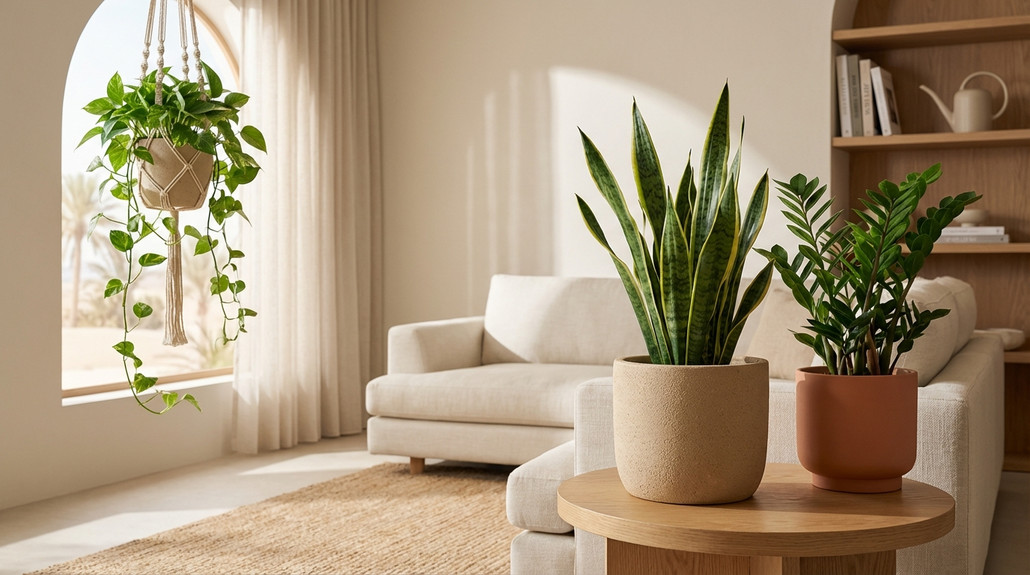
The Snake Plant is arguably the most tolerant indoor plant available. Its tough, architectural leaves are excellent at storing water, allowing it to go for weeks without irrigation. This drought tolerance makes it perfectly suited to the dry air produced by constant AC use. It is also exceptionally adaptable to different light levels. While it prefers bright, indirect light, it will survive and maintain its appearance in much lower light conditions, such as a corner of a living room or a hallway. Its vertical growth habit makes it suitable for tight spaces. Furthermore, it is one of the few plants that performs CAM photosynthesis, releasing oxygen at night, which makes it a popular choice for bedrooms. We consider it one of the best plants for beginners because its needs are minimal: infrequent watering and an occasional wipe of the leaves to remove dust.
The ZZ Plant (Zamioculcas zamiifolia)
The ZZ Plant is the definition of a low maintenance plant. Its ability to thrive on neglect comes from its large, potato-like rhizomes located beneath the soil. These structures store significant amounts of water, allowing the plant to survive extended periods of drought. It is the perfect choice for someone who travels often or is prone to forgetting to water. The ZZ Plant has glossy, dark green leaves that reflect light, brightening up even dim spaces. It is highly tolerant of low light conditions and can even grow under fluorescent office lighting. In fact, its primary enemy is too much care, specifically overwatering, which can cause the rhizomes to rot. For the Iraqi home, its resilience to dry air and its minimal water needs make it an almost foolproof option for adding green to an interior space.
The Pothos (Epipremnum aureum)
Pothos is a versatile and communicative vine that is incredibly forgiving. Its heart-shaped leaves will visibly droop when the plant is thirsty, providing a clear, unmistakable signal that it's time to water. It recovers quickly once hydrated. This trait makes it an excellent teacher for new plant owners learning to read a plant's needs. Pothos can tolerate a wide range of lighting conditions, from low to bright indirect light, although its leaf variegation may become less pronounced in dimmer spots. It is not demanding about humidity and handles the dry air from a split unit better than most vining plants. It can be grown in a hanging basket to cascade down or trained to climb a support, offering flexible styling options for any room. Its rapid growth provides a rewarding experience for beginners.
A Minimalist Care Routine That Works
The secret to keeping low-maintenance plants alive is to resist the urge to over-care for them. These plants are adapted to survive with less, and providing too much water, light, or fertilizer is a common path to failure. A simple, observation-based routine is far more effective than a rigid schedule.
Watering: Check Before You Act
Do not water on a fixed schedule, such as every Saturday. The drying rate of soil changes with the season, the intensity of the AC, and the plant's growth cycle. The most reliable method is to check the soil moisture first. Push your finger about two inches deep into the soil. If it feels dry at that depth, it is time to water. If you feel any moisture, wait a few more days and check again. When you do water, do so thoroughly until water drains from the bottom of the pot, then discard the excess. For more precision, using a simple moisture meter removes all guesswork.
Light and Placement: Consistency Is Key
Most hardy indoor plants prefer bright, indirect light. In Iraq, this means a spot near a window that does not receive direct, scorching midday or afternoon sun. East-facing windows are often ideal. A spot several feet back from a south or west-facing window also works well. The most important thing is consistency. Once you find a location where the plant seems content, leave it there. Moving a plant frequently forces it to constantly readjust, which causes unnecessary stress.
Cleaning and Feeding: Less Is More
Dust is a significant issue. Wipe the leaves with a damp cloth every few weeks. This allows the plant to breathe and absorb light efficiently. As for fertilizer, these plants do not require much. Feeding them once or twice a year during the spring and summer growing season with a balanced indoor plant fertilizer is sufficient. Do not fertilize in the winter when the plant's growth is dormant.
Signs You Are Providing Too Much Care
For resilient plants like the Snake Plant or ZZ Plant, problems are more often caused by excessive attention than by neglect. Understanding the signs of over-care can help you correct your routine before permanent damage occurs. The most common mistake is providing too much water. This is driven by the assumption that the dry, air-conditioned environment means the plant must be constantly thirsty. However, these species are built to withstand drought, and their roots are highly susceptible to rot in waterlogged soil. Yellowing leaves, especially lower ones, and a soft, mushy base are classic indicators of overwatering. Another sign of too much attention is over-fertilizing. If you notice brown, crispy tips or edges on the leaves, or a white crust forming on the soil surface, you may be providing too many nutrients. Hardy plants are slow growers and have low nutritional needs. Finally, avoid the temptation to constantly move the plant to find the "perfect" spot. Each move forces the plant to acclimate to new light and temperature conditions, causing stress that can lead to leaf drop or stunted growth. Let the plant settle.
Matching the Plant to Your Room
Selecting a plant is not just about its maintenance level, but also how it fits into your specific space. Different rooms have different light conditions and uses, which can influence your choice.
For an Office or Desk
Spaces like offices and desks often have lower light levels and are subject to powerful air conditioning. Here, you need a plant that is compact and extremely resilient. A small ZZ Plant or a dwarf variety of Snake Plant are excellent choices for a desk. They tolerate low light, infrequent watering, and maintain a neat appearance without much pruning or upkeep, ensuring they do not interfere with your workspace.
For a Living Room Corner
Living rooms often have corners or spaces far from a window that could benefit from some greenery. A larger Snake Plant or a Cast Iron Plant (Aspidistra elatior) are ideal for these low-light areas. They have a strong vertical or bushy presence that can fill a space without requiring the prime real estate right next to a window. Their tolerance for shade makes them one of the few options for adding life to dimmer parts of a home.
For the Bedroom
When choosing a plant for the bedroom, low maintenance and air quality are often top priorities. The Snake Plant is a superb choice due to its habit of releasing oxygen at night. A Pothos is also a great option, as it is one of the plants known for their air-purifying qualities. Both species are undemanding and will thrive quietly without disrupting the restful atmosphere of the room.
Frequently Asked Questions
How often should I really water a low-maintenance plant?
There is no fixed schedule. It depends entirely on your home's conditions. For plants like the ZZ or Snake Plant, this could mean as little as once every 3-6 weeks. The correct approach is to always check the soil first. Only water when the top two inches of soil are completely dry. It is always safer to underwater these plants than to overwater them.
Do low-maintenance indoor plants need special soil?
They do not need complex soil, but they do require a mix that drains well. Using a standard potting mix amended with perlite or sand is ideal. This prevents the soil from becoming compacted and waterlogged, which is the biggest risk for these drought-tolerant species. Avoid heavy garden soil.
What is the easiest way to deal with dust on plant leaves?
The simplest method is to use a soft, damp cloth to gently wipe down each leaf every few weeks. For plants with many small leaves, a gentle shower in the sink or bathtub can work, but make sure the soil is protected from becoming overly saturated and allow the plant to drain fully afterward. Keeping leaves clean is crucial for the plant's health in dusty environments.
Which pots are best for beginners with hardy plants?
The most important feature of any pot is a drainage hole at the bottom. This is non-negotiable, as it allows excess water to escape and prevents root rot. Terracotta pots are an excellent choice for beginners because the porous material helps the soil dry out more evenly, providing an extra buffer against overwatering. When choosing appropriate pots, prioritize function over aesthetics until you are confident in your watering routine.