


Low Maintenance Indoor Plants for Busy People in Saudi Arabia Homes
Posted by Mozher Experts on 23.02.26
The Unique Challenge of Indoor Gardening in Saudi Arabia
Maintaining indoor plants in Saudi Arabia presents a distinct set of challenges not found in more temperate climates. The primary issue is the constant battle between extreme outdoor heat and powerful indoor air conditioning. While the AC provides essential comfort for us, it creates an environment of very low humidity, which can be stressful for many common houseplants. This dry air, combined with the often-filtered and indirect light available indoors, means that plants must be exceptionally resilient. Many people assume the heat is the enemy, but for indoor plants, it is the constant, dry air from the AC that is the greater threat. This environment rapidly desiccates soil and can cause brown, crispy leaf edges on humidity-loving species. Selecting the right plants from the start—those that are naturally adapted to dry conditions and forgiving of inconsistent watering—is the key to success. The goal is not to fight the environment but to choose plants that thrive within it with minimal intervention.
Top Selections for Forgiving Greenery
For those seeking greenery without a demanding schedule, certain plants consistently prove their resilience in Saudi homes and offices. These species are tolerant of conditions that would cause others to fail quickly. They are the ideal starting point for anyone new to plant care or with limited time.
Sansevieria (Snake Plant)
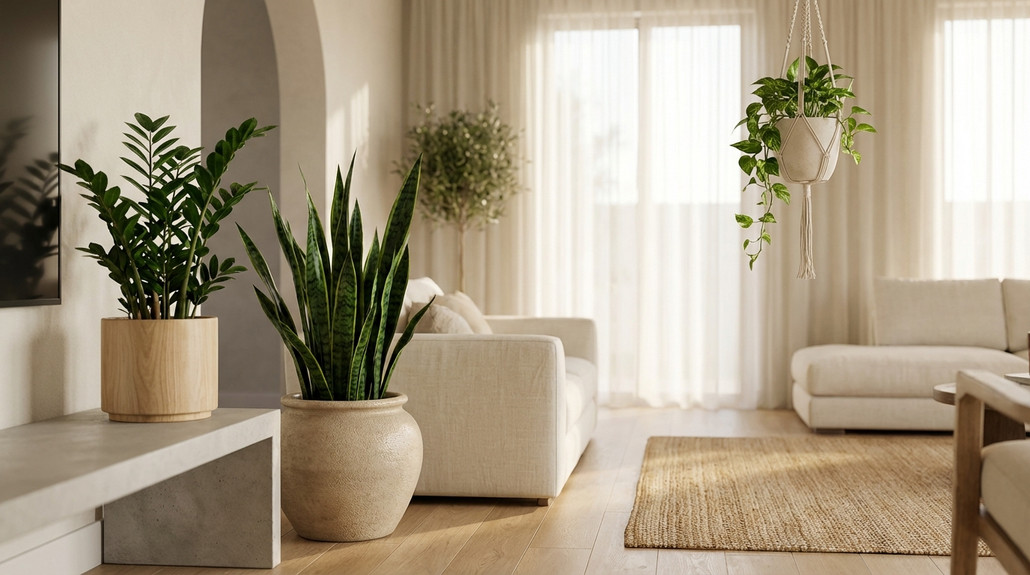
The Snake Plant is perhaps the most durable of all indoor plants. Its tough, architectural leaves are excellent at storing water, allowing it to withstand long periods of drought. It is also exceptionally versatile in its light requirements, tolerating both low-light corners and bright, indirect sun. Its slow growth means it does not require frequent repotting or feeding. Crucially, it is unaffected by the dry air produced by air conditioning, making it a perfect choice for our indoor climate.
Zamioculcas Zamiifolia (ZZ Plant)
The ZZ Plant is another champion of neglect tolerance. Its ability to thrive comes from its large, potato-like rhizomes located beneath the soil. These rhizomes store significant amounts of water, acting as a reserve during dry spells. This makes the ZZ Plant extremely forgiving of forgotten waterings. It maintains its glossy, dark green leaves even in very low light conditions, such as in office corridors or rooms with limited window access. It asks for little more than to be left alone, making it one of the best hardy indoor plants for busy individuals.
Epipremnum Aureum (Pothos)
Known for its fast-growing, cascading vines, the Pothos is both beautiful and remarkably easy to care for. It is an excellent communicator; its leaves will visibly droop when it needs water, taking the guesswork out of your routine. It recovers quickly once watered. Pothos is adaptable to a wide range of lighting, from low to bright indirect light, although its variegation may be more pronounced with more light. It is a great choice for shelves or hanging baskets where it can trail freely.
Why These Plants Tolerate Minimal Care
The resilience of low maintenance indoor plants is not accidental; it is rooted in their biological adaptations. These plants have evolved in harsh environments, equipping them with specific traits that allow them to survive periods of drought, low light, and nutrient-poor soil. Understanding these characteristics helps in appreciating why they are so forgiving. For instance, many, like succulents and the Snake Plant, have thick, waxy leaves that reduce water loss through transpiration. This is a critical advantage in the dry, air-conditioned rooms common in Saudi Arabia. Others, like the ZZ Plant, have underground rhizomes or tubers that act as water reservoirs, allowing them to draw on stored moisture during extended dry periods. This means they do not depend on a consistent watering schedule. Furthermore, many of these plants are adapted to grow under the canopy of larger trees in their native habitats, which is why they are so well-suited to the low light conditions found in many homes and offices. Their slow metabolism and growth rate mean they require fewer nutrients, reducing the need for regular fertilization.
A Practical Minimum Care Routine
Easy-care plants thrive on a "less is more" approach. The most common mistake is providing too much attention, particularly too much water. A simple, effective routine is all that is needed.
Watering Schedule
Forget a strict weekly schedule. The correct time to water is when the soil is dry. For plants like the Snake Plant and ZZ Plant, this could be as infrequent as once every 3-4 weeks, or even longer in lower light conditions. For a Pothos, it might be every 1-2 weeks. The best method is to check the soil. Insert your finger about two inches deep; if it feels completely dry, it is time to water. When you do water, do so thoroughly until water drains from the bottom of the pot, then discard the excess. Never let the plant sit in a saucer of water.
Light and Placement
Most low-maintenance plants prefer bright, indirect light but tolerate low light. An ideal spot is in a room with windows, but not directly in the path of harsh afternoon sun, which can scorch their leaves. Rotate the plant every few weeks to ensure all sides get some light exposure for even growth.
Cleaning and Fertilizing
Dust can accumulate on leaves, blocking light and hindering photosynthesis. Wipe the leaves with a damp cloth every month or two. Fertilizing is not a high priority for these plants. Feeding them once or twice a year during the spring and summer growing season with a balanced indoor plant fertilizer is more than enough. Over-fertilizing can burn the roots.
Warning Signs of Excessive Care
With low-maintenance plants, problems are more often caused by over-caring than neglect. Recognizing the signs of too much attention can save your plant before significant damage occurs. The most frequent issue is overwatering. Yellowing leaves, especially lower ones, are a classic symptom. If the soil is consistently damp and the leaves are turning yellow or mushy, you are watering too often. Brown, soft, or rotting stems at the base of the plant are another critical sign of root rot from excessive moisture. This is difficult to reverse and highlights the importance of letting the soil dry out. Another sign of misplaced care is applying too much fertilizer. This can lead to brown, crispy leaf tips or a white crust forming on the soil surface. These hardy plants have low nutrient requirements, and over-feeding does more harm than good. If you notice these signs, immediately scale back your watering and stop fertilizing. Allow the soil to dry completely before considering watering again.
Matching the Right Plant to Your Indoor Space
Choosing the right resilient plant also involves considering where it will live. Different species are better suited for specific locations within your home or office, ensuring they not only survive but also enhance the space.
For Desks and Offices
Space is often limited on a work surface, making smaller plants the ideal choice. A small Snake Plant or ZZ Plant in a compact pot works perfectly. These species are also excellent choices for office and desk environments because they tolerate artificial fluorescent light well and do not demand attention during a busy work week. Their upright growth habit keeps them contained and tidy.
For Living Rooms and Entryways
Larger spaces can accommodate bigger statement plants. A tall Sansevieria Laurentii can provide a strong vertical accent next to a sofa or in a corner. A large, mature ZZ Plant can create a lush, full appearance. For shelves or the top of a cabinet, a trailing Pothos adds a dynamic, cascading element that softens hard lines and brings a sense of life to the room.
For Bedrooms
The Snake Plant is an excellent choice for bedrooms. It is one of the few plants that perform a type of photosynthesis that releases oxygen at night. While the effect on overall air quality is minimal, its tolerance for lower light and infrequent watering makes it a practical and simple addition to a restful space.
Frequently Asked Questions
What is the most indestructible indoor plant for a beginner in Saudi Arabia?
The ZZ Plant (Zamioculcas zamiifolia) is arguably the most indestructible. Its ability to store water in its rhizomes makes it incredibly drought-tolerant, which is perfect for busy owners or beginners who might forget to water. It also thrives in very low light and is completely unfazed by the dry air from continuous air conditioning, making it perfectly suited to the typical indoor environment here.
How do I know when to water a low-maintenance plant?
Ignore the calendar and check the soil. For most low-maintenance plants like Snake Plants, ZZ Plants, and Pothos, you should allow the soil to dry out completely between waterings. The most reliable method is to insert your finger or a wooden stick about 5 cm into the soil. If it comes out dry with no soil clinging to it, it is time to water. If it feels moist, wait longer.
Can I keep these plants in a room with no windows?
While some plants are marketed as "no light" plants, all plants require some light to photosynthesize. The ZZ Plant and Snake Plant are exceptionally tolerant of low light conditions and can often survive in rooms with only artificial fluorescent lighting, such as an office. However, they will not grow much and will do better if they are occasionally rotated into a spot with some indirect natural light for a week.