


Low Maintenance Indoor Plants for Busy People in UAE Homes
Posted by Mozher Experts on 23.02.26
Thriving on Neglect: The Reality of Plant Care in UAE Homes
Maintaining indoor plants in the UAE presents a unique set of challenges not found in more temperate climates. The primary obstacle is not the outdoor heat, but the indoor environment we create to combat it. Constant air conditioning creates an atmosphere of low humidity and significant temperature fluctuations, which can be stressful for many plants. The dry air pulls moisture from both leaves and soil, while direct drafts from AC vents can cause sudden chilling. This environment demands plants that are not just tolerant of a missed watering but are structurally adapted to survive dry conditions and inconsistent care. The goal is to find greenery that fits a busy lifestyle without demanding constant attention. A truly low maintenance plant in this region is one that forgives forgetfulness and is resilient to the artificial, desert-like conditions inside our homes and offices. It's about selecting species that see our indoor climate as a manageable challenge rather than a constant threat. This approach shifts the focus from intensive care to intelligent selection, ensuring your indoor garden remains a source of calm, not a chore.
Top Selections for Forgiving Greenery
Choosing the right plant is the most critical step. Certain species are exceptionally well-suited to the demands of a busy schedule and a climate-controlled environment. These plants have evolved to store water, thrive in lower light, and resist common pests, making them ideal for beginners or those with little time for horticultural duties.
The ZZ Plant (Zamioculcas zamiifolia)
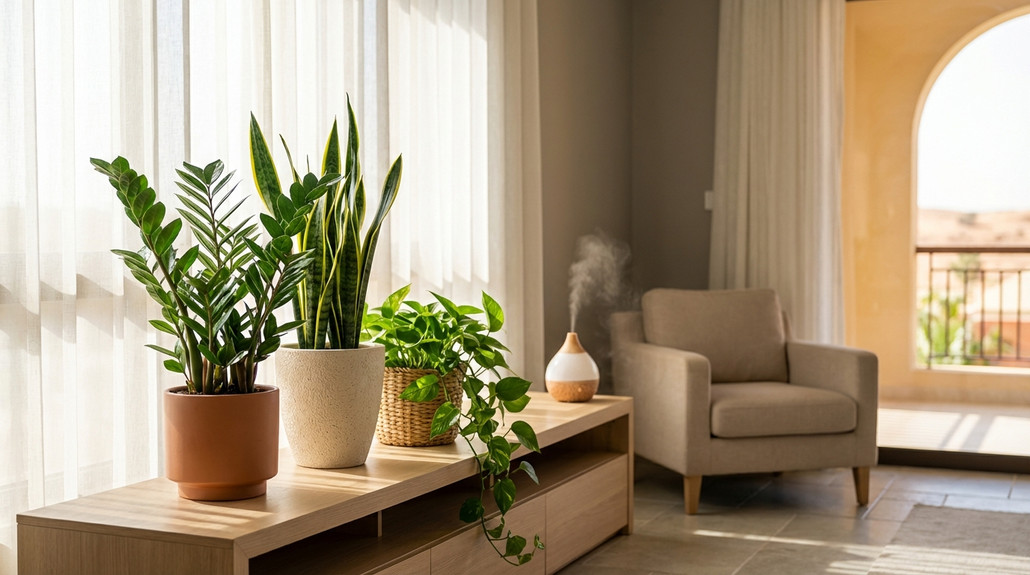
The ZZ Plant is perhaps the ultimate symbol of resilience in the plant world. Its ability to thrive on neglect is legendary. The plant's survival mechanism lies in its large, potato-like rhizomes hidden beneath the soil. These rhizomes store water, allowing the plant to endure long periods of drought without showing signs of stress. Its glossy, waxy leaves are not just for show; they reduce water loss through evaporation. It is perfectly content in environments with minimal natural light, such as office corridors or rooms with north-facing windows. The primary mistake owners make with a ZZ Plant is overwatering. It is essential to allow the soil to dry out completely between waterings, a cycle that might take three to four weeks or longer in a cool, air-conditioned room.
The Snake Plant (Dracaena trifasciata)
Formerly known as Sansevieria, the Snake Plant is another champion of durability. Its stiff, architectural leaves are designed for water storage and efficiency. Like the ZZ Plant, it is highly drought-tolerant and susceptible to root rot if overwatered. This makes it a perfect match for the "water when you remember" schedule. Snake Plants are also remarkably versatile when it comes to light. While they prefer bright, indirect light to grow robustly, they will tolerate very low light conditions, making them one of the most adaptable indoor plants available. Furthermore, they are known for their air-purifying qualities, removing common toxins from the indoor environment. Their upright growth habit makes them suitable for tight corners and narrow spaces where other plants might not fit.
The Pothos (Epipremnum aureum)
Known for its fast-growing, trailing vines, the Pothos is both beautiful and incredibly easy to care for. It is an excellent communicator, with its leaves visibly drooping when it requires water, taking the guesswork out of its care routine. It bounces back quickly once hydrated. Pothos is adaptable to a wide range of lighting conditions, from bright indirect light to lower-lit areas, although its leaf variegation may become less pronounced in dimmer spots. It is a great choice for hanging baskets or for placing on shelves where its vines can cascade downwards. This plant is also very easy to propagate; simply snipping a piece of stem and placing it in water will result in new roots, making it easy to expand your collection or share with friends.
Understanding the Impact of Constant Air Conditioning
Life in the UAE is synonymous with air conditioning. While essential for our comfort, it creates an indoor microclimate that is often hostile to plants. The primary effect is a drastic reduction in ambient humidity. Most popular houseplants are tropical in origin and thrive in humid conditions. The dry air produced by an AC unit forces them to transpire more rapidly, losing water through their leaves at an accelerated rate. This can lead to brown, crispy leaf tips and edges, even if the soil is adequately moist. The second issue is cold drafts. Placing a plant directly in the line of an AC vent exposes it to constant streams of cold air, which can shock the plant, causing leaf drop and stunted growth. The final challenge is inconsistent soil drying. The soil surface may appear dry due to the airflow, while the lower layers remain saturated. This can mislead owners into overwatering, leading to root rot. To mitigate these effects, it is crucial to place plants away from direct AC vents. Grouping plants together can help create a small pocket of higher humidity. For more sensitive plants, occasional misting or using a pebble tray with water can provide necessary moisture without waterlogging the soil.
A Minimalist Care Routine That Works
The appeal of low maintenance plants is that they do not require a complex or time-consuming care regimen. A simple, consistent approach is all that is needed to keep them healthy. The core principle is "less is more." Forget daily check-ins; a weekly or even bi-weekly glance is often sufficient. The most important task is watering, and the rule is to check the soil first. Do not water on a fixed schedule. Instead, insert your finger two inches into the soil. If it feels dry, it is time to water. If there is any moisture, wait longer. When you do water, do so thoroughly until water drains from the bottom of the pot, then discard the excess. This encourages deep root growth. Dust is another factor in the UAE. A layer of dust on leaves can block light and hinder photosynthesis. Once a month, wipe the leaves with a damp cloth. This simple action keeps the plant healthy and looking its best. Fertilizing should be minimal. For hardy plants like the ZZ and Snake Plant, feeding once or twice during the spring and summer growing season is plenty. Over-fertilizing can burn the roots and do more harm than good. Our detailed plant care information provides further guidance on specific needs.
Warning Signs That You Are Caring Too Much
With resilient plants, the most common cause of failure is not neglect, but excessive care. Enthusiastic new plant owners often kill their plants with kindness, and the primary culprit is overwatering. It is a mistake born from good intentions. The signs of overwatering can be deceptive, often mimicking the symptoms of underwatering. Yellowing leaves, especially lower ones, are a classic sign. The leaves may feel soft and mushy rather than dry and crisp. A perpetually damp soil surface or a sour, swampy smell from the pot are definitive indicators of too much moisture, which suffocates the roots and leads to rot. Another common mistake is over-fertilizing. While fertilizer provides nutrients, too much can create a toxic buildup of salts in the soil, burning the plant's roots. Symptoms include brown, scorched-looking leaf tips, stunted growth, and a white crust forming on the soil surface. Similarly, constantly moving a plant or repotting it unnecessarily can cause stress. Plants adapt to their environment, and frequent changes in light and temperature force them to constantly readjust. The best approach for these hardy species is to find a suitable spot and let them be.
Placing Hardy Plants in Your Home or Office
The versatility of these plants allows them to be placed in various locations throughout a home or office, even in areas previously considered unsuitable for greenery. The key is to match the plant's tolerance levels with the conditions of the space. For a low-light corner in a living room or a dimly lit hallway, the ZZ Plant or Snake Plant are unparalleled choices. Their ability to survive with minimal natural light brings life to forgotten spaces. They are excellent choices for adding vertical interest beside a bookshelf or media console. For workspaces, certain plants can improve aesthetics and focus. An arrangement of plants for an office environment can transform a sterile space. A small Pothos on the corner of a desk or a shelf adds a touch of nature without taking up valuable room. Its trailing nature is particularly effective on top of filing cabinets or bookcases. In bedrooms, a Snake Plant is an ideal companion, as it is one of the few plants that releases oxygen at night. Its compact, upright form means it fits well on a nightstand or dresser. The resilience of these plants makes them perfect for busy corporate settings where plant care may not be a top priority.
The Importance of Proper Potting and Soil
The foundation for a healthy, low maintenance plant is what happens below the soil surface. The right pot and soil mixture are non-negotiable for success, especially with drought-tolerant species. The single most important feature of any pot is a drainage hole. Without it, excess water has no escape route. It pools at the bottom of the pot, saturating the soil and starving the roots of oxygen, which inevitably leads to root rot. For plants like succulents, snake plants, and ZZ plants, which are adapted to dry conditions, sitting in water is a death sentence. When selecting a container, always ensure it has at least one hole at the base. The soil itself is just as critical. Using a well-draining potting mix is essential. Standard potting soil can retain too much moisture for these plants. It is better to use a mix designed for cacti and succulents or to amend a regular mix with perlite or sand to increase aeration and improve drainage. The right soil and potting essentials prevent the most common failure point and provide a buffer against accidental overwatering, making your plant care routine even more forgiving.
Frequently Asked Questions
What is the absolute hardest indoor plant to kill in the UAE?
The ZZ Plant (Zamioculcas zamiifolia) is widely considered the most indestructible indoor plant for this region. Its ability to store water in its underground rhizomes makes it exceptionally tolerant of infrequent watering. It also thrives in the low-light conditions common in many apartments and offices and is completely unfazed by the dry air from constant air conditioning. Its slow growth means it rarely needs repotting, making it the top choice for anyone seeking a truly set-and-forget plant.
Do low maintenance plants still need fertilizer?
Yes, but very sparingly. These plants are typically slow growers and do not have high nutrient demands. Over-fertilizing is a much greater risk than under-fertilizing. A balanced, water-soluble fertilizer diluted to half-strength can be applied once or twice during the main growing season (spring and summer). During autumn and winter, when growth naturally slows, you should not fertilize at all. Always water the plant before applying fertilizer to avoid burning the roots.
How often should I water a "drought-tolerant" plant indoors?
There is no fixed schedule. The frequency depends on light, temperature, pot size, and airflow. The correct method is to check the soil, not the calendar. For plants like the Snake Plant or ZZ Plant, you must allow the soil to dry out completely through the entire depth of the pot before watering again. This could mean watering as infrequently as once every 3-6 weeks, especially in an air-conditioned room with lower light. When in doubt, it is always safer to wait another few days before watering.