


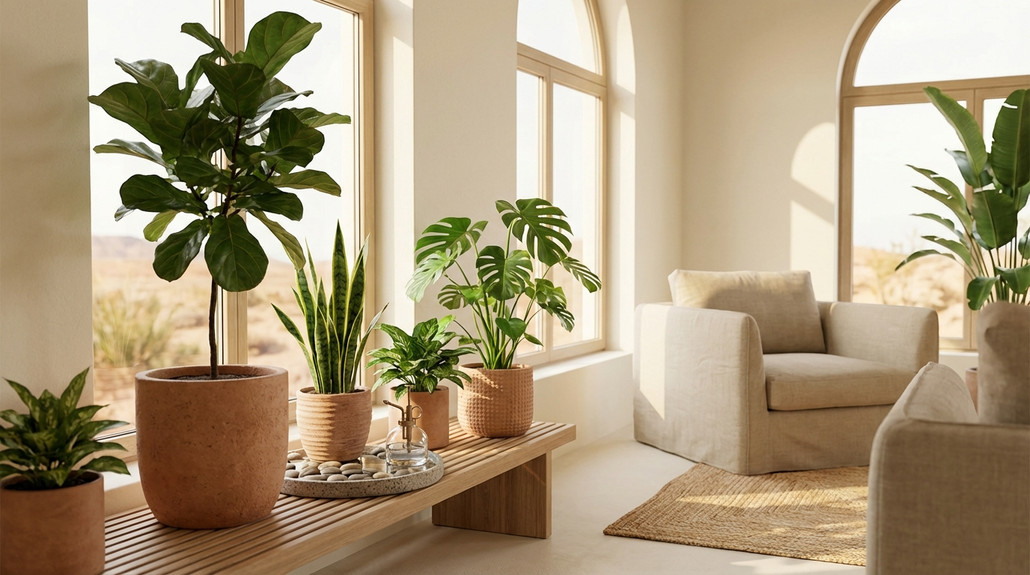
What Indoor Plants Actually Need to Survive in Real Homes in Iraq Homes
Posted by Mozher Experts on 23.02.26
The Indoor Climate Challenge: Air Conditioning and Dry Air
Keeping indoor plants alive in Iraq is less about the outdoor heat and more about managing the indoor environment we create to escape it. The primary challenge is not the sun, but the constant use of air conditioning (السبلت). While essential for our comfort, AC units create conditions that are stressful for most tropical plants. They produce cold, direct drafts that can shock a plant’s foliage, leading to yellowing or brown spots. More importantly, they strip the air of humidity, creating an artificially arid environment. A plant that thrives in 60% humidity will struggle when the indoor air drops to 30% or lower due to continuous cooling. This extreme dryness, or جفاف الجو, forces plants to transpire more rapidly, losing water through their leaves faster than their roots can absorb it. This often leads to crispy leaf edges and a constant state of thirst, even if the soil is moist. Understanding this core conflict—the plant's need for stable humidity versus our need for cool, dry air—is the first step to success.
Understanding Light: The Most Critical Factor
Light is a plant's food. Without the correct intensity and duration, a plant cannot photosynthesize properly, regardless of how well you water it. In Iraq, the outdoor sun is intense and direct, but inside our homes, the situation is often the opposite. We use heavy curtains to block heat, significantly reducing the amount of natural light available. A common mistake is placing a plant in a spot that feels bright to our eyes but is actually "low light" from a plant's perspective. Signs of insufficient light include slow or stunted growth, smaller new leaves, and a loss of variegation (color patterns) in foliage. Conversely, placing a plant too close to a sun-facing window, even for an hour, can scorch its leaves. The ideal location for most popular houseplants is a spot that receives bright, indirect light. This means a place near a window where the sun's rays do not fall directly on the leaves. A sheer curtain is an excellent tool to diffuse harsh light, providing the brightness without the burn. For rooms with limited sun, selecting plants specifically adapted to these conditions is the most practical approach. Consider exploring a collection of plants that tolerate low light to find a suitable match for darker corners of your home.
Watering Practices for a Hot, Dry Climate
Watering is a skill based on observation, not a schedule. The common advice to "water once a week" is unreliable and often harmful in an air-conditioned Iraqi home. The dry air from the AC can make the top layer of soil feel bone-dry, tempting you to water again. However, the lower part of the pot, away from the airflow, may still be saturated. This cycle of surface drying and frequent watering is the leading cause of root rot, a fatal condition where roots suffocate and decay in waterlogged soil. To avoid this, you must check the soil moisture at the root level. The most reliable method is to insert your finger 2-3 inches into the soil. If it feels dry at that depth, it is time to water. When you do water, do it thoroughly. Pour water evenly over the soil surface until it begins to drain from the bottom of the pot. This ensures the entire root ball is hydrated. After about 15 minutes, discard any excess water from the saucer. Never let a plant sit in a tray of standing water. For greater precision, a simple tool can eliminate guesswork. Using a calibrated soil moisture meter provides an accurate reading of the water content near the roots, preventing both under-watering and the more dangerous over-watering.
The Importance of Airflow and Humidity
While direct AC drafts are harmful, gentle air circulation is vital for healthy indoor plants. Stagnant air can encourage the development of fungal diseases and pests. A ceiling fan on a low setting or a room with good cross-ventilation helps strengthen stems and keep foliage healthy. However, the main issue tied to airflow in our homes is the lack of humidity. Most common houseplants are native to tropical or sub-tropical regions where humidity is high. Our AC-cooled rooms are the opposite. To counteract this, you can increase the humidity in the immediate vicinity of your plants. A simple and effective method is to group several plants together. As they transpire, they release moisture into the air, creating a more humid micro-environment. Placing plants on a tray filled with pebbles and water is another technique; as the water evaporates, it raises the ambient humidity. Regular misting can provide a temporary boost but is often not sufficient on its own, as the effects are short-lived in a very dry room. For humidity-loving plants like ferns or Calatheas, placing them in a bathroom with a shower can provide the consistent moisture they need to thrive.
Soil and Pot Selection: The Foundation of Health
The pot and soil you choose are the foundation of your plant's home. They directly impact root health, water retention, and aeration. The most common mistake is using a pot that is too large or one that has no drainage hole. A pot without a drainage hole is a recipe for root rot, as excess water has no way to escape. When choosing a pot size, select one that is only 2-5 cm wider in diameter than the plant's current root ball. A pot that is too large holds excess soil, which stays wet for too long and can lead to root decay. Terracotta pots are porous and allow soil to dry out faster, making them a good choice for succulents and other plants prone to over-watering. Glazed ceramic or plastic pots retain moisture longer, which can be beneficial for thirsty plants. The soil itself must be appropriate for the plant. A high-quality, well-draining potting mix is essential for most common indoor plants. Avoid using soil from your garden, as it is too dense, compacts easily, and may contain pests or diseases. For specific plant types like cacti or orchids, specialized soil mixes are required to meet their unique root environment needs. Ensuring your plant has the right home is a critical part of its long-term care.
Choosing Resilient Plants for the Iraqi Environment
Success with indoor plants begins with selection. Choosing a plant that is naturally suited to the conditions you can provide is far easier than trying to change your home environment to suit a demanding plant. For beginners, or for those with busy lifestyles, focusing on resilient and forgiving species is the best strategy. Plants like the Snake Plant (Sansevieria), ZZ Plant (Zamioculcas zamiifolia), and Pothos (Epipremnum aureum) are exceptionally tolerant of a wide range of conditions. They can handle lower light levels, infrequent watering, and the dry air common in our homes. These plants have robust root systems and thick leaves that store water, making them less susceptible to brief periods of neglect. When bringing a new plant into your home, it is important to understand its specific needs regarding light and water. Taking the time to select a plant whose requirements match your home's environment and your ability to provide care will significantly increase your chances of success. It is wise to start with plants known for their hardiness and gradually move on to more sensitive species as you gain experience and confidence.
Essential Plant Care Tools and Practices
Beyond the basics of light and water, a few simple tools and routine practices can make a significant difference in the health of your indoor plants. Regular cleaning of leaves is crucial, especially in dusty environments. Dust, or الغبار, can accumulate on foliage, blocking light and hindering photosynthesis. Wipe leaves gently with a soft, damp cloth every few weeks. This also gives you an opportunity to inspect your plants for any early signs of pests. Pruning is another important task. Removing any yellowing or dead leaves allows the plant to direct its energy toward new, healthy growth. It also improves air circulation around the plant. For this, a clean, sharp pair of scissors or pruning shears is necessary. Finally, periodic feeding provides the nutrients plants need to thrive. During the growing season (spring and summer), use a balanced indoor plant fertilizer diluted to half-strength every 4-6 weeks. Reduce or stop fertilizing during the dormant winter months. Having a small collection of basic soil and plant care tools makes these tasks simpler and more effective, turning plant care from a chore into a rewarding routine.