


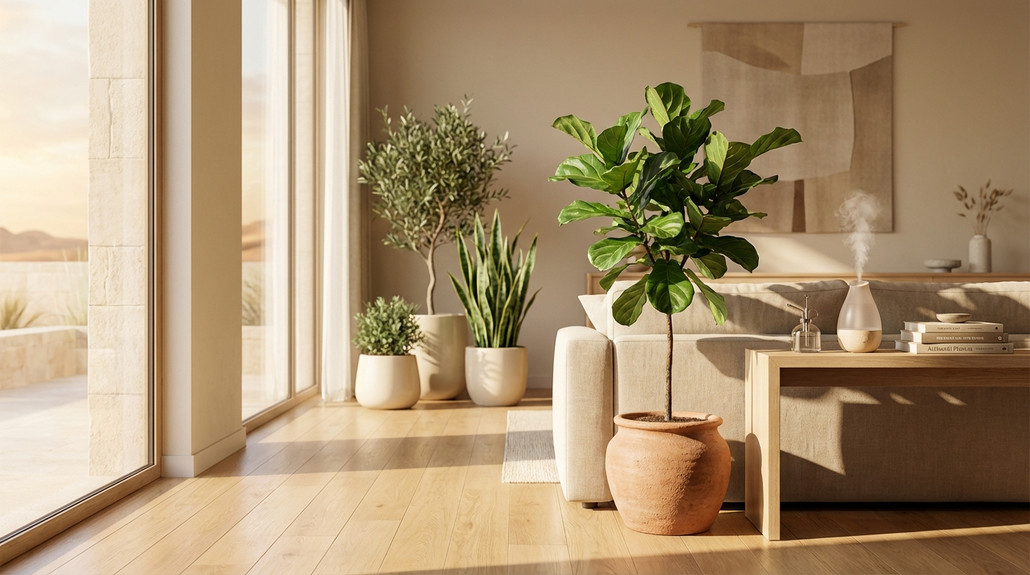
What Indoor Plants Actually Need to Survive in Real Homes in Iraq Homes
Posted by Mozher Experts on 20.02.26
Living Between 50°C Outdoors and Constant AC Indoors
Step into a typical home in Iraq in July. Outside, temperatures push past 45–50°C. Inside, the AC runs almost nonstop. Curtains are half closed to block glare. Windows stay shut to keep the cool air in. This is the real environment where indoor plants must survive.
The stress does not come from heat alone. It comes from contrast. Plants move from a nursery with filtered light and steady humidity into a room with cold, dry airflow from a split unit. Leaves that were stable yesterday suddenly face dry air, fluctuating light, and inconsistent watering. Many beginner mistakes start here.
In indoor plants Iraq setups, the AC is often the hidden problem. Continuous cooling strips humidity from the air. Cold drafts hit one side of the plant while the other side stays warm. Soil dries unevenly. Roots struggle to adapt.
This is why climate-aware selection matters. Plants chosen for resilience handle this transition better. You can explore curated climate-tolerant options under indoor plant collections adapted for local homes. But even the toughest species will fail if basic needs are misunderstood.
Indoor plants do not need perfection. They need stability. Once you understand light, water, humidity, airflow, and soil as a connected system, survival becomes predictable.
Light Is the First Limiting Factor
Most problems I see are not caused by watering. They start with light. In Iraq, many homes are bright but not plant-bright. Heavy curtains reduce intensity. Deep rooms look luminous to us but are dim for foliage.
Light determines how much water a plant can use. In lower light, growth slows. Soil stays wet longer. Roots become vulnerable. Yet owners continue watering on a fixed schedule. The result is root stress, not thirst.
Understand three practical light zones:
- Near a window with filtered sun: strong indirect light.
- Two to three meters from a window: medium light.
- Hallways or corners away from windows: low light.
If you are unsure, start with species adapted to shade. See options suitable for low-light indoor conditions. These tolerate distance from windows and handle slower growth cycles.
Direct sun through glass in Iraq is different. It can scorch leaves within hours during peak summer. Even sun-loving plants may need sheer curtains to diffuse intensity. Light is not about brightness alone; it is about duration, direction, and seasonal change.
Watering: Why Schedules Fail in AC Environments
Watering is not a calendar task. It is a response to soil dryness and plant activity. In AC-heavy homes, surface soil can look dry while deeper layers remain wet. Overwatering happens when we react to appearance rather than root-zone reality.
Use your finger to check depth, or rely on a soil moisture meter for accurate readings. This is especially useful during summer when cooling systems create uneven drying patterns.
Common watering mistakes in indoor plants iraq homes:
- Watering weekly regardless of light exposure.
- Leaving pots sitting in drainage water.
- Increasing frequency during heat while the plant is actually in cool AC air.
Roots need oxygen as much as water. Constantly wet soil suffocates them. On the other hand, plants placed directly under AC vents may dry rapidly and need closer monitoring. The solution is observation, not routine.
Water thoroughly, allow excess to drain, then wait until the appropriate dryness level returns. Consistency of method matters more than frequency.
Humidity and Airflow: The Silent Stressors
In naturally hot climates, people assume humidity is always high. Indoors, the opposite is often true. AC systems reduce humidity dramatically. Leaves lose moisture faster than roots can replace it. Edges turn brown. New growth appears smaller.
Plants adapted to dry air, such as snake plants or certain palms, cope better. Tropical foliage with thin leaves may struggle unless positioned carefully.
Airflow also matters. Cold drafts from a split unit hitting leaves directly cause localized stress. You may see damage only on one side. Move plants away from vents. Gentle air circulation is healthy, but direct cold flow is not.
Bathrooms can offer better conditions for humidity-loving species. Consider selections suited for humid indoor environments like bathrooms if natural moisture is available.
If humidity is consistently low, grouping plants together can slightly improve microclimate conditions. Avoid placing them against hot exterior walls exposed to direct sun. Stable air and moderate humidity protect foliage far more than occasional misting.
Soil, Drainage, and Pot Selection Under Extreme Conditions
Soil is the foundation. In Iraq’s indoor climate, heavy compacted soil becomes dangerous. It holds water too long in cooled rooms. Roots sit in damp conditions without enough oxygen.
A well-draining mix allows excess water to exit quickly while retaining enough moisture for steady uptake. If you are repotting, explore reliable tools and materials under soil and fertilizer essentials for indoor use.
Pots also influence survival. Decorative containers without drainage holes increase risk. Always use an inner nursery pot with drainage inside decorative covers. Check collections of functional pots designed for proper drainage to avoid common structural issues.
During summer, roots grow more slowly under AC compared to outdoor heat. That means oversized pots can stay wet for too long. Choose a container only slightly larger than the root ball. Balance is key: enough space to grow, not so much that moisture lingers.
Acclimation After Delivery or Relocation
One of the most overlooked factors is acclimation. A plant delivered to your home experiences sudden environmental change. Light intensity shifts. Humidity drops. Airflow patterns differ.
Expect minor leaf drop in the first two weeks. This is normal adjustment, not failure. Avoid repotting immediately unless there is clear root distress. Let the plant stabilize first.
Place new indoor plants in moderate light for the first week. Avoid direct sun and strong AC drafts. Gradually move them to their final position. Sudden relocation from low to bright light can scorch leaves, especially during summer.
If you relocate plants between rooms seasonally, treat each move as a fresh acclimation period. Small changes in environment can produce visible stress. Patience during this phase prevents unnecessary overcorrection.
Quick-Start Checklist for Stable Growth
For beginners managing indoor plants for the first time, clarity reduces anxiety. Use this checklist:
- Place plants away from direct AC airflow.
- Confirm light level before choosing species.
- Check soil moisture before watering.
- Use pots with proper drainage.
- Allow new plants two weeks to adjust.
If you prefer resilient options while learning, review plants categorized by ease of care for beginners. Starting with forgiving species builds confidence and reduces early losses.
Common Myths vs Reality in Iraqi Homes
Myth: More water helps during extreme summer heat.
Reality: Indoors with AC, plants are not experiencing outdoor heat. Overwatering is more common than dehydration.
Myth: Any bright room is suitable for all species.
Reality: Bright to human eyes may still be low for photosynthesis. Distance from windows matters.
Myth: Misting solves dryness.
Reality: Misting offers brief surface moisture but does not change overall humidity levels significantly.
Myth: Yellow leaves always mean thirst.
Reality: In most indoor plants iraq cases, yellowing is linked to excess moisture or root stress.
Frequently Asked Questions
How often should I water indoor plants in Iraq?
There is no fixed schedule. In AC environments, many plants need watering every 7–14 days, but always confirm soil dryness first. Light level and pot size change timing significantly.
Can indoor plants survive near a window with strong sun?
Yes, if filtered. Use sheer curtains during peak summer. Direct midday sun through glass can burn foliage quickly.
Why do leaf tips turn brown even when I water correctly?
Brown tips often result from low humidity or cold AC drafts rather than watering mistakes. Adjust placement before increasing water.
Are indoor plants in Iraq harder to maintain than in mild climates?
They require more attention to airflow, humidity, and light stability. Once these are managed, survival rates improve dramatically.
Indoor plants do not fail randomly. They respond to conditions. When you align light, water, humidity, airflow, and soil with the realities of Iraqi homes, results become consistent. Stability, not perfection, keeps plants alive and growing.