


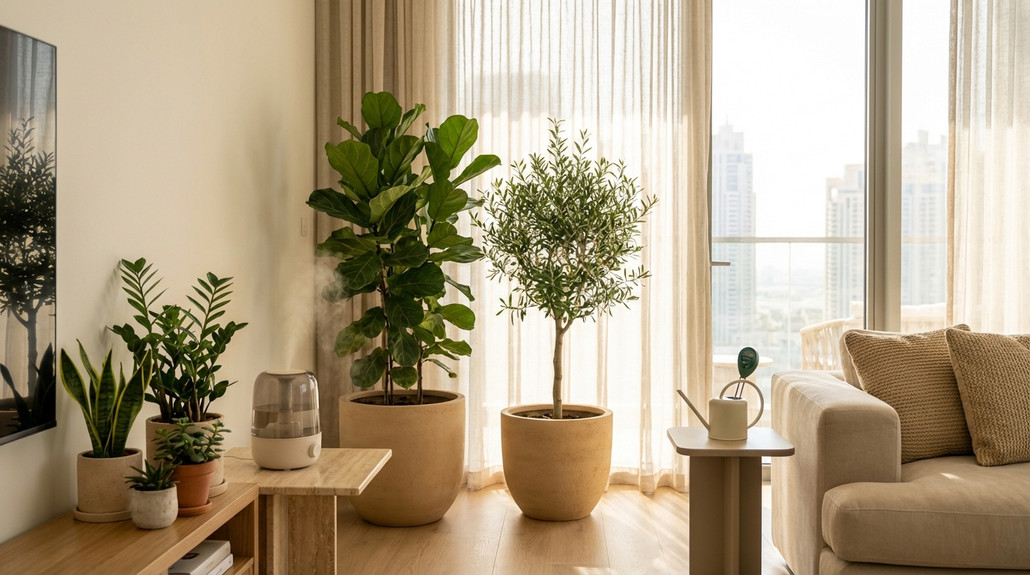
What Indoor Plants Actually Need to Survive in Real Homes in UAE Homes
Posted by Mozher Experts on 24.02.26
The Dual Challenge: Intense Sun and Dry Indoor Air
In the UAE, the environment for house plants is a study in contrasts. Outside, the sun is intense and direct. Inside, air conditioning runs constantly, creating a cool but artificially dry environment. This is the central conflict your plant must endure. Many new plant owners assume the heat is the primary enemy, but the real challenges are the low humidity and inconsistent conditions created by powerful AC units. A plant placed near a sun-drenched window can experience leaf scorch, while one directly in the path of an AC vent suffers from cold drafts and rapid moisture loss from its leaves and soil. Understanding this balance is the first step. Your goal is not to replicate a temperate European climate but to create a stable, buffered zone within your home where a plant can thrive despite these external pressures. This involves careful placement away from direct AC airflow and shielding from the harshest midday sun, which can heat a window to damaging temperatures even indoors.
Mastering Water in a Hot, Dry Climate
The most common mistake we see is overwatering, often driven by the incorrect assumption that high outdoor temperatures mean a plant is perpetually thirsty. While the heat does increase evaporation, constant AC operation dries the air, but it can also cool the soil, slowing down the plant's water uptake. Watering on a rigid schedule (e.g., "every Saturday") is a recipe for root rot. Instead, you must learn to assess the soil's moisture level directly. The most reliable method is to insert your finger about two inches into the soil. If it feels dry at that depth, it is likely time to water. For a more precise reading, using a simple moisture meter removes all guesswork. When you do water, do it thoroughly. Pour water evenly over the soil surface until it drains freely from the bottom of the pot. This ensures the entire root system has access to moisture and helps flush out any accumulated mineral salts from our desalinated tap water. After watering, always discard the excess water from the saucer. Allowing a pot to sit in standing water is one of the fastest ways to suffocate the roots and cause irreversible damage.
When to Water: Key Indicators
- The top two inches of soil are completely dry to the touch.
- The pot feels noticeably lighter than it did after its last watering.
- For some plants, you may notice a slight, subtle drooping of the leaves.
- The moisture meter consistently reads in the "dry" range.
Light: More Than Just Proximity to a Window
Light is a plant's food source, but in the UAE, it's often too intense. Very few indoor plants can tolerate the direct, unfiltered sun that comes through a south-facing window in the afternoon. This level of intensity will scorch leaves, causing brown, crispy patches. The ideal condition for the vast majority of popular indoor plants is bright, indirect light. This is the type of light found in a room with large windows where the sun's rays do not fall directly on the plant's foliage. You can achieve this by placing plants a few feet back from a window, using sheer curtains to diffuse the light, or placing them in a room that is brightly illuminated for most of the day without direct sun exposure. Pay attention to how the light changes throughout the day and the year. A spot that provides perfect morning light in winter may become a scorching death trap in the summer. Regularly rotating your plant a quarter turn each time you water ensures all sides receive adequate light for even, balanced growth. For those new to plant ownership, starting with plants suited for bright indirect light offers the highest chance of success.
Addressing Airflow and Low Humidity
Air conditioning is essential for comfort, but it is hostile to most tropical house plants. It systematically removes humidity from the air, creating a desert-like microclimate that is far from the native habitat of plants like ferns, Calatheas, or Alocasias. This dry air causes brown, crispy leaf edges and can make plants more susceptible to pests like spider mites. To counteract this, you must actively increase the humidity in the immediate vicinity of your plants. Grouping several plants together is a simple and effective strategy, as they create a small pocket of higher humidity through their natural process of transpiration. Another effective method is to place your plants on a pebble tray. This is a shallow tray filled with pebbles and water, where the pot sits on top of the pebbles, not in the water. As the water evaporates, it raises the ambient humidity around the plant. Regular misting can provide a temporary boost, but it is not a long-term solution and must be done frequently to have any real effect. Finally, ensure there is gentle air circulation but avoid placing plants directly in the path of an AC vent, as the constant cold, dry draft is extremely stressful.
Soil and Pots: The Foundation of Plant Health
The pot and soil you choose are not merely decorative; they form the basis of your plant's environment. The most critical feature of any pot is a drainage hole. Without it, excess water has no escape, leading to waterlogged soil, oxygen deprivation, and fatal root rot. Many decorative pots lack drainage, so it is best practice to keep your plant in its original plastic nursery pot (which has holes) and place that inside the decorative cachepot. This allows you to easily remove the plant for watering and ensure it never sits in stagnant water. The soil itself must be appropriate for the plant. A generic, heavy soil from a garden centre will retain too much moisture for most indoor plants in our climate. High-quality potting mixes designed for indoor use are lighter and contain components like perlite or vermiculite to improve aeration and drainage. This is non-negotiable for success. Having the proper soil and tools from the beginning prevents a host of common problems. Repotting is only necessary when a plant becomes root-bound, meaning the roots have filled the entire pot. This typically occurs every 18 to 24 months, not every year.
Acclimatising New Plants to Your Home
Plants, like people, experience stress when moved to a new environment. A plant that has been grown in a climate-controlled greenhouse needs time to adjust to the unique conditions of your home, including its specific light, temperature, and humidity levels. This adjustment period is called acclimatisation. It is normal for a new plant to drop a few leaves or show minor signs of stress in the first couple of weeks. Do not panic and react by drastically changing its care routine. When you first bring a plant home, place it in a location with medium, indirect light and hold off on fertilising for at least a month. Keep it isolated from your other plants for a week or two to ensure it hasn't brought any pests with it. Water it only when the soil indicates it's necessary. After a few weeks of stable conditions, you can slowly move it to its intended permanent location if it requires more light. Rushing this process can shock the plant, leading to significant leaf loss and a longer recovery period. Patience is key, as is choosing resilient species that are known to adapt well to typical indoor settings.
Frequently Asked Questions
Why are my plant's leaves turning yellow?
Yellow leaves are most often a sign of overwatering. When the soil is consistently waterlogged, roots cannot absorb oxygen and begin to rot, which prevents them from delivering nutrients to the leaves. Before assuming another cause, always check the soil moisture deep in the pot. Other less common causes can include nutrient deficiency, underwatering, or natural aging, where older, lower leaves yellow and drop off to make way for new growth.
Is tap water in the UAE safe for house plants?
Generally, yes. However, desalinated water can be high in salts and minerals that can accumulate in the soil over time, appearing as a white crust on the surface or the pot itself. To mitigate this, it is good practice to flush the soil thoroughly every few months by letting water run through the drainage holes for several minutes. Alternatively, letting tap water sit out for 24 hours can allow some chemicals like chlorine to dissipate before you use it on your plants.
How often should I fertilise my indoor plants?
Fertilising is important, but less is more. During the active growing season (spring and summer), most house plants benefit from a balanced liquid fertiliser diluted to half-strength every 4 to 6 weeks. In the cooler months, when growth naturally slows, you should reduce or stop fertilising altogether. Never fertilise a dry, stressed, or newly repotted plant, as this can burn the roots. Always water the plant first before applying a diluted fertiliser solution.