


What Indoor Plants Actually Need to Survive in Real Homes in UAE Homes
Posted by Mozher Experts on 20.02.26
Living With Heat Outside and AC Inside
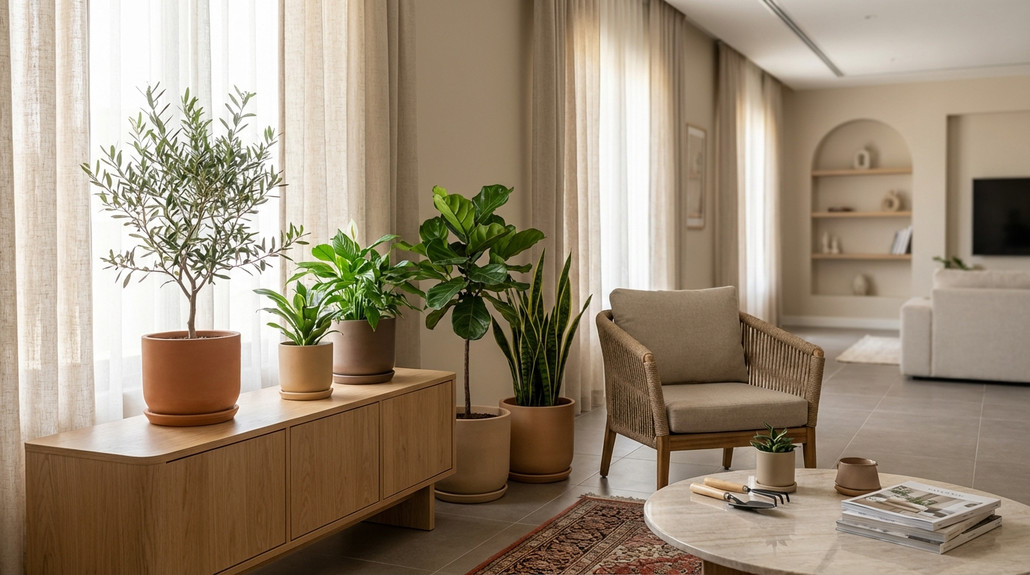
Step into a typical UAE home at midday. Outside, temperatures push past 40°C. Inside, the AC runs almost constantly. The air feels cool but dry. Curtains are half closed to block harsh sun. This combination—extreme heat outdoors and chilled, low-humidity air indoors—is what your indoor plants must survive every day.
Most plant advice online assumes mild seasons, open windows, and moderate humidity. That does not reflect indoor plants uae conditions. Here, plants rarely experience natural airflow. They sit under artificial cooling, near vents, or in corners with filtered light. The stress is subtle at first. Leaves lose moisture faster than roots can replace it. Soil dries unevenly. Growth slows.
Air conditioning is not just “cool air.” It reduces humidity significantly and creates directional airflow. Plants placed directly under vents often show brown leaf edges, curling, or stalled growth. Even hardy species struggle if exposed continuously.
Understanding this indoor climate is the starting point. Before choosing a plant, you must understand what the room is actually offering: light intensity, humidity level, airflow pattern, and watering habits. When these align, indoor plants thrive even in the Gulf. When they do not, losses happen quickly.
Light Is the First Filter, Not an Afterthought
In the UAE, sunlight is intense but not always usable. Many apartments have tinted glass, heavy curtains, or deep floor plans. As a result, what looks bright to your eyes may still be low light for plants.
Light drives growth. Without adequate light, plants cannot process water properly. Overwatering problems often start as lighting problems.
Direct Sun Through Glass
South- and west-facing windows receive strong exposure. In summer, glass can amplify heat. Leaves touching windows may scorch. Some species tolerate this, but many common houseplants prefer bright indirect conditions rather than direct midday sun.
If you truly have strong exposure, explore plants suited for direct sun or sunny indoor spots. Placement still matters—keep foliage a few centimeters away from hot glass.
Bright Indirect and Filtered Light
This is the safest and most versatile light category in UAE homes. Curtains that diffuse sunlight create stable conditions without leaf burn. Many foliage plants perform best here.
If unsure about your room’s level, review curated options for bright indirect light environments. Matching plant to light is more effective than adjusting watering later.
Artificial Light and Deep Rooms
Interior rooms with minimal windows rely on ceiling fixtures. Standard household bulbs are rarely sufficient for demanding species. However, certain plants tolerate lower intensity and adapt to artificial sources.
Do not assume all indoor plants survive in dim corners. Growth may continue slowly, but health declines over months. Stable, moderate light is always preferable to extremes.
Watering in an AC Environment Requires Restraint
In hot climates, people expect plants to need more water. Indoors with constant cooling, the opposite is often true. AC reduces evaporation from soil surface but increases moisture loss from leaves. This imbalance confuses many beginners.
The most common mistake I see in indoor plants uae homes is routine watering without checking soil moisture. A fixed schedule ignores seasonal and room differences.
Check Before You Pour
Insert your finger 3–5 cm into the soil. If it feels dry at that depth, watering is usually safe for most foliage plants. If still moist, wait. Root rot develops quietly and is harder to reverse than underwatering.
A simple tool like a soil moisture meter for accurate watering can prevent guesswork, especially for beginners or office environments.
Drainage Is Non-Negotiable
Pots without drainage trap excess water. In AC-cooled rooms, soil stays wet longer than expected. Always use containers that allow water to exit freely. Decorative covers are fine, but the inner pot must drain.
Well-designed containers from the indoor plant pots collection balance aesthetics with proper drainage. That balance matters more than appearance alone.
Seasonal Adjustments
During peak summer, plants may drink slightly more due to longer daylight hours. In winter, growth slows. Reduce frequency accordingly. Observe the plant, not the calendar.
Humidity and Airflow: The Invisible Stressors
Humidity indoors in the UAE often drops below what tropical species prefer. AC units continuously remove moisture from the air. This is why leaf tips brown even when watering seems correct.
At the same time, stagnant air encourages pests and fungal issues. The solution is balance.
Placement Away From Vents
Never position indoor plants directly under AC airflow. Cold, dry air hitting leaves repeatedly causes dehydration and physical stress. Move plants at least one meter away from direct vents.
Micro-Climate Techniques
Grouping plants increases localized humidity. Using trays with pebbles and water can slightly buffer dryness. Bathrooms with natural light are excellent for humidity-loving species.
For detailed climate-specific adaptation strategies, the article on how indoor plants behave in hot Gulf climates explains what changes inside AC-heavy homes.
Soil and Root Health Matter More Than Fertilizer
Healthy roots equal healthy foliage. In compacted or poor-quality soil, roots suffocate. This is amplified in AC environments where evaporation is uneven.
Good soil must drain well yet retain enough moisture to buffer dry air. Heavy garden soil is unsuitable for most indoor plants.
Repotting With Purpose
Do not repot immediately after delivery unless necessary. Allow acclimation first. When roots circle tightly or water runs straight through, repot into a slightly larger container with fresh mix.
Fertilizing Carefully
In high heat periods, aggressive fertilizing can stress plants already adjusting to indoor conditions. Light, balanced feeding during active growth is sufficient. Excess fertilizer burns roots faster in low-humidity air.
Acclimation After Purchase or Delivery
Plants grown in nurseries often experience filtered light and higher humidity. Transitioning into a home with AC is a shock. Expect minor leaf drop during the first two weeks.
Place new indoor plants in stable light, away from vents, and avoid repotting or fertilizing immediately. Water moderately. Let the plant adapt before making adjustments.
Climate-aware sourcing reduces stress significantly. Curated selections from the indoor plants collection for UAE homes are chosen with regional conditions in mind, which improves survival rates when proper care continues at home.
Quick-Start Checklist for Beginners
- Identify your room’s light direction and intensity before buying.
- Keep plants away from direct AC airflow.
- Use pots with drainage holes.
- Check soil moisture before watering.
- Expect minor adjustment stress after moving a plant.
- Adjust watering frequency between summer and winter.
- Group plants to improve local humidity.
This simple checklist prevents most early losses.
Common Myths vs Reality in UAE Homes
| Myth | Reality |
|---|---|
| Hot climate means frequent watering indoors. | AC reduces soil evaporation; overwatering is more common. |
| All plants need direct sunlight. | Many prefer bright indirect light, especially behind curtains. |
| Brown tips always mean lack of water. | Often caused by low humidity or AC airflow. |
| Fertilizer fixes weak growth. | Light and root health are usually the real issue. |
What Research Says About Indoor Conditions
University extension programs consistently emphasize matching species to available light and avoiding overwatering as the primary success factors. For example, the University of Florida IFAS Extension highlights proper drainage and light placement as key to indoor plant health. Similarly, the Royal Horticultural Society provides guidance on avoiding root rot and managing indoor humidity.
These principles apply globally, but in indoor plants uae settings, AC and heat amplify mistakes. When light, water, and airflow are balanced, plants become resilient rather than fragile.
Frequently Asked Questions
How often should I water indoor plants in UAE?
There is no fixed schedule. In AC-cooled homes, most foliage plants need watering only when the top few centimeters of soil are dry. This may be every 7–14 days depending on light and pot size.
Can indoor plants survive without natural sunlight?
Some tolerate artificial light, but growth is slower. Choose species adapted to low or artificial light and avoid placing high-light plants in dim corners.
Why do leaves turn brown at the edges?
In UAE homes, this is commonly due to low humidity or direct AC airflow rather than underwatering. Relocate the plant away from vents and consider grouping plants together.
Is it normal for a new plant to drop leaves?
Yes. Acclimation stress is common after transport and relocation. Provide stable light, moderate watering, and avoid immediate repotting. Most healthy plants recover within weeks.
Indoor plants are not fragile. They simply respond to conditions. When you observe your space honestly—heat outside, AC inside, filtered light, controlled watering—you create stability. Stability is what allows plants to grow steadily, even in one of the world’s harshest outdoor climates.