


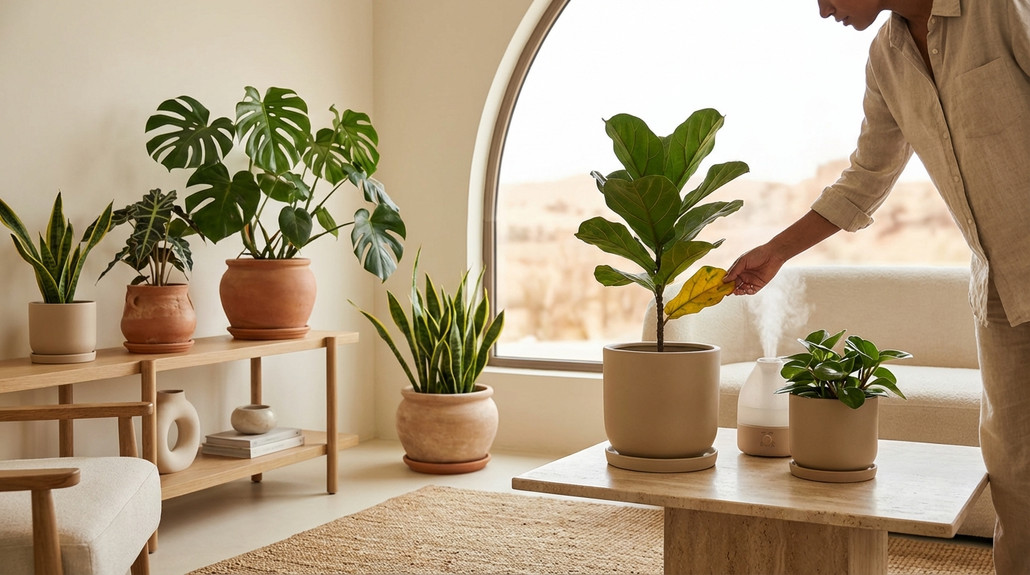
Why Indoor Plant Leaves Turn Yellow and What to Do in Iraq Homes
Posted by Mozher Experts on 23.02.26
Diagnosing Yellow Leaves in Iraq's Unique Indoor Climate
Observing yellow leaves on an indoor plant is a common source of concern. In Iraq, the challenge is amplified by a unique environmental contrast. Outside, the heat is intense. Inside, air conditioning units run constantly, creating an environment that is often cold and exceptionally dry. This fluctuation between extremes can be stressful for many houseplants. It is crucial to understand that yellowing leaves, a condition known as chlorosis, are a symptom, not the disease itself. They are a signal that the plant is under stress. The key is not to panic, but to methodically investigate the underlying cause. Common mistakes include immediately overwatering or moving the plant multiple times, which only adds more stress. Instead, approach the issue like a detective. By carefully examining the plant and its environment, you can accurately diagnose the problem and apply the correct solution, giving your plant the best chance of recovery. This guide will walk you through the most frequent causes of yellow leaves in Iraqi homes, helping you restore your plant's health.
The Primary Suspect: Watering Imbalances
The most frequent cause of yellowing leaves is incorrect watering. Both too much and too little water can produce similar symptoms, making it a confusing issue to diagnose. Overwatering is particularly dangerous. When soil remains saturated, it cuts off oxygen supply to the roots, leading to root rot. The first signs are often lower leaves turning a mushy, bright yellow before falling off. The soil will feel consistently wet to the touch, and you might detect a musty, sour smell from the pot, which indicates decaying roots. Conversely, underwatering starves the plant of the moisture it needs for photosynthesis and nutrient transport. The leaves may first appear droopy or wilted. Then, they will become dry and crispy at the edges before turning yellow and eventually brown. In the dry, air-conditioned rooms common in Iraq, soil can dry out much faster than expected. The surface may appear dry while the lower soil is still moist. The most reliable method is to check the top 5-7 cm of soil with your finger. If it feels dry, it's likely time to water. For a more precise assessment, using a reliable moisture meter removes all guesswork and helps prevent both over- and underwatering.
Light and Placement: Too Much or Too Little
Light is a plant's primary source of energy, and an incorrect amount can quickly lead to problems. The sun in Iraq is exceptionally strong, even through a window. Placing a plant that prefers indirect light in a spot that receives direct afternoon sun will cause its leaves to scorch. This often appears as large, yellow or pale brown patches on the leaves most exposed to the sun. The leaves might also feel crispy. The solution is simple: move the plant a few feet away from the window or filter the light with a sheer curtain. On the other hand, insufficient light is just as problematic. A plant that is not receiving enough light cannot produce enough chlorophyll, which is what gives leaves their green color. This results in a pale, washed-out yellow appearance across the entire plant, not just in specific spots. New growth may be weak and spindly, and older, lower leaves may turn yellow and drop as the plant sacrifices them to support new growth. Carefully observe the light conditions in your home throughout the day and choose selecting suitable indoor plants for your home that match the available light. For darker corners, consider investing in plants adapted for low light conditions.
Nutrient Deficiencies and Soil Health
Indoor plants rely entirely on the soil in their pot for nutrients. Over time, these nutrients become depleted, which can cause leaves to turn yellow. A common issue is nitrogen deficiency, which typically presents as uniform yellowing of the oldest, lowest leaves first. The plant sacrifices mobile nutrients from older foliage to support new growth. Other deficiencies, like magnesium or iron, can cause yellowing between the green leaf veins, creating a patterned look. The solution is to provide your plant with a balanced indoor plant fertilizer during its active growing season (typically spring and summer). However, it is critical not to over-fertilize, as this can burn the roots and cause more harm. Always follow the dilution instructions on the package. Sometimes, the problem is not a lack of nutrients in the soil, but the plant's inability to absorb them. This can happen if the soil is old, compacted, or has poor drainage. In such cases, repotting the plant with fresh, appropriate soil and fertilizer will provide the roots with the aeration and nourishment they need to thrive.
Environmental Stress: The Impact of AC and Dry Air
The indoor environment in Iraq is heavily influenced by air conditioning. While necessary for comfort, AC units create conditions that can be very stressful for houseplants, especially those of tropical origin. One of the biggest issues is cold drafts. A plant placed directly in the path of an AC vent will experience sudden temperature drops that can shock its system, causing leaves to yellow and drop abruptly. The solution is to ensure plants are placed away from the direct airflow of any cooling units. The second major issue is low humidity. Air conditioners are very effective at removing moisture from the air, creating an arid environment. Many popular houseplants prefer higher humidity levels. In dry air, they lose water from their leaves faster than their roots can absorb it. This often manifests as brown, crispy leaf tips and edges, which can be followed by the rest of the leaf turning yellow. To combat this, you can group plants together to create a small microclimate of increased humidity. Placing plants on a tray filled with pebbles and water (ensuring the pot sits on the pebbles, not in the water) can also help increase local humidity as the water evaporates.
Identifying and Treating Pest Infestations
Pests can cause significant damage that leads to yellow leaves. They feed on the plant's sap, robbing it of essential nutrients and moisture. Common indoor pests include spider mites, mealybugs, and scale. Spider mites are tiny and difficult to see, but they leave behind fine, silky webbing, usually on the undersides of leaves and where the leaf meets the stem. An infestation can cause leaves to develop a stippled, yellow appearance before they dry up and fall off. Mealybugs look like small, white, cottony masses and tend to hide in leaf axils and other crevices. Scale insects appear as small, immobile brown bumps on stems and leaves. To check for pests, you must inspect your plant closely, paying special attention to the undersides of leaves. If an infestation is found, isolate the plant immediately to prevent it from spreading. For small infestations, you can wipe the pests off with a cotton swab dipped in rubbing alcohol. For larger problems, a thorough spray with neem oil or an insecticidal soap can be effective. It is important to be persistent with treatment, as multiple applications are often required to eliminate all life stages of the pests.
A Practical Recovery and Prevention Plan
Once you have identified the cause of the yellow leaves, the path to recovery can begin. First, it is important to understand that fully yellow leaves will not turn green again. You should trim these off with clean, sharp scissors or pruning shears. This allows the plant to redirect its energy toward new, healthy growth instead of trying to sustain dying foliage. The next step is to correct the underlying issue—be it adjusting your watering schedule, moving the plant to a better location, or treating a pest problem. The most critical element of long-term success is consistency. Plants do not like sudden, drastic changes. Create a stable environment and stick to it. Rather than watering on a strict schedule (e.g., "every Sunday"), water based on the plant's actual needs, which you can determine by checking the soil. Developing consistent plant care routines based on observation is the best way to prevent future issues. Regularly wiping down leaves to remove dust not only keeps the plant looking good but also allows you to inspect for pests and helps the plant photosynthesize more efficiently. Prevention is always easier than cure.