


Why Indoor Plant Leaves Turn Yellow and What to Do in Saudi Arabia Homes
Posted by Mozher Experts on 23.02.26
Understanding Plant Stress in Air-Conditioned Saudi Environments
Caring for indoor plants in Saudi Arabia presents a unique set of challenges not covered in generic online guides. The primary factor is the stark contrast between the intense outdoor heat and the constant, dry indoor climate created by air conditioning. This artificial environment is the source of many common indoor plant problems. An AC unit runs for most of the year, drastically reducing indoor humidity and causing rapid soil drying. This leads to symptoms like brown leaf tips or sudden wilting, which are often misdiagnosed. Furthermore, the dust common to the region can settle on leaves, blocking light and hindering photosynthesis. Understanding that your home is a microclimate, heavily influenced by your AC usage and insulation, is the first step toward accurately diagnosing and solving any plant issue. The goal is not to fight this environment but to learn how to work within it by choosing the right plants and adjusting your care routine accordingly.
Diagnosing the Cause of Yellowing Leaves
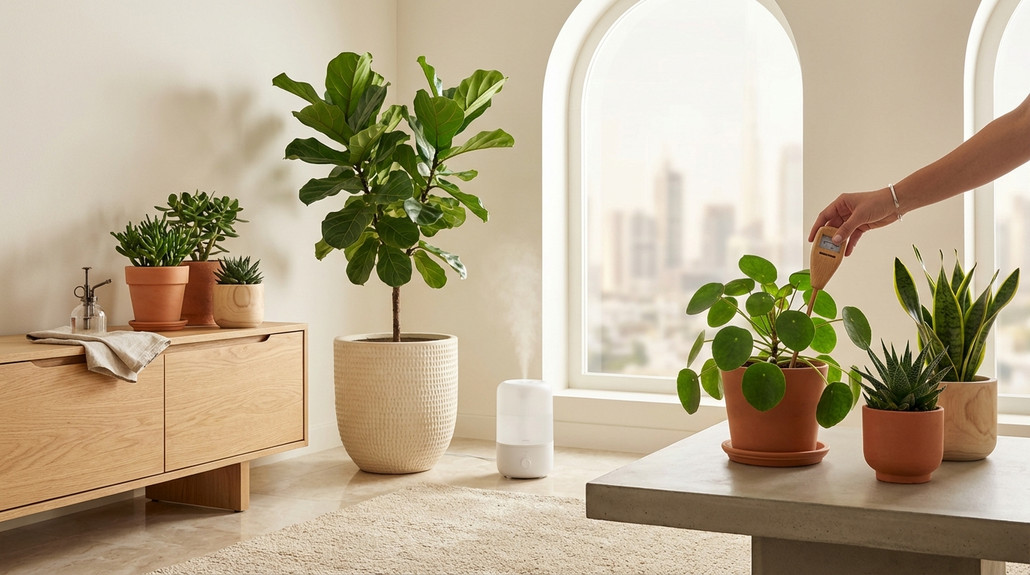
Yellow leaves, or chlorosis, are the most frequent complaint from plant owners, but it is a symptom with multiple possible causes. The most common culprit is a watering issue. Overwatering is a frequent mistake. When soil is constantly saturated, roots cannot access oxygen and begin to rot, preventing them from absorbing water and nutrients, which paradoxically leads to yellow, wilting leaves. The soil will feel soggy, and the yellowing often starts with the lower leaves. Conversely, underwatering causes leaves to turn yellow and crispy as the plant sacrifices older foliage to conserve moisture for new growth. The soil will be dry and pulling away from the sides of the pot. To solve this, always check the soil moisture before watering. A simple finger test works, but for accuracy, a dedicated moisture meter provides a clear reading and helps prevent these common errors. It removes the guesswork and is an essential tool for plant care in our climate.
Addressing Brown Tips and Crispy Edges
Seeing brown, crispy edges on leaves is a direct indicator of low humidity or inconsistent watering, both of which are prevalent in air-conditioned homes. The dry air from an AC unit constantly pulls moisture from the plant's leaves, faster than the roots can supply it. This is especially true for tropical plants like Calatheas or Ferns that thrive in high humidity. While you cannot turn off the AC, you can increase the ambient moisture around your plants. Grouping plants together creates a small humid microclimate. You can also place them on a pebble tray with water or use a small humidifier nearby. The second major cause is allowing the soil to go from bone-dry to completely saturated. This cycle stresses the plant, causing the delicate cells at the leaf tips to die. Aim for consistent soil moisture, allowing the top layer to dry out but never the entire root ball. Wiping leaves with a damp cloth also helps by removing dust and allowing the leaves to breathe more efficiently.
Why Your Plant is Drooping or Wilting
A drooping plant is a clear sign of distress, but it requires careful investigation. The immediate assumption is thirst, and while that is often the case, it can also be a sign of the exact opposite: overwatering. When a plant is underwatered, its cells lose turgor pressure due to a lack of water, causing stems and leaves to sag. The soil will be visibly dry. Giving it a thorough watering will usually resolve the issue within hours. However, if the plant is drooping and the soil is damp, the problem is likely root rot from overwatering. The damaged roots can no longer absorb water, so the plant wilts as if it were thirsty. To confirm, gently slide the plant out of its pot and inspect the roots. Healthy roots are firm and white or light-colored; rotting roots are brown, mushy, and may have a foul smell. If root rot is present, you must trim the affected roots with sterile shears and repot the plant into fresh, well-draining soil. This highlights the importance of choosing appropriate soil and pots with drainage to ensure proper aeration.
Managing Common Indoor Pests
Pests can appear seemingly out of nowhere, but they typically thrive when a plant is already under stress. In our dry, indoor environments, two pests are particularly common. Spider mites are tiny arachnids that flourish in low humidity. They are difficult to see with the naked eye, but you can identify their presence by fine, web-like material on the undersides of leaves and a stippled, discolored appearance on the leaf surface. The second common pest is fungus gnats. These small, flying insects are annoying but largely harmless to the plant itself; their larvae, however, feed on organic matter and fine roots in the soil. Their presence is almost always a sign of consistently overwatered soil. To manage spider mites, increase humidity and regularly wipe down leaves with a damp cloth or use a neem oil solution. For fungus gnats, the most effective solution is to allow the top few inches of soil to dry out completely between waterings, which kills the larvae. Prevention is always the best strategy: inspect new plants thoroughly before bringing them home and maintain a consistent care routine.
Dealing with Slow or Stunted Growth
If your plant seems to have stopped growing, it's a sign that one of its core needs is not being met. The most likely cause is insufficient light. Many homes in Saudi Arabia use heavy curtains or have windows with coatings that reduce light intensity to manage heat. A plant labeled "medium light" may need to be placed directly in front of a window to receive adequate energy. Observe your plant's location throughout the day to understand the light it receives. If natural light is limited, consider supplementing with a grow light. Another factor is nutrition. A plant that has been in the same pot for over a year may have depleted the nutrients in its soil. During the growing season (spring and summer), apply a balanced liquid fertilizer every 4-6 weeks. Finally, the plant could be root-bound, meaning its roots have filled the entire pot, leaving no room for growth. If you see roots emerging from the drainage holes or a dense, tangled mass when you lift the plant, it is time to repot into a container that is 2-4 cm larger in diameter. For those with challenging light conditions, exploring a collection of plants that tolerate low light can provide more resilient options.
A Proactive Approach to Plant Health
Preventing indoor plant problems is more effective than treating them. The foundation of prevention is choosing the right plant for your specific environment. Instead of buying a plant that requires high humidity and then struggling to provide it, select a species known for its resilience. Many plants, such as the ZZ Plant (Zamioculcas zamiifolia), Snake Plant (Dracaena trifasciata), and Pothos (Epipremnum aureum), are exceptionally tolerant of the dry air and variable light conditions found in our homes. Our curated selection of hardy and resilient indoor plants is specifically chosen for their ability to thrive in challenging indoor climates. Establish a consistent routine for checking on your plants. Instead of watering on a fixed schedule, check the soil moisture every few days. Regularly wipe down leaves to remove dust and inspect for early signs of pests. This proactive observation allows you to catch minor issues before they become major problems, ensuring your plants remain a healthy and beautiful part of your home. Following a good foundational plant care guide can also build good habits.