


Bougainvillea 'Bon Bon'
Unleash a riot of color in your garden with the Bougainvillea 'Bon Bon'! This isn't just a plant; it's a statement. Perfect for sun-drenched balconies and patios, its breathtaking, paper-thin blossoms create an unforgettable display from spring through fall. Exceptionally hardy and easy to care for, the 'Bon Bon' asks only for sun and the occasional drink to reward you with an explosion of vibrant hues. Stop dreaming of a Mediterranean getaway and bring it to your doorstep. Order yours today and let the show begin!
1. Basic Identification
Common Name: Bougainvillea 'Bon Bon'
Botanical Name: Bougainvillea spectabilis
Arabic Name: جهنمي
Variant: Bon Bon
Plant Color: Multicolor
Country of Origin: Spain
2. Taxonomy & Classification
Kingdom: Plantae
Clade: Tracheophytes
Order: Caryophyllales
Family: Nyctaginaceae
Genus: Bougainvillea
Species: B. spectabilis
3. Origin & Distribution
Bougainvillea spectabilis is native to South America, specifically Brazil, Peru, and Argentina. However, this 'Bon Bon' specimen is sourced from cultivation in Spain. It is widely distributed across tropical and subtropical regions globally, thriving in Mediterranean climates.
4. Visual Characteristics
The 'Bon Bon' variety is characterized by its dense, woody climbing habit and vibrant, paper-thin bracts that appear in a riot of multicolor hues. These bracts surround tiny, inconspicuous white flowers. Its leaves are dark green, ovate, and slightly hairy on the underside.
5. Size & Dimensions
As a medium-sized plant, it can reach heights of 1 to 3 meters depending on pruning and support. When grown in containers or as a hanging plant, it maintains a more compact, trailing form suitable for balconies and patios.
6. Light Requirements
High. This plant requires full sun to thrive and bloom profusely. It should receive at least 6 to 8 hours of direct sunlight daily. Insufficient light will lead to poor flowering and leggy growth.
7. Watering Needs
Low to Moderate. Bougainvilleas are drought-tolerant once established. Water thoroughly when the top 2-3 inches of soil feel dry, then allow it to drain completely. Avoid overwatering or letting the plant sit in water, as this can cause root rot.
8. Soil & Potting
Requires well-draining, gritty soil. A mix of peat moss, perlite, and sand is ideal. It prefers a slightly acidic soil pH (5.5 to 6.0). They actually bloom better when their roots are slightly crowded in a pot.
9. Temperature & Humidity
Thrives in warm temperatures between 18°C and 35°C. It is frost-sensitive and should be protected if temperatures drop below 5°C. It performs best in moderate humidity but is quite adaptable to dry air.
10. Fertilization
Feed with a balanced, water-soluble fertilizer or a specialized hibiscus/bougainvillea food every 4-6 weeks during the growing season (spring and summer). Reduce fertilization in winter to allow the plant to rest.
11. Maintenance & Care Level
Low Maintenance. Maintenance primarily involves regular pruning after a flowering cycle to encourage new blooms and maintain the desired shape. Wear gloves when handling as the plant has sharp thorns.
12. Growth & Propagation
Rapid growth rate during the warm months. It can be propagated via semi-hardwood cuttings taken in summer or by air layering.
13. Common Problems
Susceptible to aphids, spider mites, and mealybugs. Overwatering can lead to root rot and leaf drop. Fungal leaf spots may occur if the foliage remains wet in poorly ventilated areas.
14. Benefits & Uses
Primarily used for ornamental purposes to add vibrant color to landscapes, rooftops, and balconies. It is excellent for privacy screening on fences or as a stunning focal point in hanging baskets. It also attracts pollinators like bees and butterflies.
15. Toxicity & Safety
The sap of the Bougainvillea can cause mild skin irritation or dermatitis in sensitive individuals. The thorns can cause physical injury. While generally considered non-toxic to humans, ingestion by pets may cause mild gastrointestinal upset.

Bougainvillea 'Bon Bon'
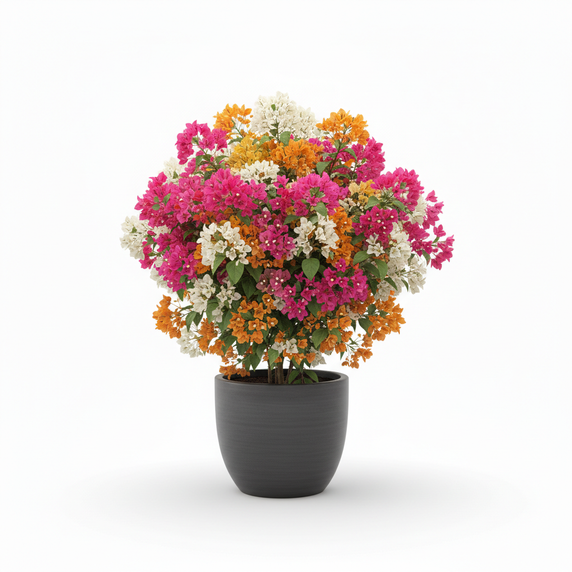
Unleash a riot of color in your garden with the Bougainvillea 'Bon Bon'! This isn't just a plant; it's a statement. Perfect for sun-drenched balconies and patios, its breathtaking, paper-thin blossoms create an unforgettable display from spring through fall. Exceptionally hardy and easy to care for, the 'Bon Bon' asks only for sun and the occasional drink to reward you with an explosion of vibrant hues. Stop dreaming of a Mediterranean getaway and bring it to your doorstep. Order yours today and let the show begin!
1. Basic Identification
Common Name: Bougainvillea 'Bon Bon'
Botanical Name: Bougainvillea spectabilis
Arabic Name: جهنمي
Variant: Bon Bon
Plant Color: Multicolor
Country of Origin: Spain
2. Taxonomy & Classification
Kingdom: Plantae
Clade: Tracheophytes
Order: Caryophyllales
Family: Nyctaginaceae
Genus: Bougainvillea
Species: B. spectabilis
3. Origin & Distribution
Bougainvillea spectabilis is native to South America, specifically Brazil, Peru, and Argentina. However, this 'Bon Bon' specimen is sourced from cultivation in Spain. It is widely distributed across tropical and subtropical regions globally, thriving in Mediterranean climates.
4. Visual Characteristics
The 'Bon Bon' variety is characterized by its dense, woody climbing habit and vibrant, paper-thin bracts that appear in a riot of multicolor hues. These bracts surround tiny, inconspicuous white flowers. Its leaves are dark green, ovate, and slightly hairy on the underside.
5. Size & Dimensions
As a medium-sized plant, it can reach heights of 1 to 3 meters depending on pruning and support. When grown in containers or as a hanging plant, it maintains a more compact, trailing form suitable for balconies and patios.
6. Light Requirements
High. This plant requires full sun to thrive and bloom profusely. It should receive at least 6 to 8 hours of direct sunlight daily. Insufficient light will lead to poor flowering and leggy growth.
7. Watering Needs
Low to Moderate. Bougainvilleas are drought-tolerant once established. Water thoroughly when the top 2-3 inches of soil feel dry, then allow it to drain completely. Avoid overwatering or letting the plant sit in water, as this can cause root rot.
8. Soil & Potting
Requires well-draining, gritty soil. A mix of peat moss, perlite, and sand is ideal. It prefers a slightly acidic soil pH (5.5 to 6.0). They actually bloom better when their roots are slightly crowded in a pot.
9. Temperature & Humidity
Thrives in warm temperatures between 18°C and 35°C. It is frost-sensitive and should be protected if temperatures drop below 5°C. It performs best in moderate humidity but is quite adaptable to dry air.
10. Fertilization
Feed with a balanced, water-soluble fertilizer or a specialized hibiscus/bougainvillea food every 4-6 weeks during the growing season (spring and summer). Reduce fertilization in winter to allow the plant to rest.
11. Maintenance & Care Level
Low Maintenance. Maintenance primarily involves regular pruning after a flowering cycle to encourage new blooms and maintain the desired shape. Wear gloves when handling as the plant has sharp thorns.
12. Growth & Propagation
Rapid growth rate during the warm months. It can be propagated via semi-hardwood cuttings taken in summer or by air layering.
13. Common Problems
Susceptible to aphids, spider mites, and mealybugs. Overwatering can lead to root rot and leaf drop. Fungal leaf spots may occur if the foliage remains wet in poorly ventilated areas.
14. Benefits & Uses
Primarily used for ornamental purposes to add vibrant color to landscapes, rooftops, and balconies. It is excellent for privacy screening on fences or as a stunning focal point in hanging baskets. It also attracts pollinators like bees and butterflies.
15. Toxicity & Safety
The sap of the Bougainvillea can cause mild skin irritation or dermatitis in sensitive individuals. The thorns can cause physical injury. While generally considered non-toxic to humans, ingestion by pets may cause mild gastrointestinal upset.