


Bougainvillea Bonsai 'Bonsai'
Transform your space with the fiery beauty of the Bougainvillea Bonsai. A living sculpture, this tree combines the rugged, hardy nature of Bougainvillea with the ancient art of bonsai. Perfect for a sun-drenched patio or a bright indoor location, it rewards dedicated care with an explosion of vibrant, paper-like blooms. Each tree is a unique masterpiece, ready to become the stunning focal point of your collection or the perfect, unforgettable gift.
1. Basic Identification
Common Name: Bougainvillea / Lesser Bougainvillea
Botanical Name: Bougainvillea glabra
Arabic Name: جهنمي
Color: Multicolor
Country of Origin: Thailand
2. Taxonomy & Classification
Kingdom: Plantae
Clade: Tracheophytes
Order: Caryophyllales
Family: Nyctaginaceae
Genus: Bougainvillea
Species: B. glabra
3. Origin & Distribution
Native to South America, specifically Brazil, Bougainvillea glabra has been widely distributed across tropical and subtropical regions worldwide, including Southeast Asia and the Mediterranean, due to its ornamental value.
4. Visual Characteristics
This bonsai variety features a woody, gnarled trunk with thorny branches and small, glossy green leaves. The true flowers are small and white, but they are surrounded by three large, papery, and brilliantly colored bracts in shades of magenta, purple, or pink, giving the plant its "Multicolor" appearance.
5. Size & Dimensions
As a bonsai specimen, its size is carefully maintained through pruning. It typically ranges from 30 cm to 60 cm in height, fitting into the "Medium Plants" category, with a spread determined by its specific bonsai style (e.g., informal upright or cascade).
6. Light Requirements
Requires high light intensity. For vibrant blooming, it needs at least 6 to 8 hours of direct sunlight daily. If kept indoors, it must be placed in the brightest possible spot, such as a south-facing window or a sunlit atrium.
7. Watering Needs
Water thoroughly when the top surface of the soil feels dry to the touch. It prefers to dry out slightly between waterings. During its blooming phase, keep the soil consistently moist but never waterlogged, as it is prone to root rot.
8. Soil & Potting
Requires well-draining, slightly acidic soil. A mix of peat moss, perlite, and pine bark is ideal for bonsai containers to ensure aeration and rapid drainage.
9. Temperature & Humidity
Thrives in warm climates with temperatures between 18°C and 35°C. It is not frost-tolerant and should be protected when temperatures drop below 10°C. It enjoys moderate humidity but can tolerate drier air if properly watered.
10. Fertilization
Feed every two to four weeks during the growing season (spring and summer) with a balanced liquid fertilizer or a high-potassium fertilizer to encourage prolific blooming.
11. Maintenance & Care Level
Moderate to High. Requires regular pruning to maintain its bonsai shape and encourage new growth. Deadheading spent bracts will promote a longer flowering period.
12. Growth & Propagation
A fast grower during the warm months. Propagation is most successful via semi-hardwood cuttings or air layering, typically performed in late spring or early summer.
13. Common Problems
Watch for pests such as aphids, spider mites, and mealybugs. Overwatering can lead to root rot and fungal issues, while insufficient light will result in leaf drop and a lack of flowers.
14. Benefits & Uses
Primarily used for aesthetic and ornamental purposes. As a bonsai, it serves as a "living sculpture" for home décor, offices, and entryways. It is also an excellent gift for plant enthusiasts and collectors.
15. Toxicity & Safety
The sap of the Bougainvillea can cause mild skin irritation or dermatitis in sensitive individuals. The thorns present a physical hazard. While not highly toxic, ingestion of the leaves or bracts can cause mild gastrointestinal upset in pets.
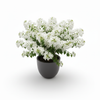
Bougainvillea Bonsai 'Bonsai'

Transform your space with the fiery beauty of the Bougainvillea Bonsai. A living sculpture, this tree combines the rugged, hardy nature of Bougainvillea with the ancient art of bonsai. Perfect for a sun-drenched patio or a bright indoor location, it rewards dedicated care with an explosion of vibrant, paper-like blooms. Each tree is a unique masterpiece, ready to become the stunning focal point of your collection or the perfect, unforgettable gift.
1. Basic Identification
Common Name: Bougainvillea / Lesser Bougainvillea
Botanical Name: Bougainvillea glabra
Arabic Name: جهنمي
Color: Multicolor
Country of Origin: Thailand
2. Taxonomy & Classification
Kingdom: Plantae
Clade: Tracheophytes
Order: Caryophyllales
Family: Nyctaginaceae
Genus: Bougainvillea
Species: B. glabra
3. Origin & Distribution
Native to South America, specifically Brazil, Bougainvillea glabra has been widely distributed across tropical and subtropical regions worldwide, including Southeast Asia and the Mediterranean, due to its ornamental value.
4. Visual Characteristics
This bonsai variety features a woody, gnarled trunk with thorny branches and small, glossy green leaves. The true flowers are small and white, but they are surrounded by three large, papery, and brilliantly colored bracts in shades of magenta, purple, or pink, giving the plant its "Multicolor" appearance.
5. Size & Dimensions
As a bonsai specimen, its size is carefully maintained through pruning. It typically ranges from 30 cm to 60 cm in height, fitting into the "Medium Plants" category, with a spread determined by its specific bonsai style (e.g., informal upright or cascade).
6. Light Requirements
Requires high light intensity. For vibrant blooming, it needs at least 6 to 8 hours of direct sunlight daily. If kept indoors, it must be placed in the brightest possible spot, such as a south-facing window or a sunlit atrium.
7. Watering Needs
Water thoroughly when the top surface of the soil feels dry to the touch. It prefers to dry out slightly between waterings. During its blooming phase, keep the soil consistently moist but never waterlogged, as it is prone to root rot.
8. Soil & Potting
Requires well-draining, slightly acidic soil. A mix of peat moss, perlite, and pine bark is ideal for bonsai containers to ensure aeration and rapid drainage.
9. Temperature & Humidity
Thrives in warm climates with temperatures between 18°C and 35°C. It is not frost-tolerant and should be protected when temperatures drop below 10°C. It enjoys moderate humidity but can tolerate drier air if properly watered.
10. Fertilization
Feed every two to four weeks during the growing season (spring and summer) with a balanced liquid fertilizer or a high-potassium fertilizer to encourage prolific blooming.
11. Maintenance & Care Level
Moderate to High. Requires regular pruning to maintain its bonsai shape and encourage new growth. Deadheading spent bracts will promote a longer flowering period.
12. Growth & Propagation
A fast grower during the warm months. Propagation is most successful via semi-hardwood cuttings or air layering, typically performed in late spring or early summer.
13. Common Problems
Watch for pests such as aphids, spider mites, and mealybugs. Overwatering can lead to root rot and fungal issues, while insufficient light will result in leaf drop and a lack of flowers.
14. Benefits & Uses
Primarily used for aesthetic and ornamental purposes. As a bonsai, it serves as a "living sculpture" for home décor, offices, and entryways. It is also an excellent gift for plant enthusiasts and collectors.
15. Toxicity & Safety
The sap of the Bougainvillea can cause mild skin irritation or dermatitis in sensitive individuals. The thorns present a physical hazard. While not highly toxic, ingestion of the leaves or bracts can cause mild gastrointestinal upset in pets.