


Bouvardia
Elevate your space with the delicate charm of the Bouvardia. Known for its exquisite, star-shaped flower clusters that release a subtle, sweet fragrance, this plant is a living bouquet. Perfect for brightening a sunny windowsill or as the centerpiece of a living room, the Bouvardia brings elegance and life indoors. Its use by florists worldwide is a testament to its beauty, making it an exceptional gift for any occasion. Bring home this floral jewel today!
1. Basic Identification
Common Name: Bouvardia / بوفارديا
Botanical Name: Bouvardia spp.
Plant Variant: Standard
Plant Color: Multicolor
Plant Country: Netherlands
Family: Rubiaceae
2. Taxonomy & Classification
Bouvardia belongs to the Rubiaceae family, the same family as coffee and gardenias. The genus consists of approximately 30 to 50 species of evergreen shrubs and herbaceous perennials. They are characterized by their opposite or whorled leaves and terminal clusters of tubular, four-lobed flowers.
3. Origin & Distribution
Bouvardia is native to the tropical and subtropical regions of Mexico and Central America. It was named after Charles Bouvard, physician to Louis XIII and superintendent of the Jardin du Roi in Paris. Today, it is widely cultivated in Europe, particularly the Netherlands, for the cut flower industry.
4. Visual Characteristics
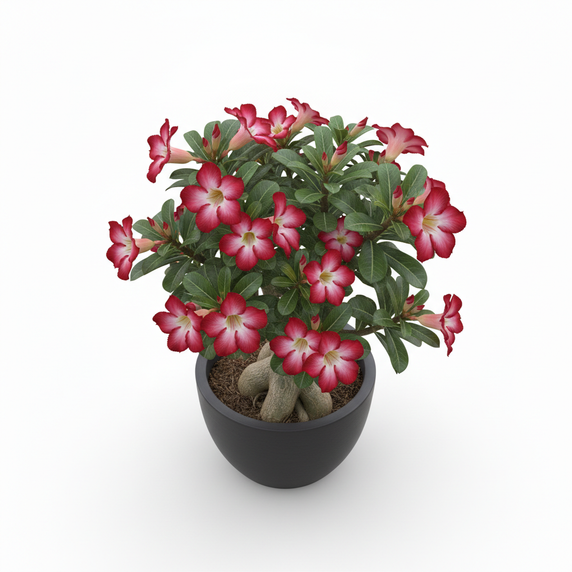
The plant features woody stems and lush, dark green, lance-shaped leaves. Its most striking feature is the dense, umbrella-like clusters of star-shaped flowers. These blossoms come in various shades, including white, pink, red, and peach, often emitting a delicate, jasmine-like scent during the evening.
5. Size & Dimensions
In its natural habitat, Bouvardia can reach heights of 2 to 4 feet. As an indoor potted plant or greenhouse specimen, it is typically maintained at a more compact size of 12 to 18 inches (30–45 cm) in height and width.
6. Light Requirements
Bouvardia thrives in bright, indirect light. A spot near a south or west-facing window with filtered sunlight is ideal. While it enjoys light, direct mid-day summer sun can scorch the foliage and cause flowers to wilt prematurely.
7. Watering Needs
This plant prefers consistently moist soil but is sensitive to overwatering. Water when the top half-inch of soil feels dry to the touch. Ensure the pot has excellent drainage to prevent root rot, and never allow the plant to sit in standing water.
8. Soil & Potting
Use a high-quality, well-draining potting mix that is rich in organic matter. A mixture of peat moss, perlite, and a small amount of compost works well. The soil should be slightly acidic to neutral for optimal nutrient uptake.
9. Temperature & Humidity
Bouvardia prefers moderate temperatures between 65°F and 75°F (18°C–24°C). It requires high humidity to maintain its lush foliage and flower production; misting regularly or using a humidity tray is highly recommended in dry indoor environments.
10. Fertilization
During the active growing and flowering season (spring through autumn), apply a balanced liquid fertilizer every two weeks. High-potassium fertilizers can help promote more prolific blooming. Reduce feeding significantly during the winter dormancy period.
11. Maintenance & Care Level
The care level is moderate. Regular deadheading of spent flowers is essential to encourage new blooms. After the flowering season concludes, the plant can be pruned back to maintain a bushy shape and prevent it from becoming leggy.
12. Growth & Propagation
Bouvardia grows at a moderate rate. It is typically propagated through semi-hardwood cuttings taken in early summer or by root cuttings in late winter. Seeds are also an option but are less common for domestic cultivation.
13. Common Problems
The plant can be susceptible to common indoor pests such as aphids, whiteflies, and spider mites, especially in dry conditions. Leaf drop or bud drop can occur if the plant is exposed to sudden temperature changes, drafts, or if the soil dries out completely.
14. Benefits & Uses
Bouvardia is prized primarily for its aesthetic value and fragrance. It is a staple in the floral industry for bridal bouquets and high-end arrangements. In the home, it serves as an elegant decorative piece and a natural mood booster due to its vibrant colors and scent.
15. Toxicity & Safety
According to safety data, this plant is not considered safe for pets or small children if ingested. It may cause mild gastrointestinal upset or skin irritation in sensitive individuals. It is best kept out of reach of curious animals and children.
Bouvardia
Elevate your space with the delicate charm of the Bouvardia. Known for its exquisite, star-shaped flower clusters that release a subtle, sweet fragrance, this plant is a living bouquet. Perfect for brightening a sunny windowsill or as the centerpiece of a living room, the Bouvardia brings elegance and life indoors. Its use by florists worldwide is a testament to its beauty, making it an exceptional gift for any occasion. Bring home this floral jewel today!
1. Basic Identification
Common Name: Bouvardia / بوفارديا
Botanical Name: Bouvardia spp.
Plant Variant: Standard
Plant Color: Multicolor
Plant Country: Netherlands
Family: Rubiaceae
2. Taxonomy & Classification
Bouvardia belongs to the Rubiaceae family, the same family as coffee and gardenias. The genus consists of approximately 30 to 50 species of evergreen shrubs and herbaceous perennials. They are characterized by their opposite or whorled leaves and terminal clusters of tubular, four-lobed flowers.
3. Origin & Distribution
Bouvardia is native to the tropical and subtropical regions of Mexico and Central America. It was named after Charles Bouvard, physician to Louis XIII and superintendent of the Jardin du Roi in Paris. Today, it is widely cultivated in Europe, particularly the Netherlands, for the cut flower industry.
4. Visual Characteristics
The plant features woody stems and lush, dark green, lance-shaped leaves. Its most striking feature is the dense, umbrella-like clusters of star-shaped flowers. These blossoms come in various shades, including white, pink, red, and peach, often emitting a delicate, jasmine-like scent during the evening.
5. Size & Dimensions
In its natural habitat, Bouvardia can reach heights of 2 to 4 feet. As an indoor potted plant or greenhouse specimen, it is typically maintained at a more compact size of 12 to 18 inches (30–45 cm) in height and width.
6. Light Requirements
Bouvardia thrives in bright, indirect light. A spot near a south or west-facing window with filtered sunlight is ideal. While it enjoys light, direct mid-day summer sun can scorch the foliage and cause flowers to wilt prematurely.
7. Watering Needs
This plant prefers consistently moist soil but is sensitive to overwatering. Water when the top half-inch of soil feels dry to the touch. Ensure the pot has excellent drainage to prevent root rot, and never allow the plant to sit in standing water.
8. Soil & Potting
Use a high-quality, well-draining potting mix that is rich in organic matter. A mixture of peat moss, perlite, and a small amount of compost works well. The soil should be slightly acidic to neutral for optimal nutrient uptake.
9. Temperature & Humidity
Bouvardia prefers moderate temperatures between 65°F and 75°F (18°C–24°C). It requires high humidity to maintain its lush foliage and flower production; misting regularly or using a humidity tray is highly recommended in dry indoor environments.
10. Fertilization
During the active growing and flowering season (spring through autumn), apply a balanced liquid fertilizer every two weeks. High-potassium fertilizers can help promote more prolific blooming. Reduce feeding significantly during the winter dormancy period.
11. Maintenance & Care Level
The care level is moderate. Regular deadheading of spent flowers is essential to encourage new blooms. After the flowering season concludes, the plant can be pruned back to maintain a bushy shape and prevent it from becoming leggy.
12. Growth & Propagation
Bouvardia grows at a moderate rate. It is typically propagated through semi-hardwood cuttings taken in early summer or by root cuttings in late winter. Seeds are also an option but are less common for domestic cultivation.
13. Common Problems
The plant can be susceptible to common indoor pests such as aphids, whiteflies, and spider mites, especially in dry conditions. Leaf drop or bud drop can occur if the plant is exposed to sudden temperature changes, drafts, or if the soil dries out completely.
14. Benefits & Uses
Bouvardia is prized primarily for its aesthetic value and fragrance. It is a staple in the floral industry for bridal bouquets and high-end arrangements. In the home, it serves as an elegant decorative piece and a natural mood booster due to its vibrant colors and scent.
15. Toxicity & Safety
According to safety data, this plant is not considered safe for pets or small children if ingested. It may cause mild gastrointestinal upset or skin irritation in sensitive individuals. It is best kept out of reach of curious animals and children.